
Snow, Grapes, and Grit: Discovering the Hokkaido Wine Region
10 minutes read
If you’re into skiiing, you may have heard about Hokkaido and how this is where you’ll find the best snow. What you may not know however, is that it’s also a wine region. Indeed, wine in Japan doesn’t stop in the historic vineyards of Yamanashi or this new region Nagano. Actually, Nagano and Hokkaido compete to be the 2nd biggest region. For now, no clear winner.
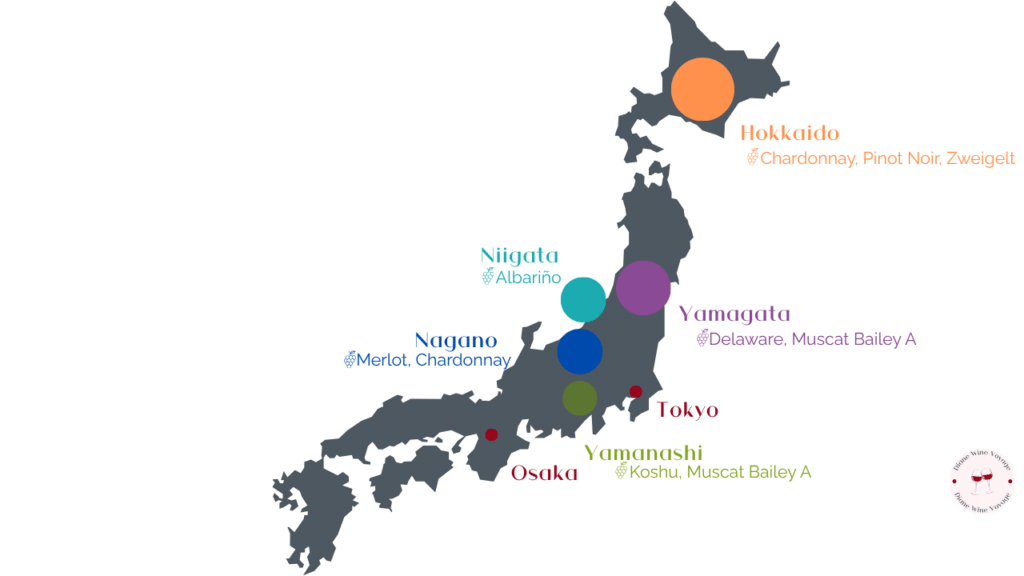
Hokkaido is massive—it accounts for 22% of Japan’s total land area—and it is a land of extremes. Just to give you an idea, Hokkaido is the size of Austria! Compared to the rest of Japan, it’s the least mountaineous area and where the humidity is at its lowest. You’re thinking, finally a japanese region ideal for vine-growing…except it’s also known for its harshest winters.
Let’s see how our inventive japanese winemakers deal with these elements. Because, spoiler alert, Hokkaido produces some of the most exciting, high-acid and elegant wines in Asia today.
The Hokkaido wine region is Japan’s coolest — literally — wine frontier. Located on Japan’s northernmost island, it rivals Nagano as the country’s second-largest wine region and earned its GI status in 2018. Despite brutal winters that force growers to bury their vines under snow each year, Hokkaido produces elegant, high-acid wines from varieties like Pinot Noir, Zweigelt, and Kerner across six distinct subregions. Low humidity, available land, and a collaborative producer community make it one of the most exciting cool-climate wine regions in Asia today.
- From “Quantity” to “Quality”: A Brief History of the Hokkaido wine region
- Mapping the Hokkaido Wine Region: 6 Subregions to Know
- The Grapes: Cool Climate Superstars
- The “Special Wine Zone” and the 10R Effect
- Man vs. Nature: How the Hokkaido Wine Region Survives Its Winters
- Why the Hokkaido Wine Region is the Future of Cool-Climate Wine
From “Quantity” to “Quality”: A Brief History of the Hokkaido wine region
The story of the Hokkaido wine region didn’t start with a visionary winemaker or a famous estate. It started with a town trying to survive. Back in the 1960s, local authorities in Ikeda — a small town in the Tokachi area — began making wine from hardy, wild mountain grapes simply to help the local economy stay afloat.
The goal was volume and accessibility, not complexity. That set the tone for the whole island: high-yield, sweet, or fruit-based wines that were perfectly fine but not exactly turning heads internationally.
Then came the early 2000s, and everything shifted. A new wave of winemakers began moving to Hokkaido, drawn by the cooler climate, the available land, and honestly, probably a sense of adventure. They saw potential where others saw problems.
And in 2018, that potential was officially recognized: Hokkaido received its GI status — a Geographic Indication that guarantees any wine labeled “Hokkaido” is made from 100% Hokkaido-grown grapes and meets strict quality standards. It was the moment the rest of the wine world had to take notice
Mapping the Hokkaido Wine Region: 6 Subregions to Know
Here’s where it gets interesting — and a little complicated. Because Hokkaido is so large, there is no single Hokkaido wine region style. The terroir shifts dramatically depending on which part of the island you’re in, and the wines follow suit. Think of it less like one region and more like six distinct personalities living under the same roof.
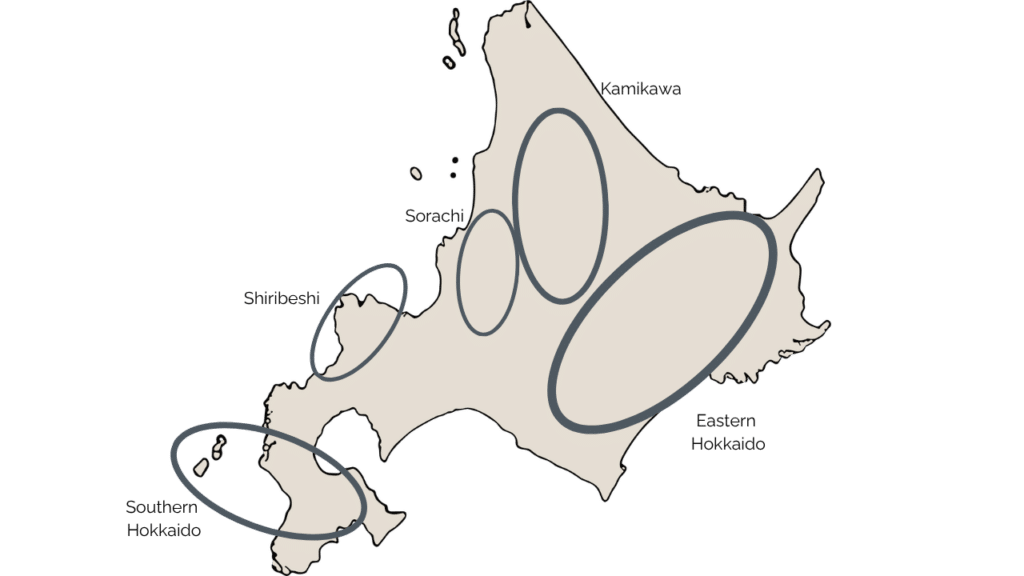
1. Shiribeshi (Yoichi & Niki)
If you’ve heard anything about Hokkaido wine, chances are it came from here. Shiribeshi is the crown jewel of the Hokkaido wine region region.
It sits on the western coast, buffered by the Sea of Japan, which gives it a slightly more temperate climate than the rest of the island. That relative mildness has made it the natural home of Hokkaido’s most celebrated varieties: Pinot Noir and Kerner.
It has become a magnet for ambitious young winemakers and even caught the attention of major international estates looking for their next project. Yoichi, in particular, has a name that is starting to travel. Remember it.
2. Sorachi (Iwamizawa & Mikasa)
Head inland and you hit Sorachi — a region of rolling hills and a very independent spirit.
This is where you’ll find many of Hokkaido’s small-scale producers and natural winemakers doing their own thing, often with minimal intervention and maximum personality.
The wines here tend to show real mineral tension and bright, lively acidity.
3. Tokachi
As we said earlier, Tokachi is where it all began, and it still holds an important place in the region’s story.
It’s inland, it’s cold — punishingly so — and it pushed producers to think creatively about which grapes could actually survive here. That creativity led to the development of Yamasachi, a grape variety specifically bred to withstand Tokachi’s brutal winters. A reminder that necessity, in winemaking as in life, is often the mother of invention.
4. Oshima & Hiyama (Hakodate/The South)
The southern tip of Hokkaido is the “warmest” part of the island — and in Hokkaido terms, that is relative.
Milder winters and volcanic soils have made this area increasingly attractive in recent years. So attractive, in fact, that it has drawn significant investment from high-profile Burgundian estates looking to plant their flag in Japan. Watch this space.
5. Ishikari
Centered around the Sapporo area, Ishikari has the advantage of being close to the island’s largest city, which means a ready market and a lot of visibility. But it also has substance behind the convenience: some of Hokkaido’s most established producers are based here, with years of experience behind them and a reputation for consistency.
6. Kamikawa (Furano & Asahikawa)
This is the deep interior, and it plays by its own rules.
Summers are hot, winters are extreme, and the temperature swings between the two are dramatic. What that produces, however, is remarkable: intensely aromatic whites that are crystalline, sharp, and deeply fragrant.
If you want to understand just how versatile this island is, try a Kamikawa white and then a Shiribeshi Pinot Noir. They feel like they come from different worlds — and in many ways, they do.
The Grapes: Cool Climate Superstars
One of the reasons Hokkaido has generated so much excitement is its ability to grow European varieties — Vitis vinifera — that simply struggle in the humid, hot summers of central Japan. The cool, dry climate creates the kind of slow, even ripening that builds complexity and preserves freshness.
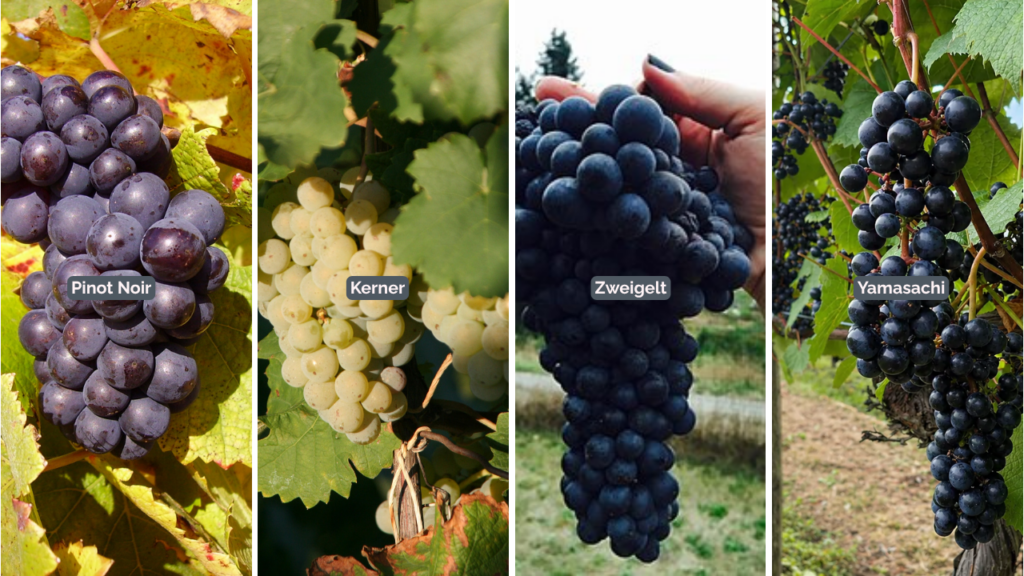
Here are the varieties worth knowing:
Pinot Noir is the red that put Hokkaido on the map. Light, elegant, and earthy, these are cool-climate Pinots that lean into finesse rather than power. Think red fruit, forest floor, and a long, refined finish. For anyone who loves Burgundy, this is a rabbit hole worth going down.
Kerner is a German white variety that has found what feels like its spiritual home in Hokkaido. It produces aromatic, zesty wines with real refreshing energy — the kind of white you reach for without overthinking it. It is widely grown across the island and consistently delivers.
Zweigelt, an Austrian red, thrives in the northern climate and brings something a little different to the table: spicy, peppery notes, bright fruit, and an easy-drinking quality that makes it very approachable for people just getting into Japanese wine.
Cold-Hardy Hybrids — particularly Yamasachi and Kiyomi — are the unsung heroes of the colder subregions. These varieties were developed specifically to survive temperatures that would wipe out a conventional vineyard. They don’t always get the glamour of Pinot Noir, but without them, large parts of Hokkaido simply wouldn’t be producing wine at all.
The “Special Wine Zone” and the 10R Effect
Hokkaido’s rise wasn’t just about the climate — it was also about smart policy.
The introduction of “Special Wine Zones” (known as Tokku) was a game-changer. By lowering the minimum production requirements needed to obtain a winemaking license, the government made it possible for small-scale farmers to produce and sell their own wine without needing serious capital behind them. Suddenly, a whole new generation of producers could get started.
But policy alone doesn’t build a wine culture.
What really accelerated things was the creation of custom-crush facilities — shared wineries where small producers can bring their grapes and make their wine without owning all the equipment themselves.
The most important of these is 10R Winery, founded by Bruce Gutlove in the Sorachi area. 10R became a kind of incubator for new talent, a place where winemakers could experiment, learn, and produce serious wine on a shoestring.
If that sounds familiar, it’s because it echoes something that happened earlier in Yamanashi — where established wineries like Mercian quietly helped smaller producers find their footing, sharing knowledge and resources rather than guarding them.
It’s a pattern that keeps repeating itself across the Japanese wine world: the bigger players lifting the smaller ones up, rather than shutting them out. In an industry that can sometimes feel ruthlessly competitive, there’s something genuinely refreshing about a scene built on the idea that everyone gets better when everyone grows together. Hokkaido has taken that spirit and run with it.
Man vs. Nature: How the Hokkaido Wine Region Survives Its Winters
Now, about those winters.
In many parts of Hokkaido, the ground freezes so deep and so hard that it can kill vine roots outright — and a dead vine is a problem that doesn’t fix itself quickly. So what do you do when your crop is a perennial plant that needs to survive in conditions it was never designed for?
You bury it.
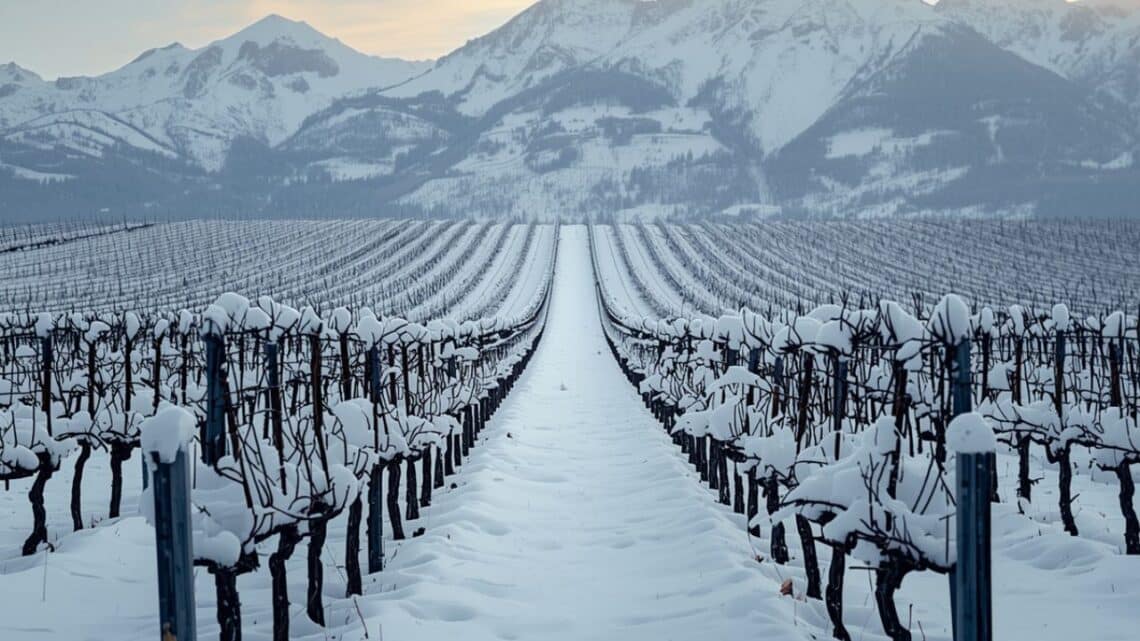
Every autumn, after harvest, farmers prune their vines and carefully lay them flat against the ground. The vines are then covered — sometimes with soil, sometimes with the heavy snowfall that Hokkaido is famous for.
That snow, the same snow that attracts skiers from around the world, acts as a thermal blanket. While the air temperature outside drops to -20°C, the vines underneath stay at a relatively stable 0°C.
Uncomfortable, yes. Lethal, no.
Then in spring, the whole process reverses: the vines are dug out, trained back up their trellises, and the growing season begins again. It is an extraordinary amount of work, repeated year after year, and It says everything about the dedication of the people growing grapes up here. It also explains the price of the bottle, just so you know
Why the Hokkaido Wine Region is the Future of Cool-Climate Wine
Here’s the thing about Hokkaido — its rise couldn’t have come at a better time. As temperatures climb in wine regions across the world, cool-climate areas are becoming increasingly precious, and increasingly rare. Hokkaido is one of them. England is another, which is wild when you think about it. The places that used to seem too cold, too far north, too unlikely? Those are exactly where the most exciting bottles are coming from right now.
On top of that, the low humidity means fewer diseases, fewer pests, and less need to intervene in the vineyard — which makes Hokkaido the most natural fit in Japan for organic and sustainable winemaking. Combine that with a community of producers who genuinely seem to love what they’re doing, rules that actually encourage small players to get started, and grape varieties that have found their sweet spot… and you start to wonder how the Hokkaido wine region isn’t talked about more
But hey — that’s kind of the point. You’re early. Enjoy it.


You May Also Like

What Is the Right Wine Serving Temperature (and Why It Matters More Than You Think)?
Best Japanese Wine Bars In Tokyo