

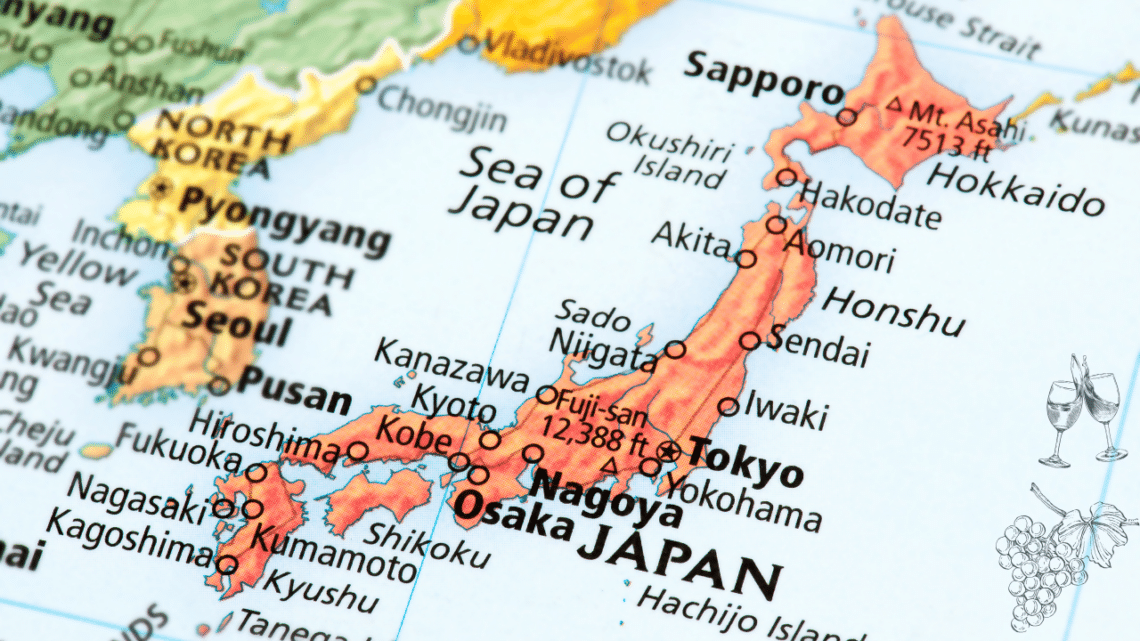
The main wine regions in Japan : A Quick Guide
17 minutes read
Japan and wine.
If that pairing made you pause for a second, you’re not alone.
Most people associate Japan with sake, sushi, and meticulous craftsmanship — but wine? That still feels unexpected. And yet, over the past few decades, Japan has quietly built one of the most distinctive wine scenes in the world.
So if you clicked on this article wondering:
- Does Japan really have wine regions?
- Where is wine actually grown in Japan?
- And what do Japanese wines even taste like?
You’re in exactly the right place.
Japan’s vineyards stretch over more than 3,000 km, from snowy Hokkaido in the north to the inland basins of Yamanashi near Mount Fuji. Add high rainfall, humid summers, volcanic soils, and a long tradition of hybrid grape varieties, and you get wines that are light, subtle, and deeply food-friendly.
These are not power wines.
They’re table wines — designed to work with food, not dominate it.
To make sense of it all, let’s start with Japan’s three main wine regions, before looking at a few historic, urban, and emerging areas that complete the picture.
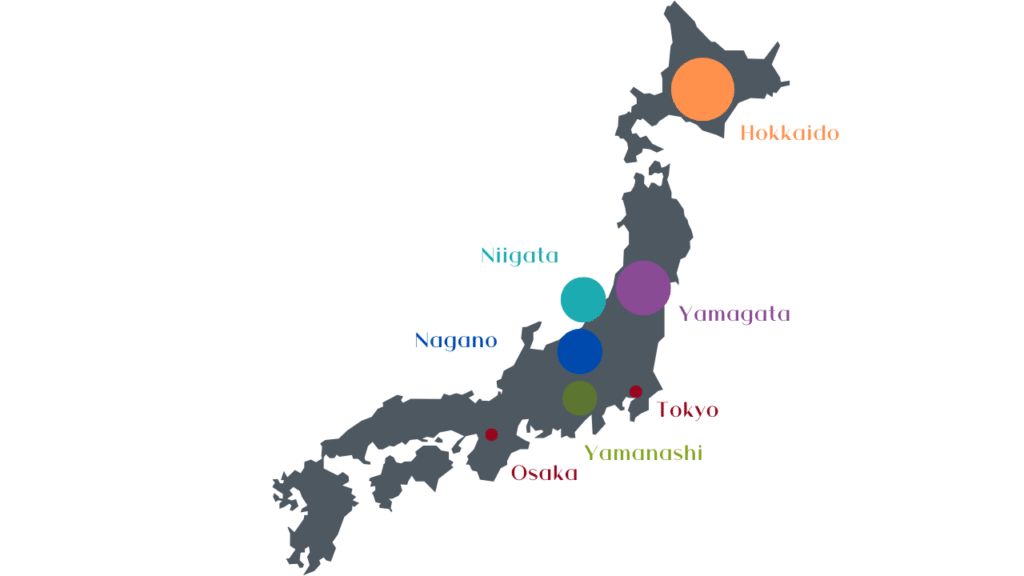
The main wine regions in Japan are Hokkaido, Nagano, and Yamanashi.
Together, they form the core of Japanese wine production, each shaped by distinct climates, soils, and grape choices. Yamanashi is the historic heart of Japanese wine and home to the Koshu grape. Nagano is known for high-altitude vineyards producing fresh, precise wines. Hokkaido’s cool climate has made it Japan’s fastest-growing wine region, especially for aromatic whites and Pinot Noir. Beyond these three, regions like Yamagata, Niigata, and Osaka play secondary or specialist roles, contributing to Japan’s diverse, food-friendly wine landscape.
Japan’s Three Main Wine Regions
If you want to understand Japanese wine today, start with three regions: Hokkaido, Nagano, and Yamanashi. This is where most of the vineyards and wineries are — and where Japan’s wine identity is really taking shape.
Yamanashi: The Historic Heart of Japanese Wine
If you’re discovering Japanese wine for the first time, Yamanashi is the natural starting point.
If you’re starting your journey into Japanese wine, Yamanashi is the obvious place to begin. Often considered the birthplace of Japanese wine, the region has a long history of grape growing and winemaking — helped along by its proximity to Tokyo and an early embrace of wine tourism. It was also the first region in Japan to receive official recognition under the country’s Geographical Indication (GI) system.
Geographically, Yamanashi sits in an inland basin surrounded by mountains. This creates a natural rain-shadow effect — a real advantage in a country where rainfall is usually one of the biggest challenges for vineyards. Most vines are planted between 450 and 550 metres, with the best sites climbing higher to keep wines fresh and balanced.
The soils here are largely volcanic, mineral-rich, and naturally well-drained — exactly what you want when summers turn hot and humid.
The grape you’ll hear about most in Yamanashi is Koshu, Japan’s signature variety. Pale in colour and delicate in flavour, it produces wines with high natural acidity and a quietly expressive profile. Think citrus, white flowers, and a touch of gentle bitterness — wines that whisper rather than shout, and that feel made for Japanese cuisine.
Alongside Koshu, Yamanashi also grows familiar faces such as Muscat Bailey A and Delaware, as well as an increasing number of international varieties, including Chardonnay, Merlot, and Cabernet Franc.
Yamanashi is also Japan’s most developed region for wine tourism, with many wineries offering tasting rooms, seasonal festivals, and easy access from Tokyo — another reason it’s such a natural starting point.
Nagano: High-Altitude Precision and Quiet Confidence
If Yamanashi feels like the historic heart of Japanese wine, Nagano is where things get a little more precise.
Set in central Honshu, Nagano is shaped by its high-altitude Alpine valleys, with most vineyards planted between 600 and 900 metres. With mountains all around, Nagano gets a rare combination for Japan: cooler temperatures, big day–night swings, and less rain. That slows ripening, protects acidity, and keeps grapes in good shape — which goes a long way toward explaining why Nagano wines feel so fresh, focused, and easy to drink.
What does that mean in the glass? Slower ripening, bright acidity, and wines that feel clean, focused, and beautifully balanced.
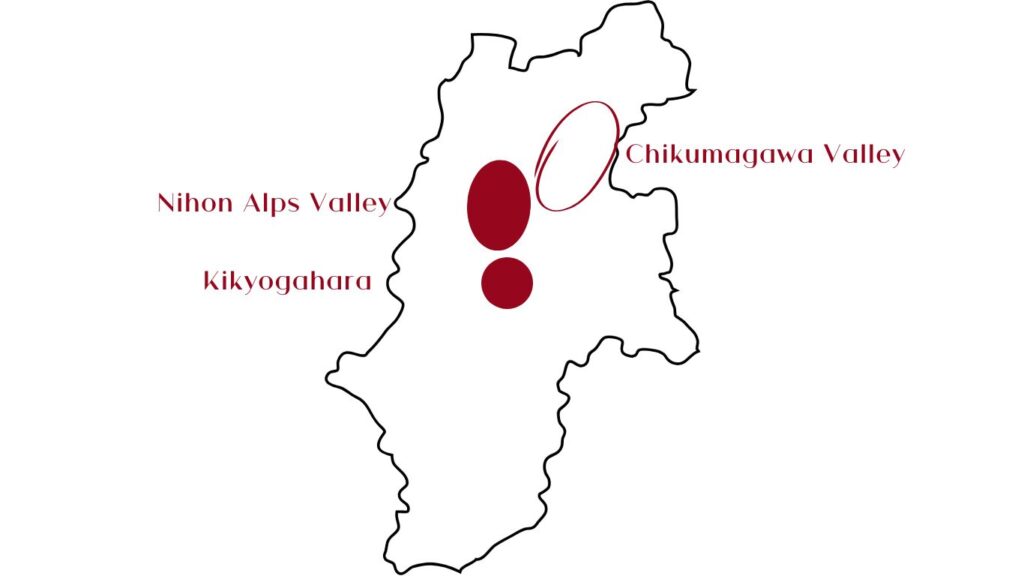
Nagano is officially recognised as a GI region and is often described through a handful of key valley areas:
- Kikyogahara, one of Japan’s oldest wine areas, known especially for Merlot
- Chikumagawa, a newer and more experimental zone
- Hokushin, producing some of Japan’s most convincing Chardonnay
Hybrids such as Concord, Niagara, and Ryugan still dominate by volume in Nagano, but the region has earned its reputation through Chardonnay and Merlot. Grown at altitude and in cooler conditions, these wines show just how elegant and well-balanced Japanese cool-climate styles can be.
In the vineyards, there’s a lot of quiet experimentation. Some growers stick with traditional pergola systems, others adopt vertical shoot positioning inspired by Europe — all with the same goal: better airflow, healthier grapes, and more precision in the glass.
Add to that a lively, easygoing wine culture — wine bars at train stations, small producers, and festivals all year round — and Nagano becomes one of the simplest and most enjoyable wine regions in Japan to explore, even without a car.
Hokkaido: Cool-Climate Ambition and International Appeal
Not so long ago, Hokkaido sat on the margins of Japanese wine. Today, it’s impossible to ignore.
Japan’s northernmost island has built a fast-moving, confident wine scene, helped by conditions that are unusually favourable by Japanese standards: cooler temperatures, lower humidity, and fewer typhoons than much of the country. The shift has been so significant that Hokkaido has now overtaken Nagano to become Japan’s second-largest grape-growing prefecture.
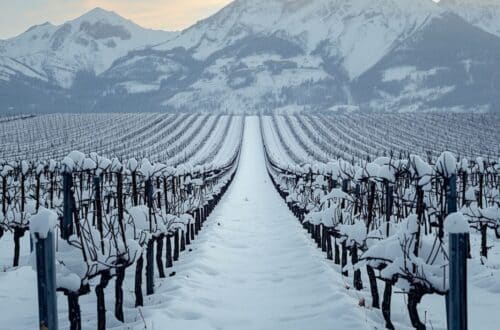
Winters here are tough, with vines often buried under snow to survive the cold. But that hardship pays off. The long, slow growing season encourages even ripening, which translates into wines that feel fresh, aromatic, and precise, rather than heavy.
The soils — a patchwork of volcanic ash, loam, and gravel — add to that sense of purity and focus. Hokkaido has earned a strong reputation for Pinot Noir, alongside Chardonnay, Kerner, Zweigelt, and the local variety Yamasachi.
Many producers in Hokkaido work with a natural or low-intervention approach, and the region has become a magnet for both Japanese and international winemakers looking for true cool-climate potential.
As a result, Hokkaido wines are now appearing more frequently on wine lists and in tastings abroad, making the region one of Japan’s most legible fine-wine areas for non-Japanese drinkers — and a key part of the country’s wine future.
Beyond the Big Three: Historic, Urban, and Emerging Regions
While Hokkaido, Nagano, and Yamanashi form the core of Japanese wine today, they don’t tell the whole story.
Yamagata: Historic Roots, Evolving Identity
Yamagata has been growing grapes for a long time, even if it hasn’t always been in the spotlight. The region is best known for varieties like Delaware and Muscat Bailey A, and for many years its grapes were used by larger producers elsewhere rather than bottled locally under a strong regional name.
Today, Yamagata has its own GI status, and things are starting to shift. Small producers are experimenting, styles are opening up, and the region is carving out a quieter role for itself — less about volume or prestige, more about continuity, local know-how, and keeping a long wine tradition alive.
Niigata: Wine Coast and Tourism-Led Development
Niigata has a special place in Japanese wine history. It’s home to the country’s oldest vineyard and the birthplace of Muscat Bailey A. Today, the region is best known for the Niigata Wine Coast — a small cluster of wineries set close to the Sea of Japan, developed with wine tourism very much in mind.
This is a region where the experience matters as much as the wine. Expect well-designed tasting spaces, a clear coastal influence, and a growing interest in more premium styles, including varieties like Albariño.
Osaka and Tokyo: Urban Wine Culture
Osaka is a bit of an exception on Japan’s wine map. It’s the country’s first true urban wine region, with a surprisingly long history of grape growing and even a few vineyards that are centuries old. It has its own GI, and because everything is so compact, it’s a region you can easily explore in a single day.
Tokyo tells a different story. It’s not really about vineyards, but about wine culture. Between urban wineries, specialised wine bars, and restaurants pouring bottles from all over Japan, Tokyo is the easiest place to drink Japanese wine — especially if you don’t have the time (or the patience) to travel out to the vineyards.
A Quick Word on Japanese Wine GIs (Without the Headache)
You might see the term GI (Geographical Indication) when reading about Japanese wine regions.
Japan introduced its GI system in the 2010s to protect regional identity and provenance. In simple terms, it guarantees that grapes are grown and wines are made locally, with rules that focus more on origin and transparency than on rigid styles.
Think less French appellation rigidity, more framework for quality — with plenty of room for creativity.
Conclusion: Why Japanese Wine Regions Matter
Japanese wine is still young, but it’s no longer a mystery.
With Hokkaido, Nagano, and Yamanashi at its core, the country’s wine scene has found its footing, while historic, urban, and emerging regions keep things curious and open-ended. Hybrid grapes play a big role here, giving wines that are light, nuanced, and low in alcohol — often even lighter than Austrian wines.
That’s what draws me in.
These are everyday wines in the best sense of the word: for summer heat, seaside picnics, and long, unhurried meals with friends. Wines that don’t shout — they stay with you.
My personal rule of thumb for food and wine pairing still applies here more than anywhere else: what grows together goes together.
Koshu with sushi.
Pinot Noir from Hokkaido with ramen.
It just works.
So next time you’re ordering Japanese food, why not try a Japanese wine too?
Where to next?
How did wine even end up in Japan? From the Meiji era to today’s quietly innovative producers, this post traces the unexpected story behind Japanese wine — and how regions like Yamanashi led the way.
Let’s go straight to the heart: Discover Yamanashi wine region
Explore Japan’s most iconic wine region, Yamanashi, home to Koshu grapes and over 80 wineries. Learn about its unique volcanic soils, mild winters, and why it’s the heart of Japanese winemaking.
Koshu: Japan’s Signature Grape
Dive into the light, crisp flavors of Koshu, Japan’s most famous grape variety. This post explains its history, flavor profile, and why it’s perfect for pairing with Japanese food.
Download your Japan Wine Regions map + quick-reference sheet
Curious about Japanese wine? This is the perfect place to start.


You May Also Like

What 30 Years Crisscrossing Japan’s Vineyards Taught Me About Its Wines
Snow, Grapes, and Grit: Discovering the Hokkaido Wine Region
