

Japanese Wine History
20 minutes read
Let me tell you something that took me completely by surprise.
Japan has a wine history stretching back over a thousand years.
I know. I had the same reaction. That polite smile. The quiet assumption that someone, somewhere, had got their facts slightly mixed up. Japan is many extraordinary things — but a wine country with ancient roots? That one takes a moment to land.
And yet the more I dug into it, the more I found myself genuinely hooked. Because Japanese wine history isn’t just interesting in a “well, isn’t that a fun fact” kind of way. It’s a proper story — with monks and merchants, emperors and explorers, war and reinvention and a quiet, determined climb toward something the rest of the world is only just beginning to notice.
Japanese wine history officially began in the 1870s during the Meiji Restoration, when Japan sent its first winemakers to France. However, Japan’s connection to grapes dates back over 1,000 years, when Buddhist monks first planted Silk Road vines in Yamanashi. Today, Japanese wine is globally recognized, driven by native grapes like Kōshū and strict geographical quality laws (GIs).
- Before Wine, There Were Grapes — Lots of Them
- One Monk, One Vine, and the Silk Road
- The Portuguese Arrive (and Bring Wine to the Party)
- The Edo Period: Japan Closes the Door
- The Meiji Era: The Emperor Cuts His Topknot and Everything Changes
- Sweet Beginnings: Japan’s First Wines Were Not What You’d Expect
- Post-War Japan: From Survival to Curiosity
- The 1990s: The Decade That Changed Everything
- Japanese Wine Steps Onto the World Stage
- The 21st Century: Japan Finds Its Own Wine Voice
- GIs and Labels: Making Sense of Japanese Wine Today/a>
- Why Any of This Matters — Especially Now
Before Wine, There Were Grapes — Lots of Them
Here’s where it starts — and it starts earlier than you might think.
Archaeological evidence suggests that people in Japan were eating and drinking wild grapes as far back as 5,000 years ago, during the Jomon period (14,000–300 BCE). The Jomon were hunter-gatherers, and among everything they foraged from the forests and hillsides, wild grapes — called Yamabudo — were very much part of the picture.
Now, were they making wine? Probably not in any deliberate sense. But fermentation has a funny way of happening on its own, so who knows what they were accidentally discovering on a warm afternoon.
What’s lovely about this part of the story is that even before anyone was thinking about winemaking, grapes already meant something in Japan. They appeared in Shinto ceremonies, offered at shrines as gifts to the gods. They were placed on altars during festivals.
Grapes weren’t just fruit – they were like a special gift.
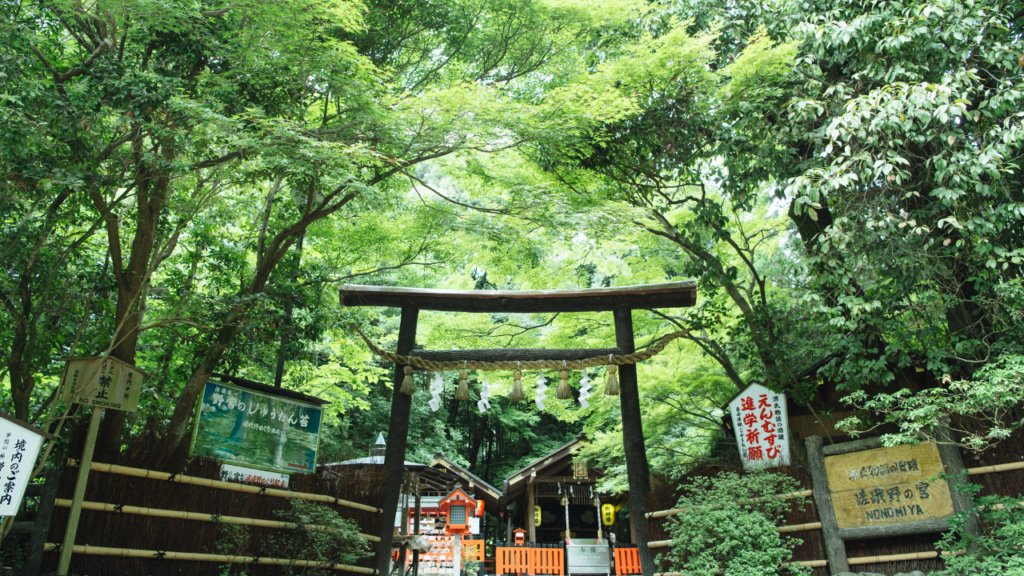
Worth knowing: Yamabudo (山ぶどう) — Japan’s ancient wild grape — isn’t just a historical curiosity. It’s still being used by adventurous producers in north-east Japan today. Naturally adapted to the Japanese climate over thousands of years, it might just be one of the most exciting things happening in Japanese wine right now. Watch this space.
That cultural weight grapes carried from the very beginning matters more than it might seem. It means that when Japan eventually started making wine, it wasn’t simply importing a European tradition wholesale. It was grafting something new onto roots that were already deep. And that’s a very different thing.
One Monk, One Vine, and the Silk Road
A Valley That Would Change Everything
Fast forward to around 1000 AD, and we arrive in Katsunuma — a valley in Yamanashi prefecture, ringed by mountains, that still produces some of Japan’s most celebrated wines today.
A Buddhist monk named Gyoki came across a wild grapevine growing in the area. He was struck by it — moved enough to carefully dig it up and replant it in a garden. A few years later, that vine was flourishing, producing beautiful clusters of fruit. Gyoki was so grateful that he carved a wooden statue of the deity Yakushi Nyorai holding a bunch of grapes as an offering. That statue is said to still exist today at Daizenji Tahozan Temple in Katsunuma.
One monk. One vine. One decision to pay attention to something growing at the side of the road.
It’s a small moment. But it’s considered the origin point of grape cultivation in Japan. And I find that rather wonderful.
Now — here’s where it gets really interesting. How did a European wine grape end up in Japan in the first place?
The Grape That Travelled the World
Because that’s exactly what Kōshū is. DNA analysis has revealed that Kōshū — the grape variety that would eventually become the soul of Japanese wine — is not native to Japan at all. It’s a Vitis vinifera variety, a European wine grape, with genetic roots pointing all the way back to the Caucasus region — the ancient birthplace of viticulture.
The most likely story? Kōshū travelled to Japan along the Silk Road. Carried by Buddhist monks and merchants moving between Central Asia, China, and Japan — probably as dried fruit or seeds — the grape made a journey of thousands of miles over hundreds of years, slowly adapting as it went.
By the time it arrived in Japan, it had already become something entirely its own.
Think about that for a second. The grape that defines Japanese wine today is, in a very literal sense, a child of the Silk Road. A traveller that arrived in a new land and quietly made it home. And now, over a thousand years later, it’s growing in the same valley in Yamanashi where that monk first planted his vine.
Once grape cultivation took hold in Katsunuma, it spread. Grapes became woven into the rhythms of life in Yamanashi — eaten fresh, offered in ceremonies, cultivated across the seasons. Different varieties found their footing in different parts of the region.
But no one was making wine yet. That would take a few more centuries — and a very unexpected arrival from the other side of the world.
The Portuguese Arrive (and Bring Wine to the Party)
It’s 1549. A Portuguese ship arrives on Japanese shores carrying, among other things, a Jesuit missionary named Francis Xavier — co-founder of the Jesuit order, and a man on a mission in the most literal sense.
The Portuguese came with two goals: to spread Christianity, and to establish trade. They brought cloth, firearms, and ideas. And they brought wine — specifically for use in Christian religious ceremonies, where it was (and still is) an essential element.
For the first time, the Japanese encountered wine as a deliberately made, culturally loaded foreign drink. The reaction, as you might imagine, was complicated. Some people were curious. Others were deeply suspicious — of the wine, of the religion attached to it, of the whole package.
Those tensions eventually reached a breaking point. In 1641, the Tokugawa shogunate made a decision that would shape Japan for the next two centuries: the country closed itself off from the outside world almost entirely. Foreign trade was restricted to a tiny Dutch trading post on a small island in Nagasaki Bay. Christianity was banned outright.
And European wine? It all but vanished from Japan.
The door had shut. And it would stay shut for a very long time.
The Edo Period: Japan Closes the Door
The Edo period (1603–1868) is fascinating precisely because of what Japan did with its isolation.
Cut off from foreign influence, Japanese culture didn’t stagnate — it turned inward and absolutely flourished. This is the era that gave us kabuki theatre and haiku poetry. The era of extraordinary woodblock prints (ukiyo-e), of refined aesthetics, of a culture becoming ever more precisely and beautifully itself.
Sake, shochu, and mirin were the drinks of Japanese life. Grapes continued to be grown in Yamanashi — but for eating, not fermenting. Wine was simply not part of the picture.
And yet curiosity about the outside world never entirely disappeared. A quiet intellectual tradition called Rangaku — “Dutch learning” — kept a thin thread of connection to Western knowledge alive through the books and ideas that trickled in through Nagasaki. Scientists, physicians, and scholars kept paying attention to what was happening beyond Japan’s borders.
When the door finally opened again, Japan wouldn’t be starting from zero. But it had a lot of ground to cover, and it knew it.
The Meiji Era: The Emperor Cuts His Topknot and Everything Changes
In 1853, American Commodore Matthew Perry sailed into Edo Bay with a fleet of black steamships and made Japan an offer it couldn’t refuse: open up to foreign trade, or face the consequences.
The shogunate, outgunned and outmanoeuvred, agreed. Within fifteen years, the Tokugawa government had collapsed, and in 1868, power was restored to the Emperor in what became known as the Meiji Restoration.
A Nation Reinventing Itself
The Meiji government had one driving mission: modernise Japan at extraordinary speed, before Western powers could take advantage of any perceived weakness. The military, the legal system, industry, agriculture, education, culture — everything was on the table.
Westernisation became something close to a national obsession. And no moment captured this more vividly than a single act by Emperor Meiji himself.
He cut his topknot.
Now — if you’re not familiar with why this was such a big deal, let me explain. The topknot (chonmage) had been a defining symbol of Japanese male identity for centuries, particularly associated with the samurai class. When the Emperor publicly cut his, it sent a message that reverberated across the entire country: the old ways are giving way to the new. Western clothing, Western food, Western customs — these are not just permitted. They are encouraged.
Wine was absolutely part of this transformation.
The Meiji government began promoting wine production as part of its modernisation agenda — a commercial opportunity, yes, but also a cultural signal. In 1870, the first serious attempts at commercial winemaking in Japan were recorded. Then, in 1877, came the moment that really mattered: the Yamanashi prefectural government sent two young men — Ryuken Tsuchiya and Masanari Takano — to France to learn how to make wine.
Japan’s First Winery
They came back with knowledge, techniques, and ambition. In 1879, they co-founded what would become Mercian — Japan’s first commercial winery — in Katsunuma.
The name itself is thought to be a nod to the French word merci — thank you. A Japanese winery, named in gratitude to France, built in a valley where a Buddhist monk had planted a vine nine centuries earlier. Japanese wine has always been good at layering its stories.
Early Struggles
But it wasn’t easy. Japan’s climate — humid summers, heavy rainfall, persistent disease pressure — made growing European Vitis vinifera varieties genuinely difficult. Mould, rot, and inconsistent harvests plagued early producers. Farmers, quite reasonably, preferred grape varieties they could reliably sell as table fruit.
There was also a structural problem that had nothing to do with climate. Japan’s Agricultural Land Law — originally designed to protect small farmers after the war — made it extremely difficult for wineries to own or lease farmland directly. This meant winemakers were dependent on buying grapes from independent farmers, who quite reasonably preferred to grow table grape varieties they could sell reliably at market. Wine grapes meant lower yields and higher risk. The incentives were pointing in the wrong direction, and fixing that would take decades of quiet legislative reform.
Early Japanese winemakers had to get inventive. Many turned to hybrid varieties — crosses between European wine grapes and hardier native Japanese species — that could withstand the climate. It wasn’t the most elegant solution. But it kept the dream alive.
Sweet Beginnings: Japan’s First Wines Were Not What You’d Expect
Let’s be honest about what those early Japanese wines actually tasted like.
Sweet. Very sweet.
And before you raise an eyebrow — this wasn’t incompetence. It was smart adaptation. Japanese consumers in the Meiji and Taisho eras had no cultural reference point for dry European wine. Their palates had been shaped by sake, by mirin, by the delicate, umami-rich textures of Japanese cuisine. A bone-dry Bordeaux would have tasted harsh and confusing to most people.
So winemakers gave people something they could actually enjoy. Sweet, gentle wines that met consumers where they were. Some producers added honey, sugar, or medicinal herbs — blurring the line between wine, liqueur, and health tonic.
Which brings us to one of my favourite footnotes in this whole story: wine was, for a period, marketed in Japan as a health product. Western medicine was arriving in Japan alongside Western culture, and somehow the two got bundled together in the public imagination. Drink wine, be modern, be well.
It’s not exactly the philosophy of a grand cru Burgundy. But it got wine onto Japanese tables. And sometimes that’s enough to start something.
Post-War Japan: From Survival to Curiosity
The Second World War left Japan in ruins. The rebuilding years were about survival, not wine lists.
The industry contracted sharply. Wineries struggled. Wine was a luxury that most people simply couldn’t access or afford, and nobody was particularly thinking about it.
But as Japan’s post-war economic recovery accelerated through the 1950s, something interesting started happening. Japan was opening up — to American culture, to Western food, to new ways of eating and drinking. Beer and whisky became enormously popular. And slowly, carefully, wine began to creep back in.
The 1960s changed the pace of everything.
As steaks and pasta and cheese started appearing on Japanese menus, wine found a natural home alongside them. Japanese consumers discovered — as consumers always eventually do — that a glass of red wine with a good steak is a genuinely excellent idea.
Then came 1964. The Tokyo Olympics. Japan presenting itself to the world, and the world arriving in Japan. International visitors brought their tastes with them. Japanese hosts became more curious than ever about global food and drink culture. Wine consumption ticked upward.
Six years later, the 1970 Osaka World Expo reinforced everything. Millions of visitors from around the world gathered in Japan, and wine was flowing freely at international pavilions. Japanese visitors experienced French, Italian, and German wines in a concentrated, immersive way that planted real seeds of curiosity.
Something was building. The stage was being set.
The 1990s: The Decade That Changed Everything
Through the 1970s and 1980s, Japanese wine production grew — but quality stayed inconsistent, and there was a deeply uncomfortable truth at the heart of the industry: many Japanese wineries were importing bulk wine or grape concentrate from overseas, then bottling it as “Japanese wine.”
Consumers had no reliable way of knowing what they were actually drinking. It wasn’t sustainable, and the industry knew it.
Change came from two directions at once.
The first was an unlikely cultural phenomenon: Beaujolais Nouveau. Every year on the third Thursday of November, Japan went slightly mad for the arrival of this young French wine. The enthusiasm was extraordinary — Japan became one of the world’s biggest markets for it. But what mattered even more than the sales figures was what it created: a generation of Japanese consumers who were genuinely interested in wine. Who followed vintages, paid attention to regions, and actually wanted to understand what was in their glass.
Wine was no longer niche. It was mainstream.
The second force was a single human being: Shinya Tasaki.
A Sommelier Changes the Conversation
In 1995, Tasaki won the title of Best Sommelier in the World at the international sommelier competition — the first Asian person ever to do so. In Japan, the reaction was seismic. Here was a Japanese person, competing on the global stage of wine, and winning.
The story captured the national imagination in a way that’s hard to overstate. It inspired a generation of young Japanese people to pursue careers in wine. It even seeped into popular culture — manga began featuring wine as a subject, bringing wine stories to readers who’d never thought about a grape variety in their lives. The most famous of these, Kami no Shizuku (The Drops of God), became a cultural phenomenon across Asia, dramatically boosting interest in wine across the whole continent.
But underneath all the excitement, something more fundamental was stirring in the industry itself. Japanese winemakers were asking harder, more honest questions. Why were they still importing bulk wine and dressing it up in Japanese clothing? Why weren’t they focusing on what Japan could genuinely, authentically do well?
The push for real quality — and real identity — had begun.
Japanese Wine Steps Onto the World Stage
The early 2000s brought a new ambition: Japanese wine wasn’t just going to improve. It was going to introduce itself to the world.
Kōshū was leading the charge.
Kōshū Goes to London
In 2003, Grace Winery submitted their Kōshū to Jancis Robinson’s tasting panel in London. The response was serious, engaged, and positive — and people in the European wine world sat up and paid attention.
It made sense, once you tasted it. Kōshū isn’t trying to be Chardonnay. It isn’t trying to be anything other than itself — pale golden in colour, delicate aromas of citrus blossom and white peach, a characteristic gentle bitterness and refreshing acidity that makes it one of the most food-friendly white wines you’ll ever encounter. There is genuinely nothing else quite like it.
In 2009, a group of Kōshū producers formalised their international ambitions by founding KOJ — Kōshū of Japan — a collective dedicated to promoting Kōshū wine in Europe and across Asia. Japanese producers, often seen as private and reserved, were choosing to show up together and present a united front to the world. It was a smart, confident move.
Then came the moment that stopped the international wine world mid-conversation.
International Recognition Builds
In 2013, NOMA — the restaurant in Copenhagen that had been named World’s Best Restaurant multiple times over — added Japanese wine to its wine list. If you know anything about NOMA’s approach to sourcing and curation, you’ll understand why this mattered so much. NOMA doesn’t put things on its list for novelty. It puts things on its list because they’re extraordinary.
Japanese wine had just been told, by one of the most respected voices in global gastronomy, that it belonged.
More recently, in 2023 and again in 2025, the Japanese Wine Salon was held in Beaune — the very heart of Burgundy. Japanese producers, pouring their wines in one of the most hallowed wine towns on earth. That’s not a tourist visit. That’s a statement of intent.
The 21st Century: Japan Finds Its Own Wine Voice
Something has crystallised over the past two decades that goes beyond awards and international recognition.
Japan has found its own wine philosophy.
The most exciting winemakers working in Japan today are increasingly drawn to minimal intervention — stepping back, trusting their terroir, letting the vintage speak. It’s an approach that fits naturally with deeply rooted Japanese values: wabi-sabi, the beauty found in imperfection and impermanence; shokunin, the spirit of the devoted craftsperson who perfects their work quietly, without fanfare.
The Japan Winery Award has helped shine light on producers who might otherwise have remained invisible outside Japan — building a framework for recognising quality, rewarding ambition, and giving domestic audiences something to be genuinely proud of.
And the geography of Japanese wine has expanded dramatically.
Hokkaido in the far north is making compelling Pinot Noir, Zweigelt, and Kerner in cool-climate conditions that remind some tasters of Alsace or northern Germany. Nagano is developing a reputation for structured, elegant Merlot and Chardonnay. Yamagata is blending tradition with experimentation — Muscat Bailey A alongside vinifera varieties. Even Osaka has its own GI now, which feels wonderfully unexpected for a prefecture most people associate with street food and neon lights.
And then there’s Yamabudo — the ancient wild grape of the Jomon people, the one that was being foraged five thousand years ago. A small but growing number of adventurous producers in north-east Japan are taking it seriously, seeing its extraordinary resilience and distinctive flavour profile not as a curiosity but as an asset. Something that is, in the most literal sense, native to Japan.
Japanese wine is no longer one thing. It never really was. But now it has the confidence to show that in full.
GIs and Labels: Making Sense of Japanese Wine Today
For most of its history, Japanese wine had no formal classification system. There were no rules about where grapes had to come from. No requirements about what could actually call itself “Japanese wine.” A bottle could be made from imported bulk wine or concentrate and still sit proudly on a shelf with a Japanese label.
That changed in 2015, when Japan revised its wine labelling regulations. The new rule was simple and non-negotiable: “Japan Wine” must be made from 100% Japanese-grown grapes.
It sounds obvious. But it was transformative.
It redrew the entire landscape of the industry overnight, giving consumers real transparency and forcing producers to be honest about what they were making and where their fruit was coming from.
The Geographical Indication system built on that foundation, certifying specific wine regions and setting standards for producers within them. Here’s where things stand today:
| GI Region | Year Established |
|---|---|
| Yamanashi | 2013 |
| Hokkaido | 2018 |
| Nagano | 2021 |
| Yamagata | 2021 |
| Osaka | 2021 |
Yamanashi was the pioneer — the first Japanese wine region to receive GI status, back in 2013, before the national labelling reform even happened. Today, around 300 different Yamanashi wines carry this GI label. That’s not a small number. That’s a region that has taken its identity seriously and built something real around it.
Each GI tells a different story. Yamanashi is Kōshū country — the spiritual home, the origin point, the place where that monk planted his vine a thousand years ago. Hokkaido is cool, ambitious, and still revealing what it’s capable of. Nagano brings structure and elegance. Yamagata is a fascinating blend of the traditional and the experimental. And Osaka, well — Osaka always does things its own way.
More GIs are coming. The map is still being drawn. And honestly? That might be the most exciting part.
Why Any of This Matters — Especially Now
I want to end with something that feels important to say plainly.
More Than a Trend
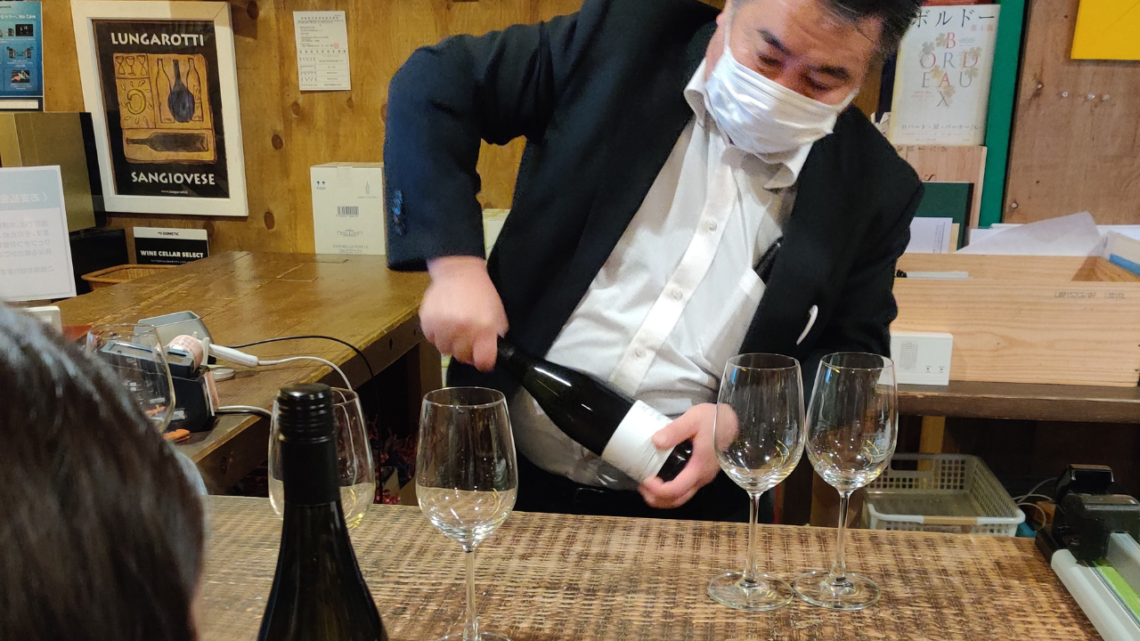
When I first discovered Japanese wine — sitting in a tiny wine bar, communicating through a combination of Google Translate and enthusiastic pointing while the owner poured me glass after glass with quiet, focused joy — I didn’t just taste something new. I realised I’d been carrying an incomplete map of the wine world.
Japanese wine history is not a footnote. It’s a full story — ancient, complex, interrupted by centuries of isolation and reshaped by war, carried along the Silk Road, built by monks and farmers and young men sent to France with a notebook and a dream. And now, after all of that, it’s arriving on the world stage with something genuinely, unmistakably its own to say.
A Genuinely Unique Identity
The grapes are different. The climate is challenging in ways that force creativity. The philosophy — quiet, precise, deeply attentive — reflects something that feels very Japanese to me: the idea that excellence doesn’t need to announce itself.
And yet most wine professionals in Europe still haven’t tasted a single Japanese wine.
That’s not a criticism. It’s just a blind spot. One that — if you’re reading this — you’re already starting to close.
The journey from a Buddhist monk noticing a vine in Katsunuma, to an Emperor cutting his topknot as a symbol of a nation reinventing itself, to Japanese winemakers standing in Burgundy pouring their wines to the world — that’s not a short story. It’s not a simple one.
But it is one of the best ones in wine right now.
Curious to keep exploring? You’re in the right place. Browse the blog for tasting notes, grape profiles, and regional deep-dives — or drop your questions and thoughts in the comments below. I’d love to hear whether you’ve already crossed paths with Japanese wine, and what you made of it — or what’s got you curious enough to want to try it.
Where to next?
Koshu and Beyond: Japan’s Iconic Grape Varieties
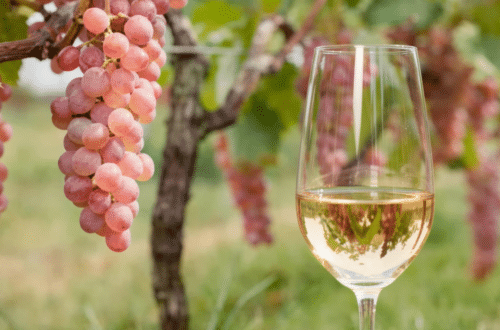
Curious about what’s actually growing in those ancient Japanese vineyards? Spoiler: it’s not just Pinot Noir and Chardonnay! From the beautiful, pink-skinned Kōshū to fascinating local hybrids like Muscat Bailey A, Japan has a flavor profile completely its own.
Discover Japan’s Wine Regions: A Journey Across Yamanashi, Hokkaido, and Beyond
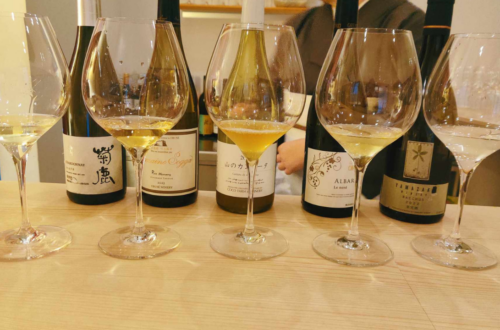
So, where exactly are all these vineyards hiding? From the freezing, snowy slopes of Hokkaido to the historic, sun-dappled valleys of Yamanashi, Japan’s wine map is wildly diverse and absolutely beautiful.



2 Comments
Véronique
Article très intéressant !! Bravo !
Diane
Merci beaucoup!