What wine region is Vienna in?
9 minutes read
You might think this is a trick question.
Because… Vienna is a capital city. Capitals drink wine. They don’t usually make it.
But here’s the answer (and it’s a good one): Vienna is its own wine region.
So when you ask “What wine region is Vienna in?” the honest reply is: Vienna is in Vienna.
And not in a “cute demo vineyard” way.
Vienna has real, working vineyards within its city limits, with a long history, a proper economic role, and a DAC of its own.
According to Fritz Weininger, one of Vienna’s key winemakers:
“In Vienna, we don’t just drink wine, we devour it!”
And honestly… that energy makes sense when you look at how deep wine runs here.
Vienna’s vineyard roots go back to the 12th century, maybe earlier — when everyone from the Celts to the Romans had a go at winemaking.
And here’s my favourite historical plot twist: in the Middle Ages, Vienna’s wine was apparently so tart that Emperor Frederick III banned its consumption.
Not exactly a glowing TripAdvisor review.
But that “sour potion” still lives on — literally — in the walls of Saint Stephen’s Cathedral, where it was used as mortar.
So yes: Vienna once built its cathedral with wine. That’s commitment.
Fast forward to the 19th century: Vienna gets hit by the vineyard villain phylloxera… and fights back by planting American vines.
Since then? Vienna has been flourishing with genuinely delicious wines.
What wine region is Vienna in? Vienna is its own wine region. With 637 hectares of vineyards inside the city limits, Vienna produces high-quality wines shaped by limestone-rich soils, Danube terraces, and centuries of history. Best known for Wiener Gemischter Satz DAC, Vienna also excels with Grüner Veltliner, Riesling, Chardonnay, and Zweigelt. This post explains how Vienna’s vineyards work, why the wines taste the way they do, and which producers to know.
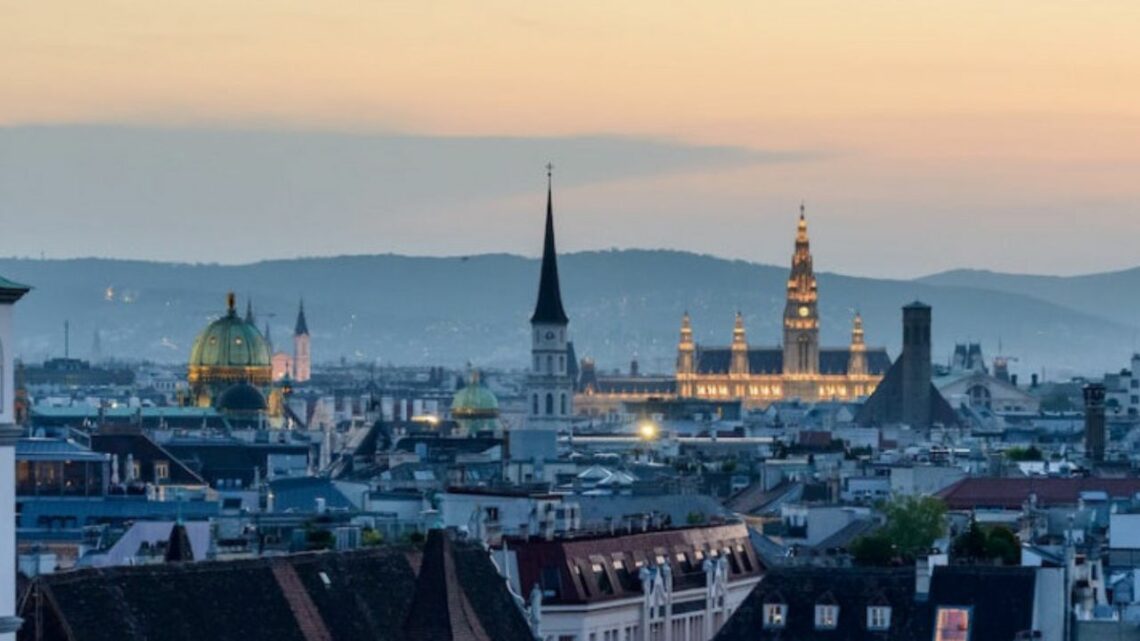
Vienna overall presentation
Vineyards in Vienna?
Usually, when a capital city claims vineyards, it’s a small “look-but-don’t-touch” plot for tourists.
But in Vienna, it’s different.
Here, 637 hectares of vineyards are a real economic factor. They help preserve the city’s urban green belt, and they produce wines that are genuinely high quality.
Fun historical detail: in the late Middle Ages, Vienna’s city walls still contained vineyards — even in what is now the first district. Today, the vineyards mostly sit on the outskirts of the capital… but they’re still very much Vienna.
And since its rediscovery, the excellent Nussberg vineyard has (almost magically) attracted innovative young winemakers from all over the “wine city” — including people who didn’t originally come from wine backgrounds.
Then you have the Wiener Heuriger culture — and it’s still very alive.
You’ve got:
- the year-round, open “noble” farm inns with lavish buffets
- and thez the hidden Buschenschank taverns nestled in the vineyards, open only a few weeks per year
Both pull in locals and visitors. And both are basically the most Viennese way to drink wine: simple, social, and slightly addictive.
And of course… there’s also my favourite place in Vienna.
But shhh. Secret address. Scroll to the end.
One detail that matters if you want “authentic” Heurigers: they’re expected to serve only cold foods, designed to support the wine drinking experience.
Also: the word Heurige has a double meaning in Austria. It refers to:
- the newest wine on the list
- and wines meant for immediate drinking (no waiting around)
ANECDOTE : where Heuriger comes from
Heuriger were created in the 18th century, by Marie-Thérèse and François-Joseph II, who wanted to modernize viticulture.
More specifically, on August 17, 1784, the Josephinische Zirkularverordnung authorizes growers:
“to sell or serve at any time of the year the foods, wines and fruit wines produced by him, no matter how, at what time and at what price“.
Boom. The Heuriger (or Buschenschank) is born.e as a public, social affair in Vienna.
Terroir of Vienna: soil, climate, and why it matters
Now terroir — but I’m going to keep it tied to what you actually care about: what you’ll taste.
Vienna’s vineyards sit on slopes on both sides of the Danube.

On one side, the Nussberg and Kahlenberg hills give favourable conditions. On the other, Bisamberg offers well-drained sand and loam soils with high limestone content.
That “two-sides-of-the-Danube” detail matters because it’s one of the reasons Vienna wines aren’t one-note.
Now, yes, the geology here gets detailed — but stick with me, because the takeaway is worth it.
The vineyards of Bisamberg, Döbling, Dornbach, and Ottakring extend over:
- hard rocks of Penninic flysch and embedded coloured marls,
- and neighbouring marine sediments of the Neogene Vienna Basin.
Flysch consists of limestone tuff or quartz-rich layers interspersed with marl and clay.
Neighbouring basin sediments can locally include hard limestone rocks (Leitha limestone), but mainly loose rocks — often coarse, sandy and gravelly, sometimes marly — sedimented about 16 to 12 million years ago.
The subsoil of vineyards in Mauer and Kalksburg also comes from the Vienna Basin sediments. Under the influence of rivers and gravel flows from the Wienerwald forest, these formed sandy and gravelly conglomerates or consolidated breccias.
Then you have the vineyards of Stammersdorf, Hungerberg, and Oberlaa spreading across terraces of ancient Danube beds:
- quartz-rich gravel covered with a clay layer
- with a predominantly gravelly and sandy (or fine-grained) subsoil called “Tegel.”
And finally, wind matters too: its presence helps dry wet grapes quickly, supporting grape health and wine quality.
The takeaway (aka why you just read all that)
All this mix of limestone, gravel, marl, sand, clay, and those Danube terraces is a big reason Vienna wines often feel:
- fresh and lifted rather than heavy
- structured but not chunky
- and sometimes more mineral / more precise, depending on the site
So no, it’s not a geology lesson for wine nerds. It’s why one Vienna white can feel crisp and tense… while another feels rounder and fuller — even inside the same city.
Grape varieties in Vienna
Out of the 637 hectares of vineyards in Vienna, 500 hectares are dedicated to white varieties.
Grüner Veltliner leads with 178 hectares, followed by Weissburgunder, Chardonnay, Riesling, and Zweigelt.
Now the fun part is where things grow best.
Locations near Mount Bisamberg, north of the Danube — cultivated by winemakers from Strebersdorf, Stammersdorf, and Jedlersdorf — are ideal for Pinot varieties.
From Ottakring to Hernals and up to Pötzleinsdorf, especially in the 19th district with municipalities like Heiligenstadt, Nussdorf, Grinzing, Sievering, and Neustift am Walde, Riesling, Chardonnay, and Pinot Blanc dominate — planted on varying limestone-rich soils.
South of Vienna, in Rodaun, Mauer, and Oberlaa, soils include rendzinas, brown soils, and black steppe soils — perfect for full-bodied white wines and rich red blends.
And across the city, winemakers favour the traditional Gemischter Satz — vineyards planted with different white varieties, harvested and vinified together.
Wiener Gemischer Satz DAC
Wiener Gemischter Satz DAC has existed since the 2013 vintage, and it’s one of the most distinctive — and historically grounded — DACs in Austria.
Gemischter Satz comes from a time when growers were cautious about planting a single grape variety. If one grape failed, the whole harvest was at risk. So instead, they planted a mix of varieties in the same vineyard. This traditional field blend is still made the same way today: all the grapes are grown together, harvested together, and vinified together, creating natural balance and complexity without overthinking it.
In practice, that means a mix of slightly underripe grapes, perfectly ripe grapes, and slightly overripe grapes — which is exactly where the harmony comes from.
To be labelled Wiener Gemischter Satz DAC, the wine must be made from at least three quality white grape varieties grown within Vienna itself. No single grape variety is allowed to dominate: the largest share cannot exceed 50%, and the third-largest component must make up at least 10% of the blend.
The DAC offers two variants.
The first is “sans cru”, which carries no further geographical indication beyond Vienna. These wines can be released from December 1st of the harvest year, must correspond to the “sec” (dry) designation, and have a maximum alcohol level of 12.5%. Their style is deliberately straightforward, with no noticeable wood influence, focusing on freshness and drinkability.
The second variant is “avec cru”, which includes a more precise geographical indication (a specific cru). These wines are released later, from March 1st of the year following the harvest, and must reach a minimum alcohol level of 12.5%. Unlike the sans cru version, the avec cru wines are not required to be labelled “sec”, allowing a bit more freedom in terms of residual sugar and style. There are also no specific taste-profile rules here — the idea is discovery, letting each vineyard express itself in its own way.
What is Sturm?
Gemischter Satz also plays a broader cultural role in Vienna. In early autumn, you’ll often hear people talk about Sturm — a partially fermented grape must that still contains residual sugar. It’s not a DAC wine, but it’s part of the same local tradition, marking the start of the new vintage and reminding you just how closely wine is woven into daily life here.
If you want a wine that’s easy to enjoy but not boring, Wiener Gemischter Satz is perfect — sans cru for fresh, everyday drinking, avec cru when you want a more expressive bottle that still feels relaxed and unpretentious..
Wineries in Vienna
Now, to the wineries!
Christ Winery
Christ is located on the Bisamberg and focuses on white wines (about 70% of production).
They favour natural yeasts for fermentation. The red wines are unfiltered.
Their signature wine, Wiener Gemischter Satz, comes from an old vineyard planted with Grüner Veltliner, Riesling, and Welschriesling.
Their Grüner Veltliner are great, and their “Vollmondwein” (Weissburgunder grown on a limestone plateau) is intriguing.
For reds, their “Mephisto” is mostly old vine Zweigelt, with additions of Merlot and Cabernet Sauvignon.
Hajszan Neumann
Now owned by Fritz Wieninger, Hajszan Neumann offers a range of natural wines.
Their restaurant Amador is a Michelin starred restaurant — and yes, it’s as good as you’d hope.
Their Wiener Gemischter Satz is superb, and so are their Grüner Veltliner and Riesling from Steinberg.
Mayer am Pfarrplatz
Located near Beethoven’s house, this is one of Vienna’s most famous Heurigens.
It was run by the family until 2007, when it was sold to Hans Schmid.
They make top-level Riesling from Nussberg and Preussen, plus a special selection called “Weisser Marmor” from Nussberg.
Weininger
Led by Fritz Weininger, this estate played a major role in transforming Vienna’s wine industry.
Vineyards are split between Bisamberg and Nussberg, and their best Grüner Veltliner comes from Herrenholz, Rosengartl, and Preussen.
They revived the Gemischter Satz style. Their Grand Select wines can be slightly oaky for Chardonnay and Pinot Noir, but honestly: you can choose any bottle with confidence — these wines age beautifully.
Zahel Winery
Founded in 1990, Zahel was one of the first in Vienna to bottle its wines.
It’s run by Alexander Zahel and his American wife. And unusually, half of their production is red wines.
Their standout is Antares, a barrique-aged blend of St. Laurent, Zweigelt, Cabernet Sauvignon, and Merlot.
Conclusion : Wine in Vienna
So — what wine region is Vienna in?
Vienna. For real.
Vienna’s vineyards aren’t tourist props. They’re a serious economic factor, they help protect the city’s green belt, and they produce high-quality wines rooted in history.
Most vineyards now sit on the outskirts of the capital, with key areas like Nussberg and Kahlenberg on one side of the Danube and Bisamberg on the other, offering well-drained soils and plenty of limestone influence.
Vienna’s main grapes include Grüner Veltliner, Weissburgunder, Chardonnay, Riesling, and Zweigelt.
And if you’re in Vienna, you should absolutely drink Gemischter Satz — Vienna’s signature field blend, and a DAC since 2013.
Wineries like Christ, Hajszan Neumann, Mayer am Pfarrplatz, Wieninger, and Zahel show the range and ambition of the city — from sharp whites to serious reds.
And yes… about that secret address.
If you want it, you’ll have to keep reading.
Where to next?
My secret adress! Want to turn your city visit into a tasting adventure? This guide to Austrian Wine Tasting in Vienna walks you through the best experiences — from classic pours to off-the-beaten-track tastings that even locals love.
Hidden Wine Cellars in Vienna — An Unforgettable Journey
If Vienna’s vineyards intrigue you, wait until you go underground — literally. Dive into Hidden Wine Cellars in Vienna, where ancient cellars, surprising stories, and unforgettable tastings make the city’s wine culture even richer.
Want to understand how Austria went from ancient vine roots to world-class wines? This History of Wine in Austria unravels the people, places, and pivotal moments that shaped the country’s wine culture — a perfect backdrop before you sip your next glass.


You May Also Like
Biodynamic Winemaking In Austria
Why the Kremstal Wine Region Deserves a Spot on Your Wine List