
Nagano Wine Region : The Future of Japanese Wine
8 minutes read
You know how when people talk about Japanese wine, they always start with Yamanashi?
Fair enough. That’s where modern Japanese wine really took off, with Koshu leading the way.
But if you want to understand where Japanese wine is going, you need to look at the Nagano wine region.
And actually, if you want the bigger picture first — how all the regions fit together — start with a full overview of wine regions in Japan. It makes everything click much faster.
Now, back to Nagano.
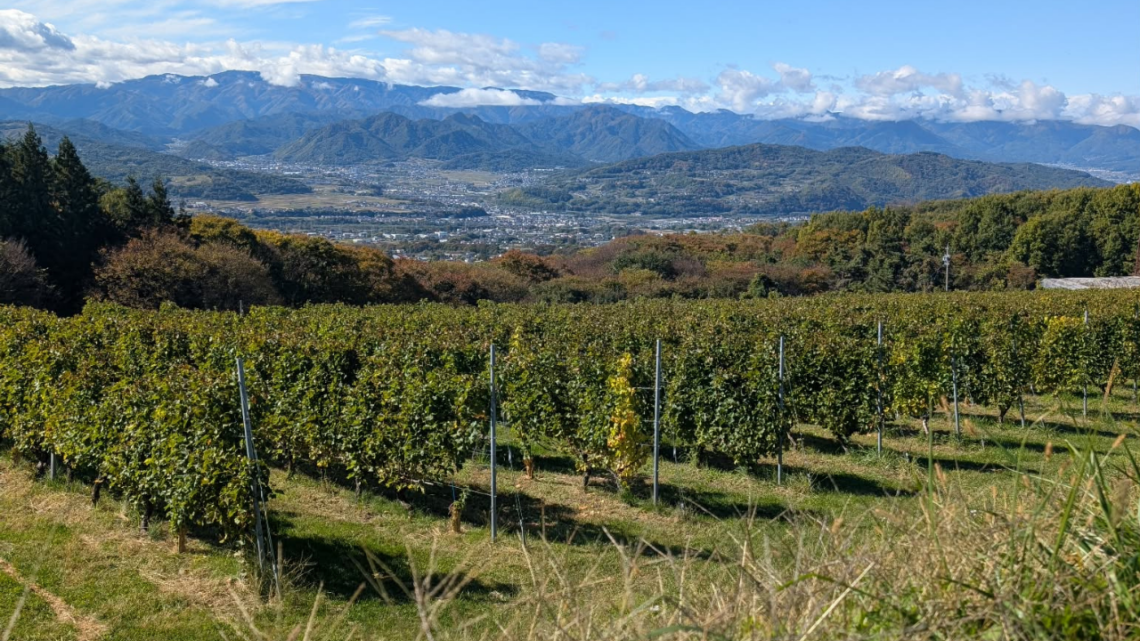
Right in the middle of Honshu, surrounded by the Japanese Alps, this is a place defined by altitude, cool air, and precision. Grapes don’t just ripen here — they find balance. Acidity stays fresh, aromas stay clean, and structure builds naturally.
And most importantly, this is where Merlot and Chardonnay truly make sense in Japan.
The Nagano wine region, located in central Japan, is one of the country’s most important wine-producing areas. Known for its high-altitude vineyards, cool climate, and diverse terroirs, Nagano is divided into five main valleys: Kikyogahara, Chikumagawa, Nihon Alps, Tenryugawa, and Yatsugatake. The region is especially recognized for its Merlot and Chardonnay, which benefit from strong day–night temperature variation and low rainfall. With its collaborative wine culture, modern viticulture, and GI Nagano certification established in 2022, Nagano is widely considered a key region shaping the future of Japanese wine.
A Mountain Region That Shapes the Wine
The Nagano wine region isn’t one continuous vineyard landscape. It’s a series of valleys carved by rivers and mountains, each with its own conditions.
What they share is a very particular climate: relatively low rainfall, plenty of sunshine, and strong temperature differences between day and night. That diurnal shift is key — it allows grapes to ripen while holding onto freshness.
Altitude plays a huge role too. Vineyards stretch from around 500 metres up to over 1,000 metres, and in recent years, growers have been planting higher and higher to adapt to warming temperatures.
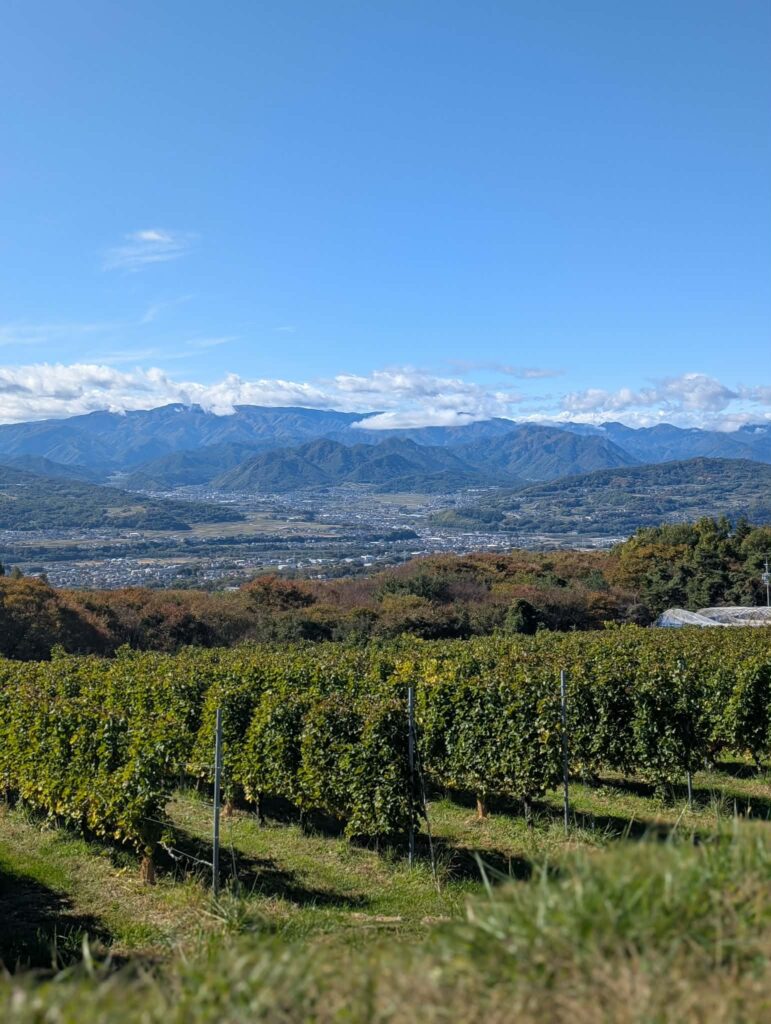
But this comes with a constraint. Winters are harsh, and late spring frost is still one of the biggest risks in the region. That alone shapes which grapes can realistically succeed here.
Five Valleys, Five Expressions of Nagano
To understand the Nagano wine region, you have to think in terms of valleys. Each one tells a slightly different story.
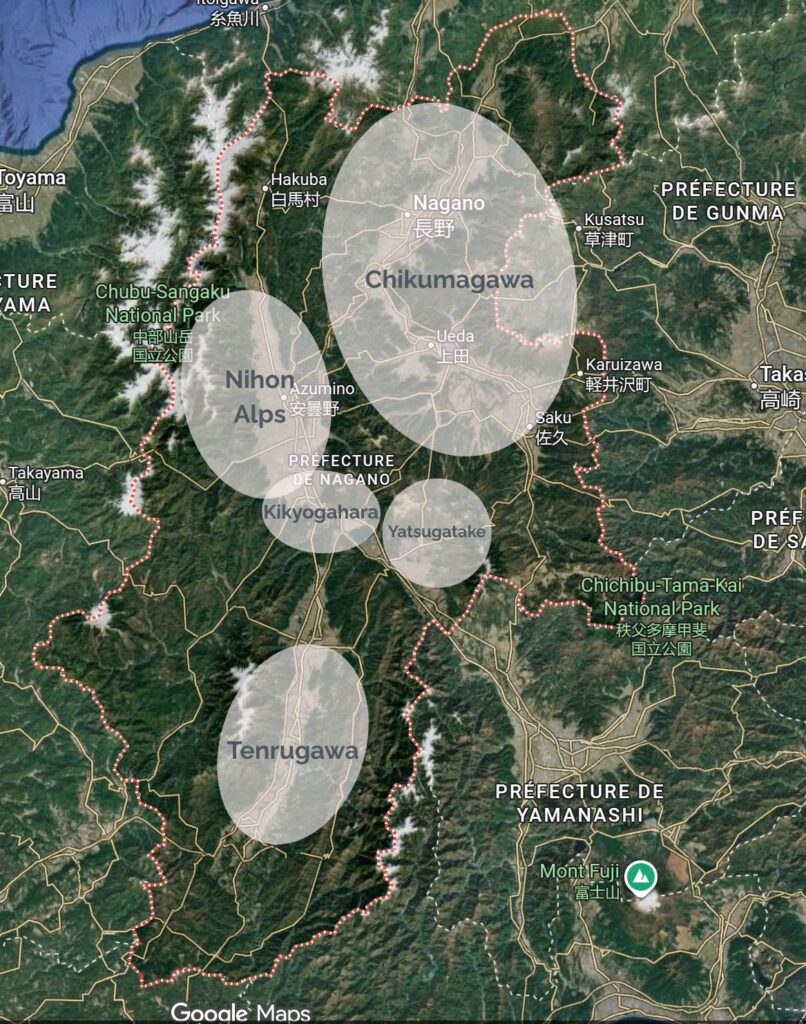
Kikyogahara, centred around Shiojiri, is where everything really began. Perched at around 700 metres, with volcanic ash soils and excellent drainage, it became the natural home for Merlot. This is where Nagano transitioned from sweet wines made with labrusca grapes to serious winemaking with European varieties. Today, Kikyogahara still defines what Japanese Merlot can be.
Further north, along the Chikuma River, Chikumagawa has become the beating heart of Chardonnay in Nagano. The vineyards here sit between 500 and 850 metres, on a mix of clay and gravel soils, and benefit from a slightly cooler, drier climate. What’s fascinating is how producers approach the wines — some vinify plots separately, even distinguishing between river banks, while others focus on single-vineyard expressions. It’s one of the most dynamic parts of the region today.
On the western side, the Nihon Alps valley brings a more alpine identity. Surrounded by dramatic mountain landscapes, it’s still evolving, but already producing wines with real precision and elegance. Chardonnay and Merlot dominate, with a clear focus on clean, refined styles.
Further south, Tenryugawa feels different again. The climate is a touch warmer, and the valley has a more experimental energy. You’ll find a mix of wine, cider, and newer producers exploring both European and hybrid grapes. It’s less defined stylistically, but that’s exactly what makes it interesting.
And then there’s Yatsugatake, one of the newest frontiers. High altitude, cool air, and a wave of small, quality-focused wineries. It’s still early days here, but the direction is clear — careful, high-altitude wines with a strong sense of place.
From Sweet Wines to Fine Wine
Nagano didn’t start out producing the kind of wines it’s known for today.
Like much of Japan, it began with Concord and Niagara — labrusca grapes used to make sweet wines with that distinctive “foxy” character. For many Japanese consumers, that flavour is familiar and nostalgic. But it doesn’t align with international expectations of fine wine.
The shift began in the second half of the 20th century, when producers started moving toward European grape varieties. It wasn’t an easy transition — disease, climate, and technique all posed challenges.
Then came a turning point.
When Kikyogahara Merlot won international recognition in the 1980s, it changed everything. It proved that Japan, and Nagano specifically, could produce wines with real global credibility.
From there, the region accelerated.
A Region Built on Collaboration
One of the most distinctive aspects of the Nagano wine region isn’t just its terroir — it’s its structure.
In places like Kikyogahara, hundreds of growers supply grapes to wineries, often through cooperative systems. Knowledge is shared, practices are discussed collectively, and even grape pricing can be determined based on sugar levels at harvest.
At the same time, the region has developed facilities that allow new winemakers to produce wine without owning a full winery from day one.
That combination — tradition on one side, accessibility on the other — is a big part of why Nagano is evolving so quickly without losing coherence.
The Grapes That Define Nagano
Nagano grows a wide range of grapes, but two stand out clearly.
Merlot, especially in Kikyogahara, is what first put the region on the map. Structured, balanced, and often produced as a single varietal, it remains a benchmark for Japanese red wine.
Chardonnay, particularly in Chikumagawa, has become just as important. In some areas, it’s now the grape that best expresses the region’s precision and terroir.
Alongside these, you’ll still find Cabernet Sauvignon — although it remains challenging in this climate — as well as smaller plantings of Syrah and Pinot Noir. Local varieties like Ryugan and crosses such as Shinano Riesling add another layer to the region’s identity.
And importantly, Concord and Niagara haven’t disappeared. They’re still part of the landscape, both culturally and commercially.
Adapting Viticulture to Japan
If there’s one thing Nagano shows clearly, it’s that growing grapes in Japan means adapting.
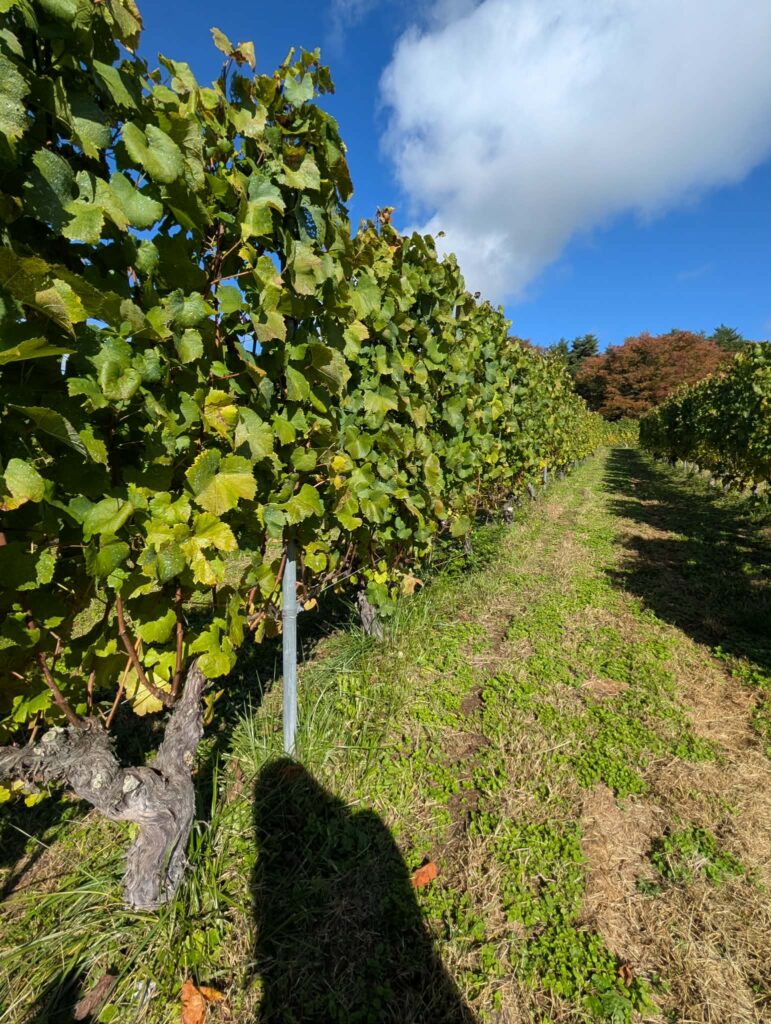
Traditional pergola training is still widely used, especially in older vineyards. But many producers are moving toward vertical shoot positioning (VSP), aiming for lower yields and greater concentration.
At the same time, local innovations have emerged — from rain protection systems to labour-saving training methods — all designed to deal with Japan’s specific climate challenges.
And increasingly, vineyards are moving higher up the slopes, following cooler conditions.
GI Nagano: Defining the Region
In 2022, the Nagano wine region received official GI status.
This introduced two levels — GI Nagano and GI Nagano Premium — both built on strict production standards and quality controls, including analytical and tasting evaluation.
More than a label, it’s a way of defining what Nagano stands for: wines that reflect their origin, not just their grape variety.
Why Nagano Matters
Nagano isn’t trying to imitate anywhere else.
It’s not Burgundy.
It’s not Bordeaux.
It’s a mountain region, shaped by altitude, climate, and a strong collective mindset. A place where experimentation and structure coexist.
If Yamanashi tells the story of where Japanese wine started,
the Nagano wine region shows you where it’s going.
Where to next?
The reference book on Japanese wine
If you really want to dive deeper, this book is a goldmine. It covers the history of wine in Japan, the main regions, key producers, and even wine travel routes. It’s the kind of resource that helps you understand the bigger picture — and where Nagano fits into it.
Japanese wine grape varieties explained
Koshu, Muscat Bailey A, Niagara, Chardonnay… Japanese wine doesn’t follow the same logic as European regions. Between local grapes, hybrids, and international varieties, the diversity is huge — and closely tied to climate.
This article helps you understand why Nagano focuses so much on Merlot and Chardonnay, and how they fit into the broader Japanese wine landscape.
Nagano is one of Japan’s key wine regions, alongside Yamanashi and Hokkaido — each with its own identity.
If you want to place Nagano in the bigger picture and understand how styles, climates, and grape choices differ across the country, this is the best place to start.


You May Also Like

Yamanashi Wine Region: The Ultimate Guide to Japan’s Wine Capital

What are some good Japanese wines?