
The Yamagata wine region : where food came first, and wine followed
17 minutes read
The first person to make wine in Tōhoku wasn’t a farmer, a winemaker, or even someone who particularly cared about wine. He was a young man who heard that a British English teacher wanted something to drink with his beef.
That was 1887. Yasō Sakai was in his twenties, and the beef in question was Yonezawa beef, one of Japan’s top three Wagyu, a name so tied to this region that it effectively put the town of Yonezawa on the map.
Sakai taught himself to make wine, planted vines, and released his first bottle in 1892, sweet, because he was confident that locals wouldn’t yet appreciate dry European styles. He also raised the profile of Yonezawa beef, eventually serving as mayor of Akayu from 1908 to 1924.
In Yamagata, food and wine have been inseparable from the start.
To be precise actually, wine is the newest chapter in a much older food story. Yamagata is known first and foremost as Japan’s “Fruit Kingdom” — fertile volcanic soils, abundant persimmons, cherries, pears, apples, some of the country’s best sake rice, and three of Japan’s top three Wagyu (yes, including Kobe and Matsusaka).
Today, Yamagata has 23 wineries and produces 10% of Japan’s wine grapes. It is Japan’s largest producer of Delaware, its second-largest producer of Chardonnay and Cabernet Sauvignon, and one of the fastest-growing wine regions in the country. The GI was only established in 2021. The number of wineries has more than doubled since 2013.
You’re reading about it at the right time.
SUMMARY: Located in the Tōhoku region of north-east Japan, Yamagata (“mountain form”) is Japan’s fourth-largest wine-producing region and one of its most historically rooted. Home to 23 wineries across three distinct sub-regions — the coastal Shōnai plain, the central Murayama basin, and the volcanic Okitama basin — the prefecture is best known for its Delaware grape, which it grows better than anywhere else in Japan. Two Special Wine Zones (Nanyō and Kaminoyama) were designated in 2016, and a Yamagata GI in 2021. A new generation of natural winemakers has arrived since 2013, finding common ground with family wineries now in their fourth and fifth generations.
It Started With Gold Miners and a Beef Craving
This wine story like so many in Japan, starts long before anyone thought to make wine. Bear with me on this one.
During the Edo period (1603–1865), gold miners from Yamanashi came to work the Akayu district, what is now Nanyō City, and brought Kōshū vines with them. There are records of Kōshū growing here as far back as 1727. But because the gold-mining region had a ban on crop cultivation, the vines couldn’t go in a proper vineyard. So they ended up in people’s gardens, growing around persimmon, chestnut and cedar trees. Pretty decorative don’t you think?
When the Meiji restoration lifted the ban in 1868, grapes finally moved onto the mountain slopes. Proper cultivation followed in 1873, with a government vineyard and experimental station. But the thing that really set things in motion wasn’t policy.
It was a beef craving.
In 1887, Yasō Sakai heard about a British English teacher named Charles Henry Dallas, stationed in Yamagata in the early 1870s, who wanted wine to drink with his Yonezawa beef. Sakai, in his twenties, decided to figure out how to make it.
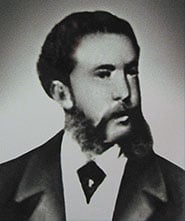
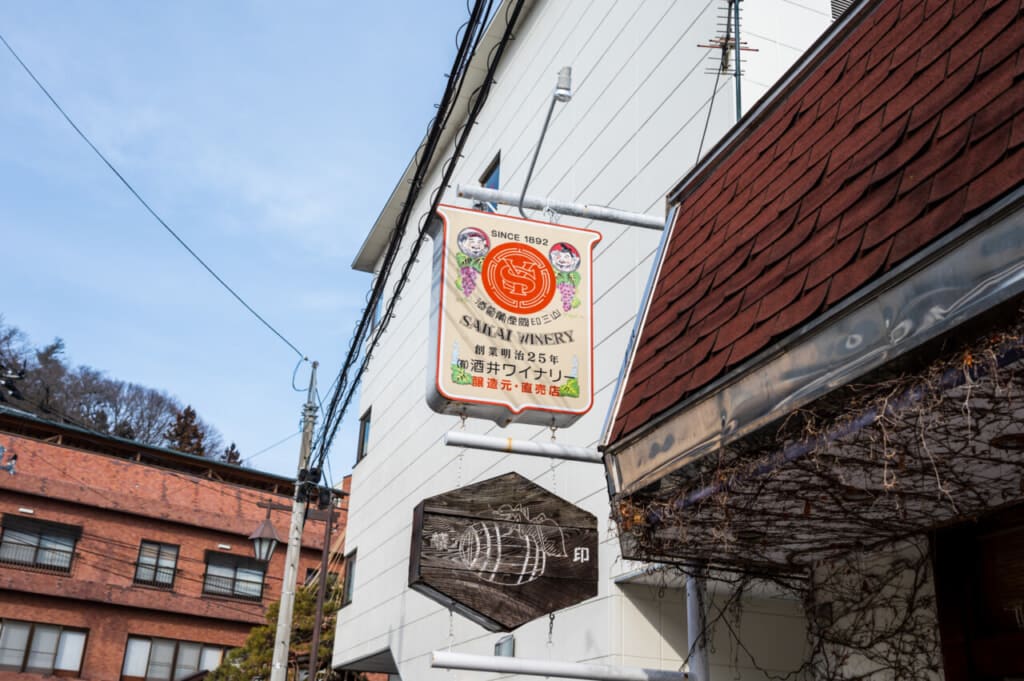
He taught himself, planted vines, and released his first wine in 1892. Sweet, because he knew full well that locals weren’t ready for dry European styles. He wasn’t wrong about that.
That pragmatism, making wine people actually want to drink, not wine the textbook says they should, has shaped Yamagata ever since.
Sakai Winery is still operating today, under his great-great-grandson. We’ll get to him later.
Phylloxera arrived in the early 1900s. Disease-resistant rootstock came from Yamanashi, and with it, Delaware, a hybrid variety originally from America. It took hold here in a way it hasn’t quite managed elsewhere.
Yamagata is now Japan’s leading Delaware region, with the Akayu district recognised as the benchmark for quality. Locally though, they don’t even call it Delaware. They call it kohime. “Little princess.” Cute!
Then came the war and with it, a strange chapter. Wineries were essentially commandeered to produce tartaric acid, used in explosives and food preservation. New ones opened specifically for this purpose: Oura Winery in 1939, Asahimachi in 1944.
After the war, the big national producers, Suntory, Mercian, came looking for grape supply. By 1950, Yamagata was Japan’s third-largest grape-growing region. By 1980, nearly 4,000 hectares of vines, over 80% of them Delaware.
When sweet wine fell out of fashion in the 1960s, the region pivoted. European varieties, such as Cabernet Sauvignon and Chardonnay, grown on VSP trellising, became the focus through the 1980s and 1990s.
Producers built information-sharing networks, got serious about quality, and Yamagata became a national leader in both. The 1984 establishment of the Yamagata Wine Manufacturers’ Association, only the second of its kind in Japan, made it official.
Then silence.
Between 1990 and 2013, not a single new winery opened. Twenty-three years.
What happened since is something else entirely: the number of wineries has more than doubled.
Two Special Wine Zones were designated in 2016, Nanyō and Kaminoyama, drawing a new generation looking for available land, volcanic soils, and a community that had already figured out how to share what it knows.
The Yamagata GI followed in 2021. And new arrivals have been coming quickly: Grape Republic (2017), Yellow Magic Winery (2019), HOCCA Winery (2021), Domaine Kelos (2022), DROP (2023), Voyage de Yuuai (2024), Agri-Coeur (2025), Zao Wine Factory (planned 2027).
The Place: Four Regions, One River
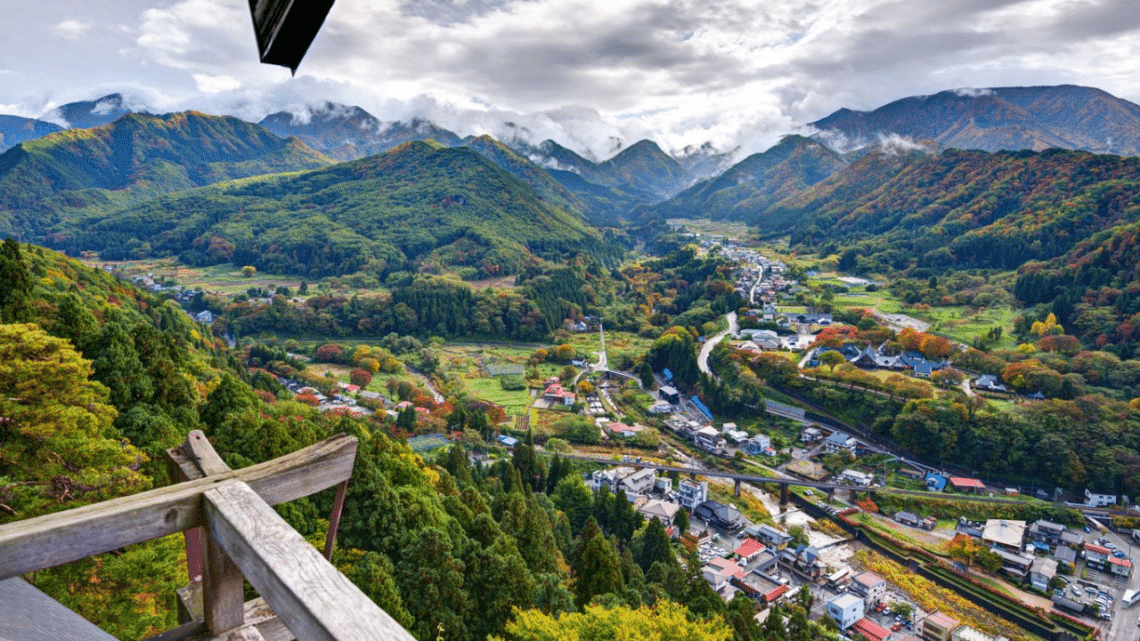
Yamagata means “mountain form.” And take a look at the landscapes, you’ll quickly understand why.
The prefecture sits on Japan’s north-west coast: Sea of Japan to the west, mountains on all three other sides — Akita to the north, Miyagi to the east, Fukushima to the south. The Mogami River runs through the middle, collecting streams from the surrounding peaks and flowing north-west toward the sea. The vineyards sit in the inland basins along its path.
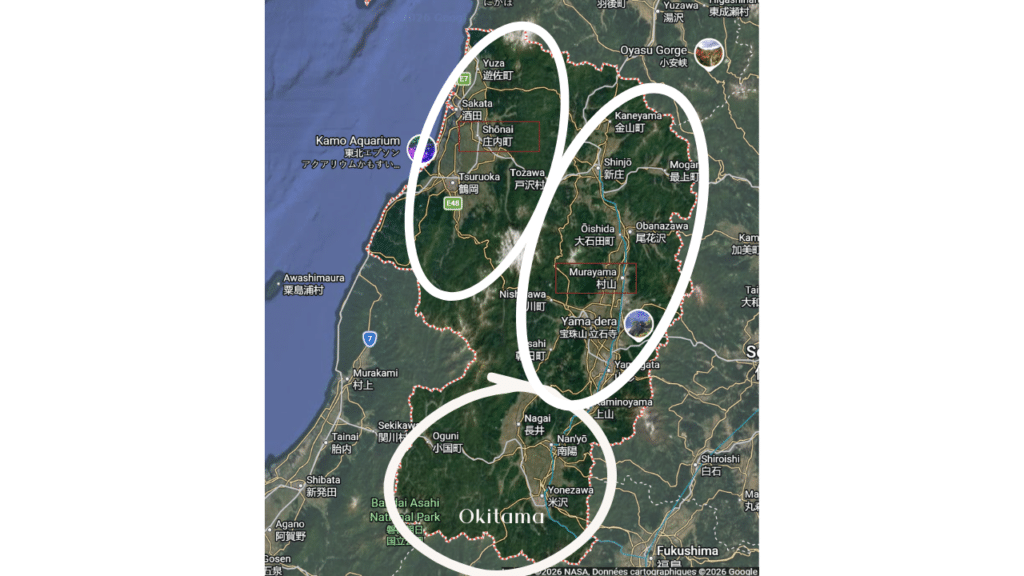
Four regions make up the prefecture. Three of them have wineries.
Shōnai, to the north-west, faces the Sea of Japan around Tsuruoka City.
This is coastal Japan at its most food-obsessed, one of the country’s leading rice regions, home to some of its best sake, and since 2019, a UNESCO Creative City of Food Culture.
Four wineries operate here, the oldest of which, Gassan Wine, has been producing since 1979. It is also the northernmost point in Japan where Kōshū is cultivated. The climate is coastal. The vines know it.
Murayama is the central basin around Yamagata City
It has warm summers, less snowfall than further south, and home to Kaminoyama, one of the two Special Wine Zones designated in 2016.
This is where most of the newer wave has landed : Bellwood Vineyard, Domaine Kelos, DROP, Woody Farm, Takeda Winery. It’s referred to as the Kaminoyama end of the Yamagata Wine Road, which feels like a sign that people are starting to pay attention.
Okitama, in the south, is where most of the history is.
The Yonezawa Basin has warm summers and heavier snowfall than Murayama and it sits on an ancient volcanic crater, which is what gave the Akayu district its mineral-rich, well-drained, rocky and gravelly soils.
This is where Kōshū vines arrived with the Edo-era gold miners, where Delaware found its best expression in Japan and where Sakai Winery opened in 1892.
Nanyō City is the hub, and Akayu is recognised as Japan’s premium Delaware-producing zone.
The wine regions of Okitama and Murayama along the Mogami River even share a name : the Mogamigawa wine region, or the Yamagata Wine Road. Makes sense when you see the map. Same well-drained clay-gravel soil, same mountain breezes keeping humidity and mildew in check, same summer temperatures below 25°C. And as harvest gets closer, the nights cool down sharply. That gap between warm days and cold nights is what keeps acidity in the grapes. Which is what keeps the wines worth drinking.
One more thing. Yamagata sits between latitudes 37.7 and 39.1 degrees north. Same band as Athens, Seville, San Francisco and Melbourne. I know. Doesn’t feel right. And honestly, it doesn’t tell you much.
What matters more : the vineyards are all below 300 metres, the mountains shape everything, rainfall, winds, the river, and the volcanic soil is what makes the ground actually interesting.
The Grapes: Delaware First, Everything Else After
Yamagata grows 1,980 tonnes of wine grapes, 10% of Japan’s total, and ships 30% of that to wineries elsewhere. Five varieties account for 75% of what’s grown: Delaware (30%), Muscat Bailey A (19%), Chardonnay (9%), Niagara (9%), and Merlot (7%).
The one that defines the region is Delaware. Yamagata grows 48% of Japan’s entire Delaware production, 599 tonnes, almost entirely on pergola training, which keeps fruit high off the ground where humidity is lower.
The funny thing is : most of the wine world has never heard of Delaware. It’s a hybrid variety, which tends to exclude it from serious wine conversations. But, take my word for it, that’s worth revisiting.
In the right hands, from the volcanic soils of Akayu, it produces wines of jasmine, pear and wild herbs with a freshness that has nothing to do with the American state it’s named after. Producers like Sakai Winery have been working with it for over a century. It is the grape this land knows best, it’s not a consolation grape.
Then there’s Muscat Bailey A, the hybrid developed by Zenbei Kawakami of Niigata, Japan’s great grape breeder, in the late 1800s. (If you’ve read the Niigata article, you’ll know who he is.)
The oldest MBA vines in Japan are thought to be at Sudo Winery and Takeda Winery in Kaminoyama, grown from material received directly from Kawakami in the 1930s.
At Asahimachi Wine, MBA accounts for around 70% of annual production which is 350,000 bottles. That’s what we call a house wine.
On the European side, Chardonnay and Cabernet Sauvignon have been Yamagata’s most dependable varieties since the 1960s, and Yamagata is Japan’s second-largest producer of both. Climate change is starting to shift things though: Cabernet Sauvignon and Viognier are thriving, while Chardonnay has started picking up more tropical notes, something producers are adapting to, not entirely by choice.
Kōshū is grown here too, at its northernmost limit in Japan.
And then there are the varieties nobody is quite sure about yet.
Albariño, Syrah and Petit Manseng are being tried across the region. Petit Manseng in particular is looking promising in Kaminoyama, naturally disease-resistant and well-suited to the local climate. Woody Farm and Agri-Coeur are among those cultivating it. Whether it becomes Yamagata’s next signature grape is an open question. But Woody Farm has made finding that answer a stated goal. Watch this space.
The Wineries
Twenty-three wineries, and more opening every year. Wine tourism here is still finding its footing, many producers are closed to the public or require advance bookings, and festivals tend to be the most reliable way to taste broadly without planning every visit weeks in advance.
But a few are absolutely worth building a trip around.
One detail before we get into it: the sacred mountain that watches over much of the region, Gassan, means “moon mountain.” Several wineries nearby have taken its name. I find that kind of thing quietly beautiful.
Sakai Winery
This winery is where the whole Yamagata story started, and 130 years later, you get Ippei Sakai, fifth generation, who is worth remembering.
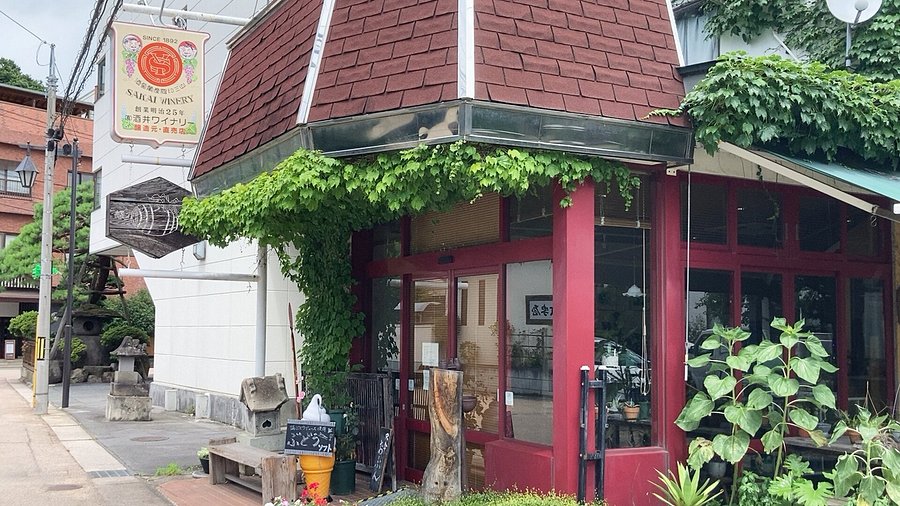
He’s moved deliberately away from European techniques, going back to 100-year-old local practices instead. He questions whether VSP (vertical shoot positioning, standard across most of the wine world) even suits Japan at all. With two metres of snow in winter and hot, humid summers, he prefers high pergolas to keep fruit off the ground. And he uses trees as trellises. Actual trees. Some of his fields look more like forests than vineyards.
One plot sits on a 30-degree slope where no machinery can operate. The mowing team? A flock of British mountain sheep.
40,000 bottles a year, across four ranges: vineyard Series (single-vineyard wines with old-school Taishō-era labels), Mazekoze (multi-vintage field blends in 730 ml bottles), Kohime (Delaware in various styles), and BIRDUP, named after toriagezaka, the steep slope where the original vines were planted: “the hill of the soaring birds.”
Open daily 13:00–16:00 (also 10:00–12:00 Sat–Sun). Tastings available.
Takeda Winery
This winery is Tōhoku’s second-oldest, founded in 1920 (and one of the first wineries I tasted!)
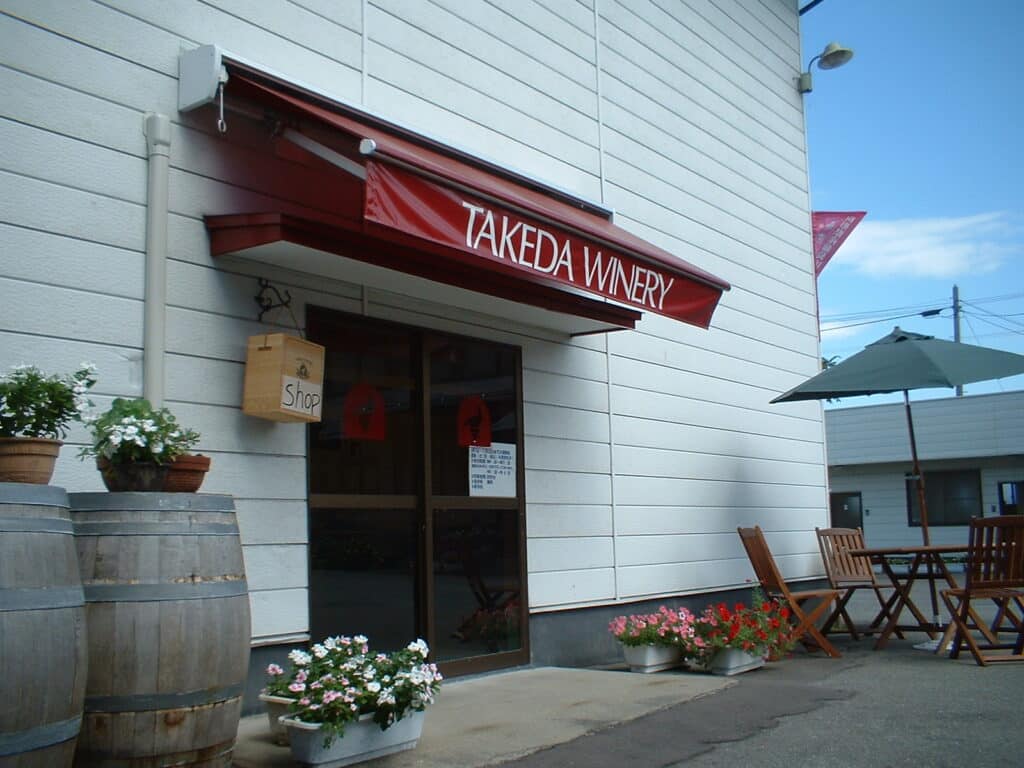
Fifth generation. Noriko Kishidaira, born Noriko Takeda, spent four years studying in Burgundy and Bordeaux before taking over in 2005. Her father initially rejected up to 20% of her harvest decisions. He changed his mind after tasting her first wines.
The shift has been significant: natural yeast for all fermentations, no ploughing, no fertilising, pesticides minimal. Their MBA vines are among the oldest in Japan, received personally from Zenbei Kawakami in the 1930s. The premium estate wines are labelled “Domaine Takeda” or “Château Takeda.” The top wine is “Cuvée Yoshiko” : zero-dosage traditional method Blanc de Blancs, named after Noriko’s mother, aged three years on lees.
Open daily 10:00–12:00 and 13:00–17:00 (Mon–Fri only Dec–Mar). Tastings, sales and tours available.
Takahata Winery
This winery is Yamagata’s largest, with 900,000 bottles and a long-term plan they’re entirely serious about: the “100-Year Concept.” The goal is to become a premium winery on par with the world’s best. It might take 100 years. They’re fine with that.
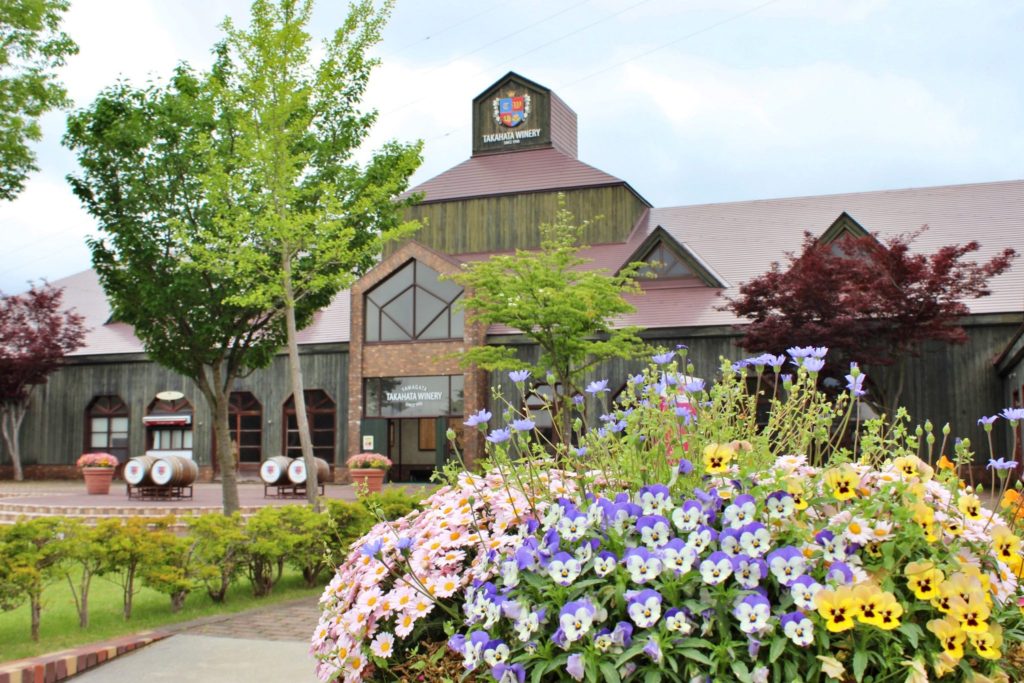
Founded in 1990 by the Hombo Group, which also runs the Mars wineries in Yamanashi and Nagano, they have the backing to think that way.
The top range, “Haut-Vigne,” is small-production from their own vineyards. The flagship “Arcadia” includes a traditional-method sparkling Chardonnay aged 4–5 years on lees. They’re moving progressively toward organic viticulture, particularly with disease-resistant Delaware varieties.
Restaurant on site. Spring Festival in May (Golden Week), Autumn Festival in October. Ten minutes on foot from Takahata Station.
Woody Farm & Winery
This winery has a different kind of ambition: find Yamagata’s next signature grape.
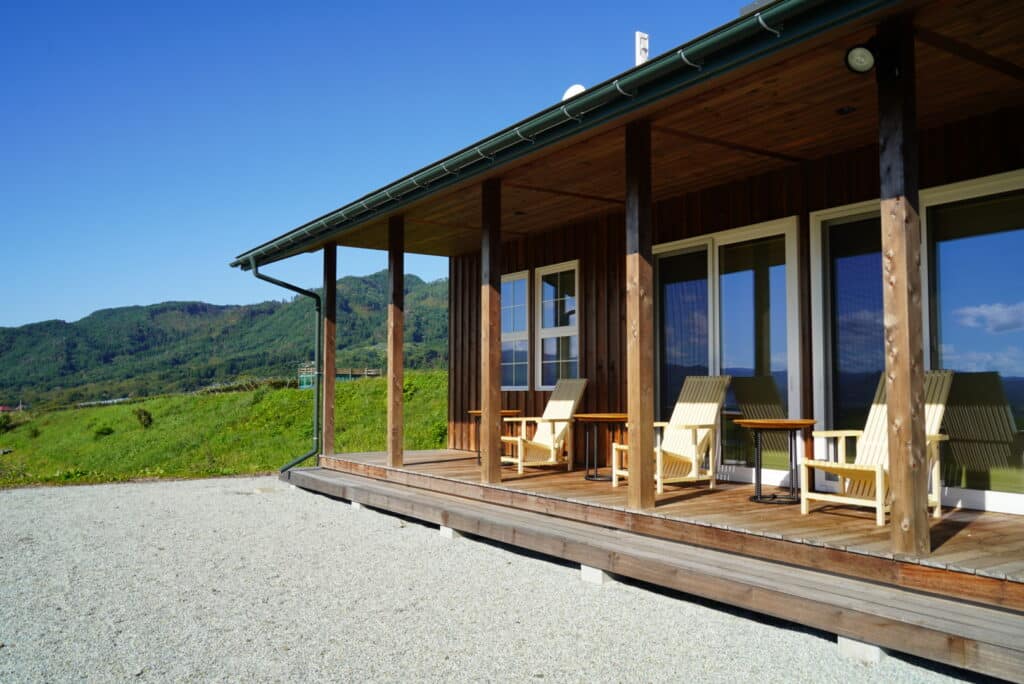
The estate was established in 1977 by Yoshio Kimura, winery opened in 2013, and is now run by second-generation Yoshihiro Kimura with Kazane Kimura as winemaker. Nine hectares centred on Cabernet Sauvignon, with Albariño, Chardonnay, Petit Manseng, Sauvignon Blanc, Cabernet Franc, Merlot, Pinot Noir and Syrah also in the ground.
They’ve installed rain guards over the vines to cope with increasingly heavy rainfall, and are experimenting with pergola training for some vinifera varieties. Look for their “Albariño,” “Petit Manseng,” and barrel-aged “Petit Manseng Moelleux” which they suggest pairing with blue cheese from Hokkaido. An inspired recommendation if you like blue cheese! (I know I do)
Guest accommodation and BBQ facilities on site. Open Tue–Sun 10:00–12:00, 13:00–16:00.
DROP
This is the new wave in concentrated form.
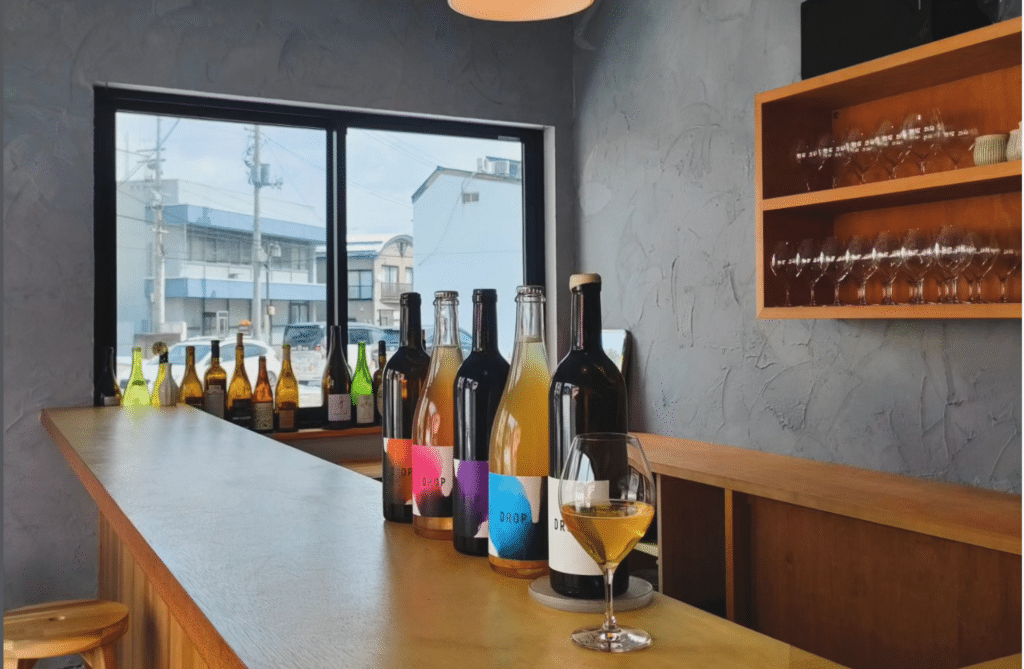
Founded in 2019 by sommelier Masamitsu Sei, who did working harvests in Australia and New Zealand before coming back and doing things his way. Winery opened in Kaminoyama in 2023, one of the very few in the region using amphorae. Delaware primary, alongside Albariño, Kerner, Sauvignon Blanc, Cabernet Franc, Cabernet Sauvignon and Syrah. Minimal intervention throughout.
DROP also runs DROP Wine Stand, a weekend wine bar and store in Kaminoyama, the kind of low-key place that makes you want to stay longer than planned. They also collaborate with Jean-Marc Brignot, the French natural winemaker on Sado Island in Niigata, on “Kuma DROP Nouveau.” Worth tracking down.
Wine bar open Fri 19:00–22:00, Sat 16:00–22:00.
Grape Republic
This winery is probably the easiest entry point if you’re new to Yamagata wine.
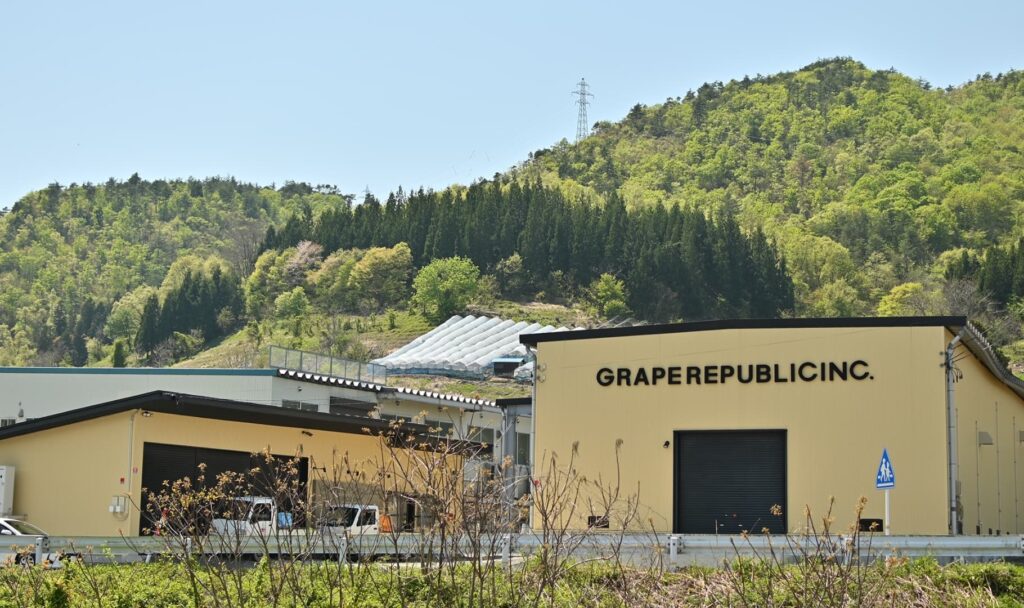
Founded in 2017 by Kazuomi Fujimaki, restaurateur, sommelier, natural wine advocate, the winery produces 60,000 bottles of still, sparkling, red, white and rosé. No additives, no sulphur, 17 buried amphorae from Spain.
The 4-hectare estate is mainly Delaware and local varieties, with Albariño, Sauvignon Blanc, Cabernet Franc, Cabernet Sauvignon, Gamay, Merlot, Nebbiolo and Sangiovese planted in 2019 and 2020.
Their wines are among the most widely available in Japan, natural wine bars, restaurants, fairs, and they’ve recently started exporting internationally. In 2024, they opened their own restaurant (Vineria Salone) in Kanagawa.
No tastings or tours at the winery itself. But if you want to start somewhere, start here. Open daily 09:00–12:00, 13:00–16:00 (sales only).
How to Visit
Yamagata is Japan’s fourth-largest wine region, but it hasn’t yet developed the wine tourism infrastructure of Yamanashi, Nagano, or Hokkaido. Many wineries are closed to the public, require advance appointments, or operate on limited hours.
That’s not a reason to stay away : you’ve just got to plan your visit.
The two key areas are Nanyō (Okitama region) and Kaminoyama (Murayama region), both designated Special Wine Zones.
Most of the main wineries sit along the Shinkansen line from Tokyo, which passes through Yamagata City, Kaminoyama-onsen, and on south toward Nanyō. Two itineraries worth keeping in mind:
- Route one: Start at Takahata Winery (10 minutes on foot from Takahata Station), lunch at their restaurant, then move to Akayu in Nanyō : Oura, Sakai and Kinkei wineries are all within walking distance of each other. End the evening at a wine bar in Yamagata City.
- Route two: Takeda Winery (1 km walk from Mokichikinenkan-mae Station) → Kaminoyama-onsen Station → Woody Farm (6 km by taxi) and Voyage de Yuuai (2 km on foot from the station) → DROP Wine Stand (open Friday evenings and Saturdays). North of Yamagata City, Domaine Kelos is 4 km from Takatama Station but requires advance reservation.
Wine tours can also be organised through Yamagata Terroir: yamagata-terroir.jp.
In Yamagata City, two restaurants stand out:
- Shokudo Mercado (natural wines, open from 18:00, closed Mondays, reservation required)
- Pourpier (regular events with local producers, cash only, from 18:00, closed Mondays).
Yamagata Wine Sakaba is an upstairs wine bar focused on local bottles.
In Nanyō, Pizzeria Sakuramura uses local ingredients and fruit yeast in its sourdough pizza (a small detail that fits this region completely).
In Kaminoyama, the Yamagata Wine Cave, inside the tourist information centre opposite Kaminoyama-onsen Station, sells local wines by the bottle and glass.
For tasting the widest range without pre-booking every visit:
- Yamagata Wine Bal (March, Yamagata City) : the main consumer event, 57 producers from Yamagata and Tōhoku
- Wine Festival Nanyō (late May) : six regional producers
- Takahata Winery Spring Festa (May, Golden Week) and Autumn Festa (October)
- Asahi Town Wine Festival (September)
- Va Vin Va Vin Vin Vin (April, Ebiruzu) : a natural wine event launched in 2025, featuring five natural producers from across Japan including Hokkaido icons
Ad-hoc events are listed at love-wine.jp/wineevent/Yamagata.
Why Now?
Twenty-three wineries. More than double the count from a decade ago, and the number is still climbing.
What makes Yamagata interesting right now isn’t just the growth, it’s what’s happening on both ends of the timeline simultaneously.
On the one hand : fourth and fifth-generation family wineries working with some of the oldest vines in Japan, asking old questions. Sakai Winery has been refining its answer to Delaware since 1892. Under the fifth generation, that answer looks more like a forest than a conventional vineyard. Takeda Winery has MBA vines that were saplings when Zenbei Kawakami, Japan’s most important grape breeder, handed them over personally in the 1930s.
On the other hand: a wave of winemakers who’ve trained in Burgundy, Bordeaux, New Zealand, and Champagne, or who came up through the natural wine bars of Tokyo, drawn by the Special Wine Zone designations, the available land, the volcanic soils, and a producer community that has repeatedly shown it prefers to share knowledge rather than guard it.
Somewhere between those two forces, Yamagata is working out what it is.
The GI is four years old. The signature varieties are still being debated : Delaware, certainly, and Cabernet Sauvignon, but also Petit Manseng, Albariño, Yama Sauvignon, things that don’t yet have a chapter in the international wine press.
One hundred and thirty years after Yasō Sakai taught himself to make wine so that someone could drink it with Yonezawa beef, the restaurants in Akayu still pair the two. Some things stay in place for good reasons.
You’re ahead of that chapter. That seems like a reasonable argument for paying attention now.
Where to next?
If you’ve started by Yamagata, interestingly enough, you’ve started by the least known of the main wine regions in Japan. Ask anyone about Japanese wine and they’ll mention Yamanashi. Fair enough but stop there and you’re missing half the picture: Nagano’s high-altitude vineyards, Hokkaido’s cool-climate reds, Kyushu’s subtropical experiments. Japan’s wine map is far more interesting than most people realise. Let’s get into it..
Discover Unique Japanese Wine Grape Varieties
Most people are surprised to learn that Japan doesn’t just grow European grapes. It has its own. From the delicate, citrusy Koshu, grown in Yamanashi for over a thousand years, to the soft, berry-rich Muscat Bailey A and the aromatic Delaware, these varieties were shaped by Japan’s humid climate, its soils, and its food culture. The result? Wines that pair with Japanese cuisine in a way no Bordeaux ever could. Here’s what makes them so different.


You May Also Like

The Most Complete Guide to Japanese Wine

Where can I taste Japanese wines in Tokyo? | 3grapes