

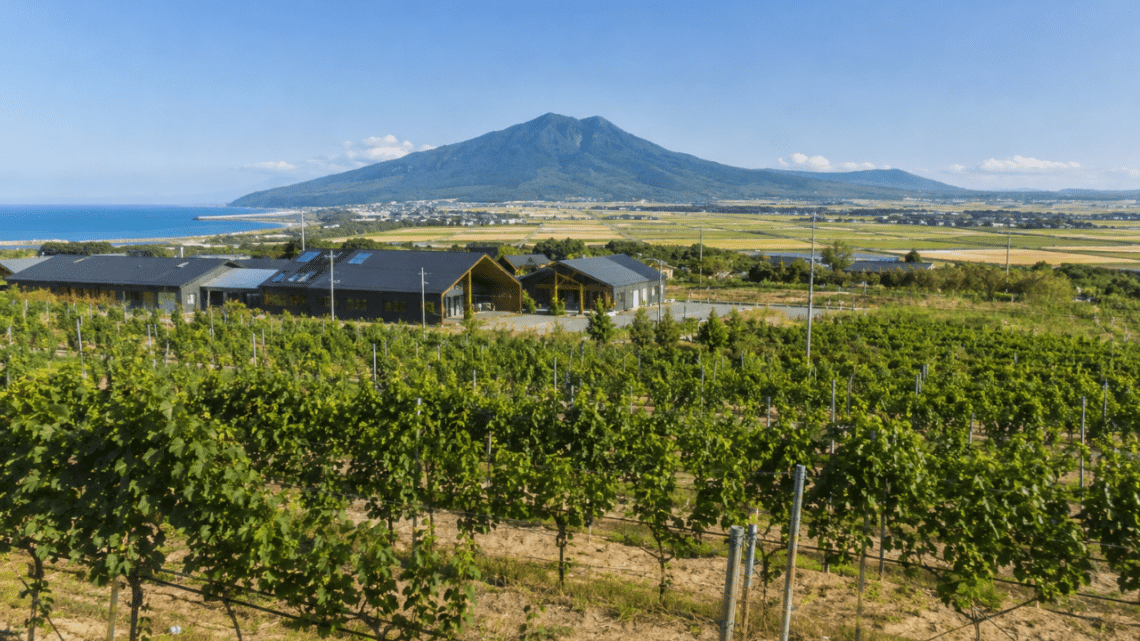
Niigata Wine Region: Japan’s Best-Kept Secret on the Sea of Japan Coast
11 minutes read
Most people who visit the Niigata wine region go for the sake, the rice, or to catch a ferry to Sado Island, a place so remote it was once used as a gold mine and a penal colony. It is also home to the Kodō taiko drummers, one of the most famous percussion ensembles in the world. But that’s a story for another day.
My point is: wine is rarely part of the itinerary.
Big mistake. Let’s change that. Because the Niigata wine region has been making it for over 130 years. I know. I was surprised too. On a narrow strip of sandy coastline facing the Sea of Japan, with its own signature grape, its own approach to viticulture, and a coastal terroir that has more in common with Rías Baixas than with anything else in Japan.
The rest of the wine world has barely noticed yet.
If you’re the kind of person who likes finding things before everyone else does, pay attention.
The Niigata wine region is one of Japan’s oldest and most distinctive, with over 130 years of history on a sandy coastline facing the Sea of Japan. Home to twelve wineries, its signature grape is Albariño — an unexpected choice that makes complete sense given the wet climate, sea breezes, and low-fertility soils. The story begins in 1890 with Zenbei Kawakami, whose 10,311 grape crossings laid the foundation for the entire Japanese wine industry. Two hours from Tokyo by Shinkansen, it is one of the least-discovered wine destinations in Asia.
The Niigata wine region started with one stubborn farmer
The name Niigata means “new lagoon.” Which feels right, honestly. This is a place shaped completely by water — rain, snow, sea air, and the wide Shinano River running down from the mountains of Nagano all the way to the coast.
The wine story starts in 1890, with a 22-year-old named Zenbei Kawakami who just inherited a 50-hectare estate in what is now Jōetsu City, in the southern part of the prefecture. He looked at the farmers around him, saw how hard their lives were, and decided that viticulture could give the region something more stable.
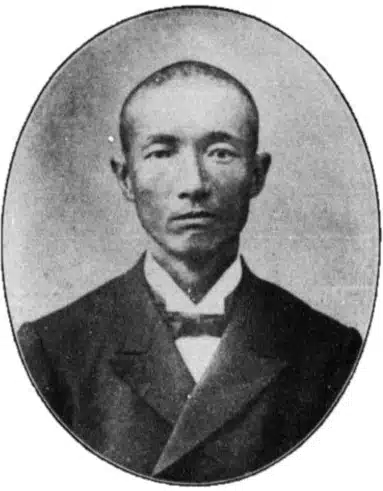
Then he spent the next 30 years proving it.
And I mean that literally. Kawakami made 10,311 grape crossings, not a typo, searching for varieties that could actually survive Japan’s humidity, disease pressure, and brutal winters.
Twenty-two worked well enough for winemaking.
Five are still grown commercially today.
His most important creation was Muscat Bailey A, a cross of Muscat Hamburg and Bailey, which became the most widely planted red grape in Japan and earned him the Japan Prize for Agricultural Science three years before his death in 1944.
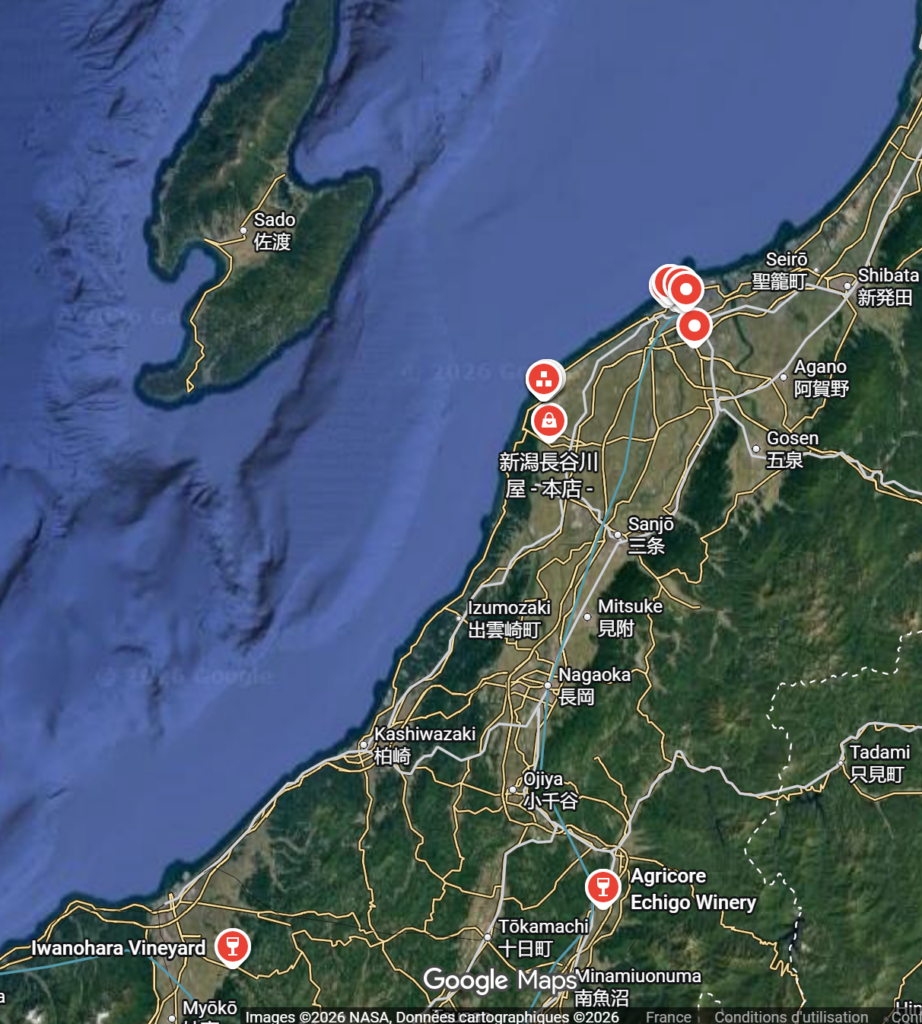
He named his vineyard Iwanohara “field of rocks” after the barren state of the land when he first started. It is still one of Niigata wine region’s most respected producers today, and you can have lunch or dinner at their on-site restaurant, Kanaishi-no-on, open daily until 18:00.
Without Kawakami, there is arguably no Japanese wine industry.
Doesn’t that feel like the kind of thing worth making a trip for?
The Place Itself
The Niigata wine region stretches 300 kilometres along Japan’s west coast, sitting between 37 and 38 degrees north latitude: the same band as south-east Sicily, Etna, Auckland, and the Yarra Valley. I know, it sounds wild. Because Niigata looks nothing like any of those places.
It is snowier, wetter, cooler. Annual rainfall goes from 1,800mm in Niigata City up to 2,750mm further south in Jōetsu. In February 1945, 3.77 metres of snow fell in a single event. In 2021, 1.7 metres in just 24 hours.
But here’s what I love about it, wineries like Iwanohara and Echigo figured out how to use that snow. They collect it through winter to cool their cellars and stabilise fermentation temperatures. The constraint became the tool.
The prefecture splits into three areas, and they really do feel different from each other.
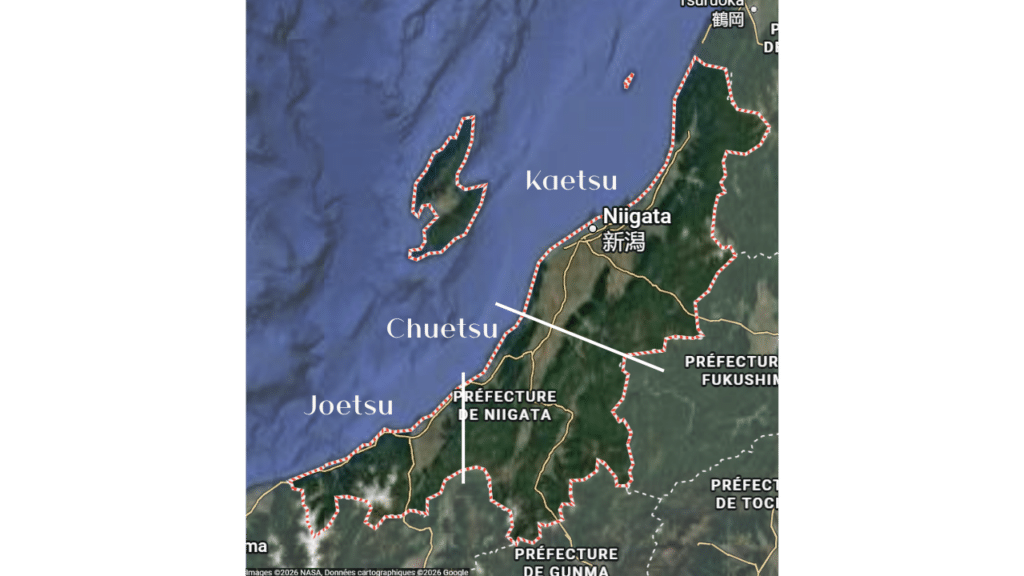
Kaetsu, on the north-west coast, is where most wineries are.
Vineyards sit about 1.2 kilometres from the sea on sandy, low-fertility soils, the kind that stress the vines just enough to make things interesting. Slower growth, deeper roots, lighter wines with a mineral edge. Sea breezes help with humidity, which in Japan you can never take for granted. This is also home to the Niigata Wine Coast, a cluster of wineries about 25 kilometres south of Niigata City, built with visitors in mind, this means tasting rooms, restaurants, a proper afternoon out.
Chūetsu sits in the middle, quieter and less visited, but worth knowing about.
And then Jōetsu in the south, where it all started.
Rockier, snowier, and home to those pergola-trained vines I find so fascinating. Canopies stretched 2.3 metres high (higher than in Nagano!), built to hold the weight of a Niigata winter and keep fruit off the wet ground. Head north to Tainai Winery and you get a completely different answer to the same challenge : a 25-degree sloped vineyard on denser soil, cooled by mountain winds that keep the vines dry. Same problem, different solutions.
The Grapes
In 2023, Niigata wine region vinified 86 tonnes of grapes. The year before, it was 137. That gap tells you everything you need to know about how small and weather-dependent this industry still is. Half of that 86 tonnes was Merlot and Chardonnay, which are fine, but they’re not really the story.
The story is Albariño.
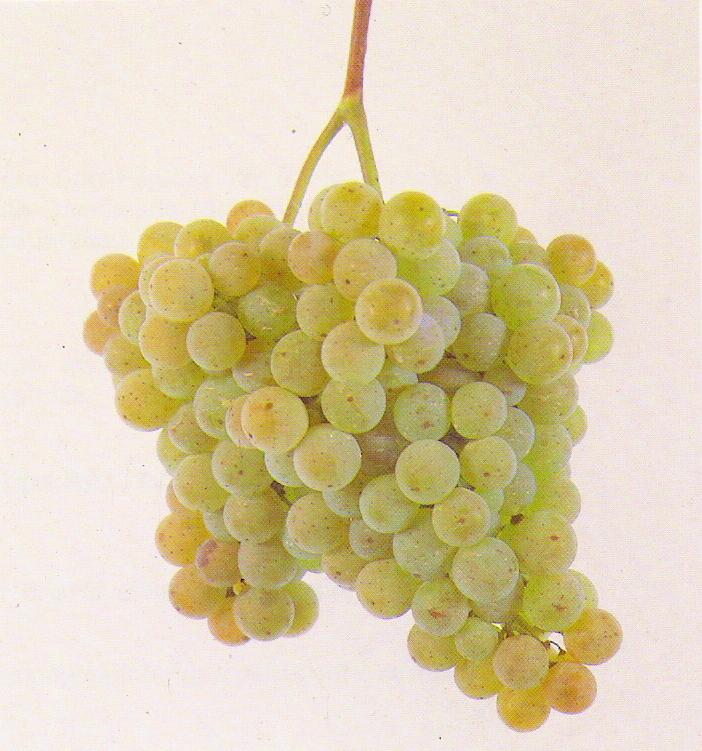
Nobody saw that coming. Cave d’Occi planted it around 2006, and the logic, once you hear it, is hard to argue with. Albariño is from Galicia, from the Rías Baixas, one of the wettest winemaking regions in Europe, where Atlantic winds blow off the ocean and granite soils produce whites that are bright and saline and aromatic. Sound familiar? Niigata wine region has sandy coastal soils and persistent sea breezes and more rain than it knows what to do with. It’s not a perfect match, but it’s close enough that the grape feels at home here in a way that’s almost eerie.
Cave d’Occi eventually sold their Albariño contract to Fermier, who became the first winery in Japan to bottle it commercially. It has since spread north to Iwate and south into Kyūshū. The wines are genuinely distinct, saline and textured in a way that feels specific to this coastline. Yields are low, bunches are small, prices are high. Worth it.
Alongside Albariño, Niigata’s winemakers work with a cast of Japanese hybrid varieties that Iwanohara developed over generations: Muscat Bailey A, Bailey Alicante A, Black Queen, Red Millennium, Rose Ciotat. I want to be clear about something here, these are not consolation prizes. They are not what you plant when you can’t grow the good stuff. They are grapes bred specifically for these conditions, over decades, by people who understood this land deeply. In the right hands, they produce wines that European varieties simply cannot replicate here.
The Wineries
The Niigata Wine Coast lines up six producers along a 40-minute stretch of coastline south of Niigata City. They’re different enough from each other that moving between them actually feels like a day well spent.
Cave d’Occi is where you start, literally and historically.
They introduced European varieties to this coastline in 1992, and their Wine Management School has since produced most of the region’s next generation — Fermier, Cantina Zio Setto, Hakko Chaud, Le Cinq all trace back here in one way or another. Four stars in the guidebooks, and a free shuttle from Uchino Station if you’d rather not drive.
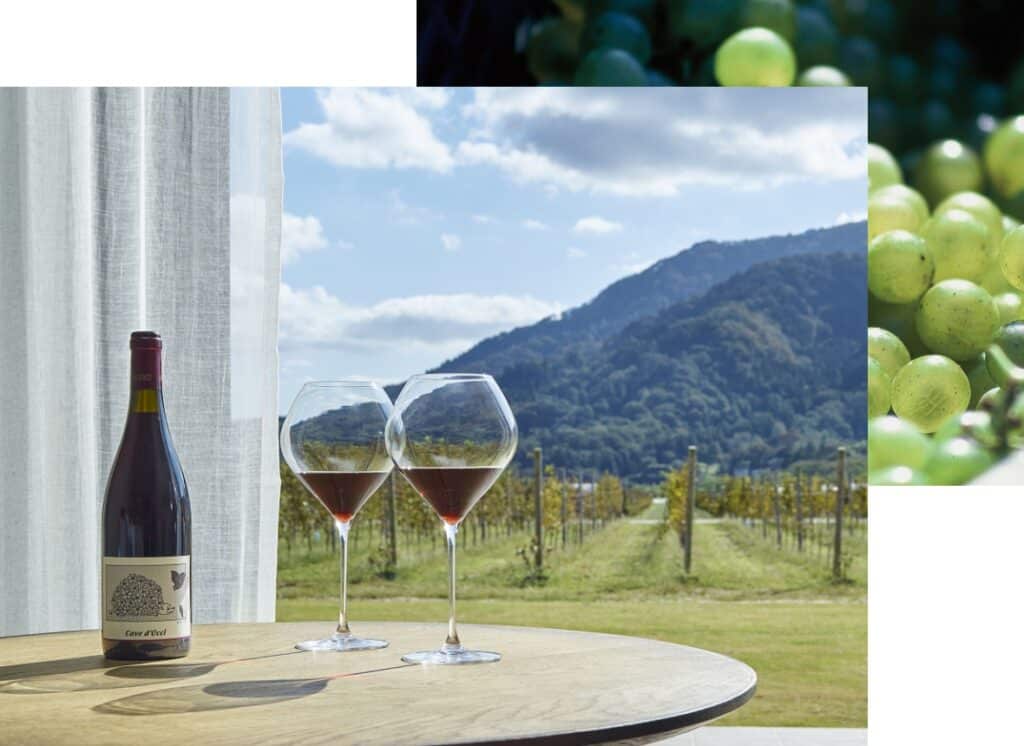
Fermier is the one most people come specifically to visit, and for good reason.
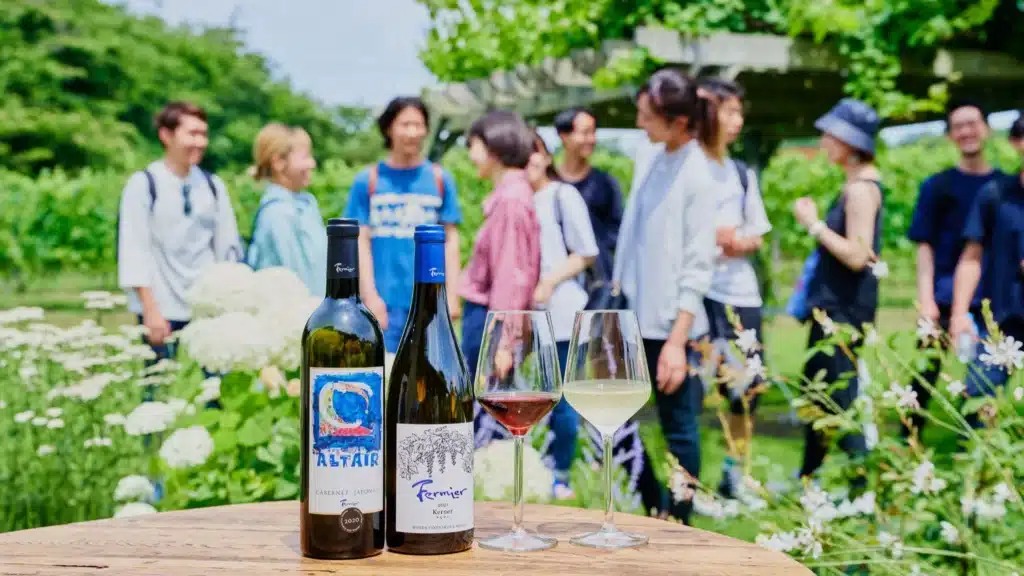
This is where you taste what coastal Niigata Albariño actually is. Beyond that, their range is surprisingly broad — white and orange from a Seibel/Müller-Thurgau blend, a light red Thurgau with Cabernet Sauvignon, rosé Seibel, Chardonnay, barrel-aged Muscat Bailey A, Merlot, and Yama Sauvignon. European training meeting Japanese varieties, which is exactly the tension that makes Niigata interesting. They’re also the only winery in Kaetsu using pergola training, on sloped plots in the Shinano River basin. Tastings Thursday to Tuesday, 10:00–16:00, ¥3,000 to ¥6,500.
Other wineries
L’Escargot keeps things tight — estate-grown Kyoho, Muscat Bailey A, and Pinot Noir, around 10,000 bottles a year, aged in French oak. Their 2019 Pinot Noir is available on site. Open Monday to Friday, 11:00–17:00, bottles from ¥2,000 to ¥11,000.
Le Cinq and Hakko Chaud round out the cluster. Cave d’Occi specifically recommends both alongside Fermier and L’Escargot, which feels like reliable enough guidance.
If you have more time — and I’d argue it’s worth making time — Tainai Winery in the north is a municipal project run with city workers and local pensioners, which sounds unlikely until you see the sloped vineyard and taste what denser soils do to the wines. Three stars, worth the detour.
And if you’re heading south to Jōetsu, Iwanohara Vineyard is not optional. This is where the whole story began. Four stars, the most historically significant site in Japanese viticulture, and the kind of place that makes everything else make more sense once you’ve been.
And Then There’s Sado Island
Sado Island sits out in the Sea of Japan, visible from the Niigata coast on a clear day. It was a gold mine once, and before that a place of exile for anyone who fell badly out of favour with the imperial court. Now it’s home to the Kodō drummers, whose performances pull visitors from around the world, and it’s becoming one of the most interesting natural wine addresses in Japan.
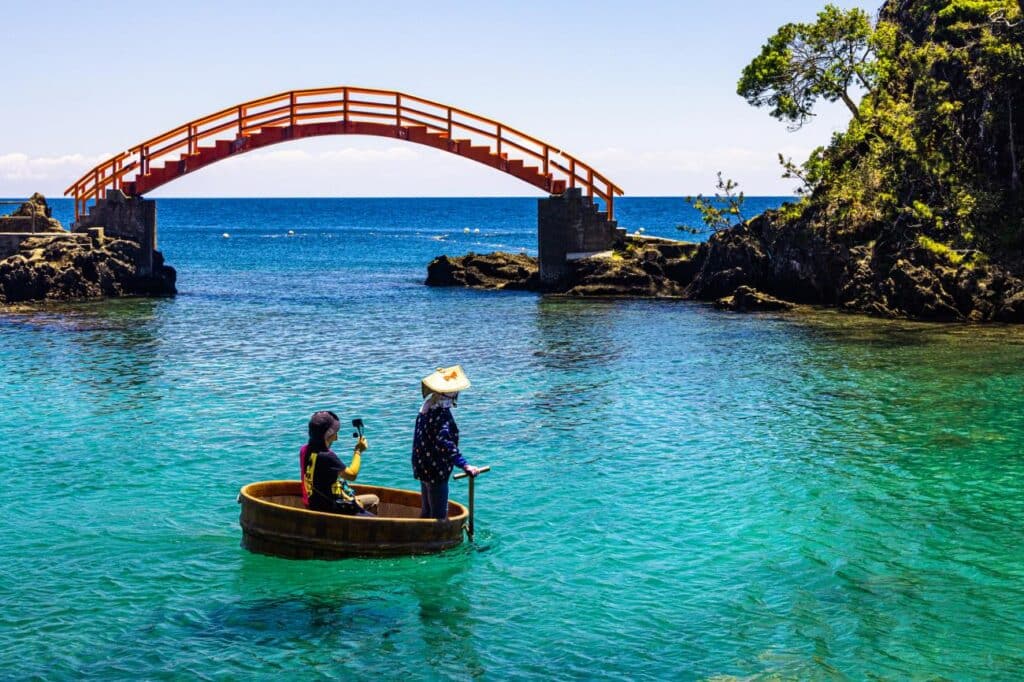
Jean-Marc Brignot got there first. The French natural winemaker arrived in 2012 with his wife Satomi, planted vines, and opened the island’s first natural wine bar in 2015. His wine isn’t commercially available yet, which somehow feels appropriate for a place still figuring out what it wants to be.
Around the same time, a young Japanese couple established Bay Bee Farm, and later opened Andante, a guesthouse and restaurant modelled on the informal places they’d stayed while travelling through southern Europe.
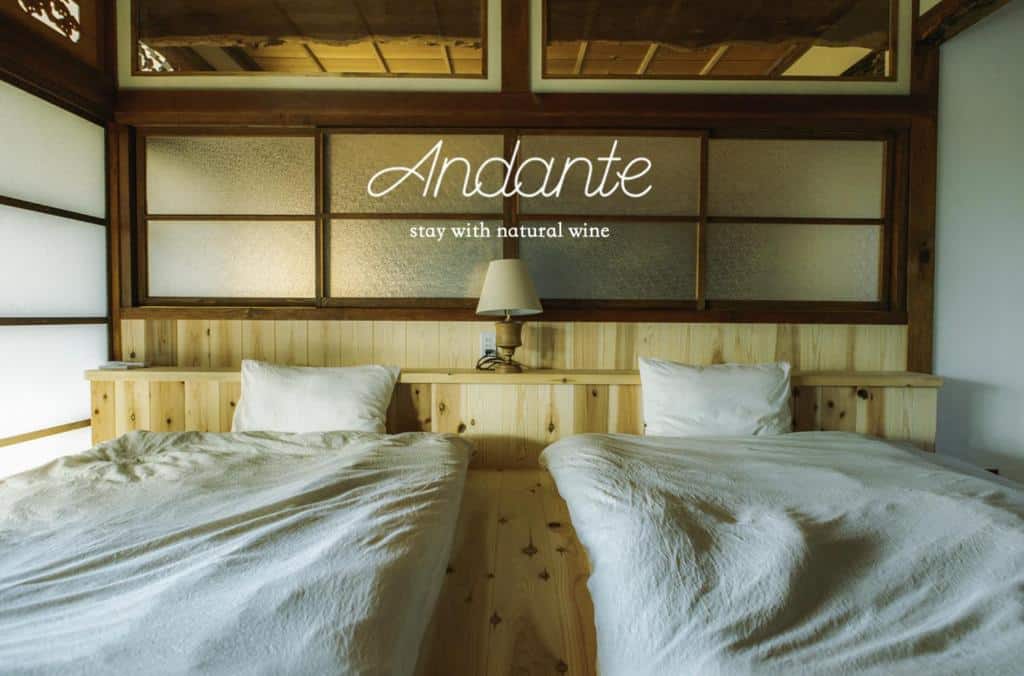
None of this is large. That’s entirely the point. Sado sounds like the kind of place you want to find before the guidebooks catch up.
How to Visit
Getting there is straightforward enough. The Wine Coast is 40 minutes from Niigata City by car, or a short train ride to Uchino Station : departures at 09:30 and 13:30, returning at 11:00 and 16:00. Cave d’Occi runs a free English-speaking shuttle from the station, which is worth knowing about. Contact wineries in advance to confirm tasting availability and check the shuttle is running before you build your day around it.
From Tokyo, the Shinkansen gets you to Niigata City in around two hours. From Nagano, about 2.5 hours. If you’re coming specifically from Nagano City, driving is probably the better call : 1h 15min to the Wine Coast versus 1h 45min by public transport, which is a meaningful difference when you’re trying to fit in six wineries.
Autumn is the obvious season: harvest colours, longer sunshine, the kind of light that makes everything look like it was staged. Spring works well too, before the summer humidity arrives. Winter has its own appeal, snow on the vines, small tasting rooms, the particular cosiness of being somewhere most people aren’t, but check opening hours before you go. Monday, Thursday, and Friday are the days most wineries tend to close.
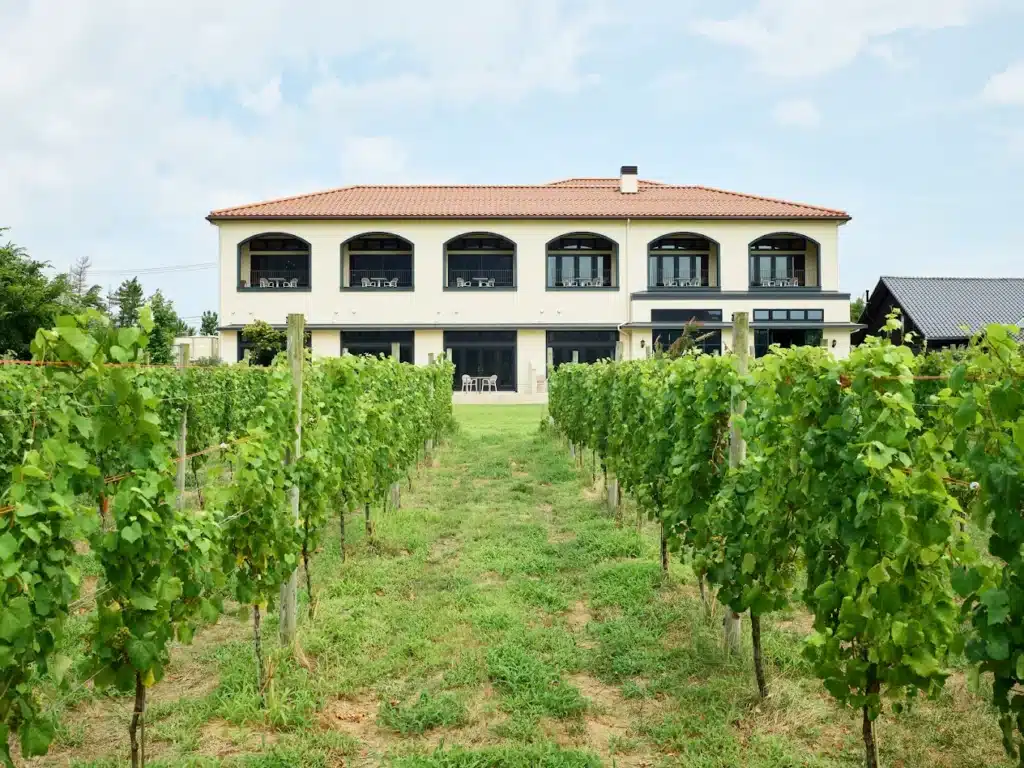
If a day trip starts to feel insufficient, and it might, Winerystay Travigne offers an overnight stay at the winery itself, with western and Japanese dining options ranging from relaxed café meals to formal wine-pairing dinners. It is, frankly, a very good reason to stay longer.
Why Now?
Twelve wineries. Eighty-six tonnes. A coastal strip of dunes that the international wine world has barely started to notice.
What makes Niigata interesting right now is precisely its smallness and its specificity. This is not a region trading on a famous appellation or a grape variety everyone already knows. The winemakers here are working out their own answers to their own questions. How do you train vines against two metres of winter snow? How do you turn sandy infertile soil into an advantage rather than a liability? How do you make Albariño taste like the Sea of Japan rather than the Atlantic coast of Spain?
Zenbei Kawakami spent 30 years and 10,311 crossings asking a version of the same question. The answer, it turned out, was in the ground the whole time.
Where to next?
Let’s explore beyond Yamanashi
Ask anyone about Japanese wine and they’ll mention Yamanashi. Fair enough but stop there and you’re missing half the picture. Nagano’s high-altitude vineyards, Hokkaido’s cool-climate reds, Kyushu’s subtropical experiments. Japan’s wine map is far more interesting than most people realise. Let’s get into it..
Discover Unique Japanese Wine Grape Varieties
Most people are surprised to learn that Japan doesn’t just grow European grapes. It has its own. From the delicate, citrusy Koshu, grown in Yamanashi for over a thousand years, to the soft, berry-rich Muscat Bailey A and the aromatic Delaware, these varieties were shaped by Japan’s humid climate, its soils, and its food culture. The result? Wines that pair with Japanese cuisine in a way no Bordeaux ever could. Here’s what makes them so different.


You May Also Like
Matching Japanese Red Wines With Your Meal

Where can I taste Japanese wines in Tokyo? | 3grapes
