
What 30 Years Crisscrossing Japan’s Vineyards Taught Me About Its Wines
9 minutes read
I get Olivier Derenne on the phone, and the first thing he tells me is that Japan found him, not the other way around.
He’s third-generation in a Japan-loving family. So Japan is something he fell into as a kid, a bit like Obelix and his magic potion. He spent years exporting poultry to the country, until bird flu and the vaccination rules that followed shut that business down.
So he pivoted: importing Japanese products into France, founding his company PALMIFRANCE in 2003.
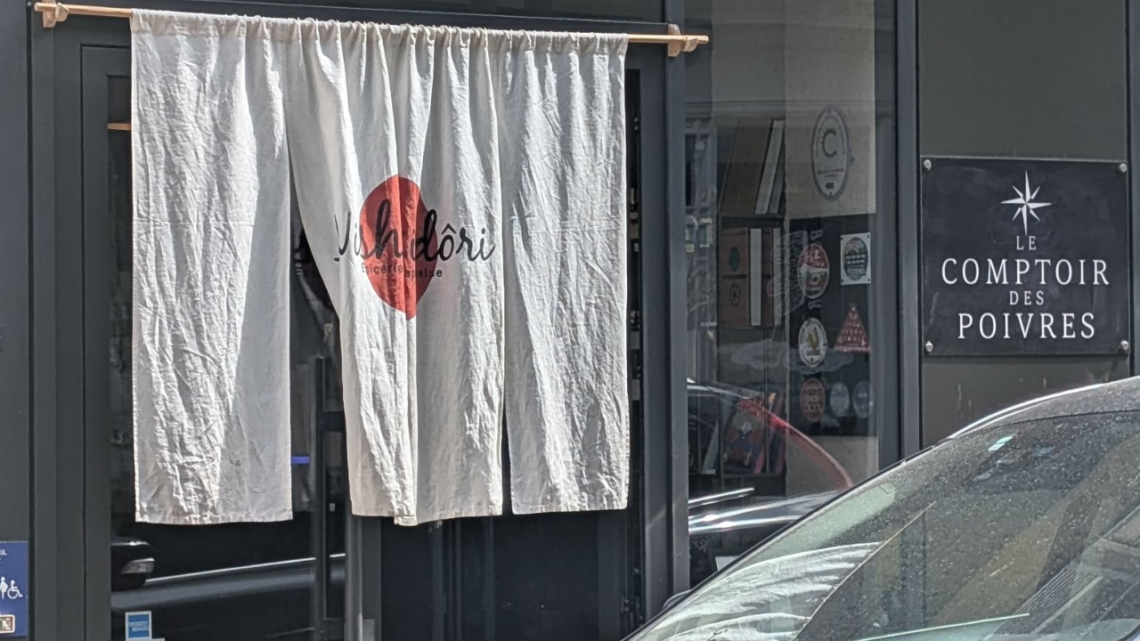
For the past thirty years, he’s spent 100 to 110 days a year in Japan. Estate by estate, he tracks down the wines he now imports under the name Nishikidôri, his fine food shop near the Palais-Royal.
Olivier traces Nishikidôri’s birth to december 2008, in a piano bar in Kyoto. A Japanese business partner sets a small tin of sardines down in front of him, expecting to impress him. But Olivier is Breton, from Finistère, so not an easy man to surprise with canned fish.
Except when he opens it, he finds about fifteen tiny sardines from the Sea of Japan, lined up with near-surgical precision, and a taste he’d never come across. That tin is where the urge to track down Japan’s local food cultures, one by one, began.
The first products reached France in December 2008, sold at first to a handful of chefs and pastry makers. However, the physical shop near the Palais-Royal didn’t open until much later, in 2017.
Not many people in France have spent this much time on the ground watching Japanese wine evolve. What he told me helps explain why it’s still so little known here, and why that’s probably not going to stay true much longer.
Olivier Derenne, who’s spent 100 to 110 days a year in Japan for three decades importing wine under the Nishikidôri name, says Japanese wine isn’t a recent trend (Suntory planted the first vines in 1899) or a copy of European styles, it’s suited to its own terrain and climate. Hokkaido plays Burgundy’s role, with the ultra-restrictive Takahiko Soga estate as its benchmark; most of Olivier’s 27 estates sell to restaurants only, though about 20 more are opening to the public soon, with in-shop bottles like Chichibu Wine (aged in ex-whisky barrels). His headline claim: France is already Europe’s top importer of Japanese wine, and barely anyone in the trade knows it.
- A wine country since 1899, not since yesterday
- Three assumptions Olivier took apart, one by one
- Why these bottles cost what they cost
- Hokkaido, Japan’s Burgundy
- The other favorites of a man who’s tasted it all
- What you can actually buy today
- A climate making things harder, a France that’s already watching
A wine country since 1899, not since yesterday
People think Japanese wine is super new. But it really isn’t.
While many wine lovers are only just discovering Japan’s vineyards, the country’s modern wine story began well over a century ago.
During the Meiji era, Japan looked to France to learn the art of winemaking. In the late 1870s, two young Japanese were sent to study in Champagne and Burgundy before returning home to help establish the country’s first commercial winery in Yamanashi.
A few years later, in 1899, Suntory was founded, not as a whisky company as you may think, but as a wine business. Long before Yamazaki and Hibiki became household names, Shinjiro Torii was already convinced Japan could produce wines suited to Japanese tastes.
So no, Japanese wine isn’t a newcomer or a passing trend. Modern winemaking has been part of the country’s story for nearly 150 years. It’s simply a history that has remained largely under the radar outside Japan.
Three assumptions Olivier took apart.
The first, and most common: the Japanese only know how to make sake. Not even close to true. Wine’s produced across many of the country’s prefectures, with a real diversity of European grape varieties planted locally.
The second assumption is that it’s just a handful of obscure estates. Wrong again. Wine production is spread widely across the archipelago, with grapes you wouldn’t expect to find there. Albariño, for instance, the star grape of Galicia in Spain, grows there too.
Comparing it to its Spanish counterpart doesn’t get you very far, though: according to Olivier, it’s a completely different expression of the same grape.
The third assumption is more subtle: assuming Japanese winemakers are trying to copy European wines because they use European grapes. It’s actually the opposite.
The country took a long time to master these varieties. Twenty years ago, the quality wasn’t there yet.
Ten years ago, a few native grapes were starting to stand out. The country was only just beginning to get a handle on pinot noir or merlot.
Today, that mastery is real. But the goal was never to copy Burgundy or Bordeaux. It’s to get the best out of Japan’s own nature and exposure.
Why these bottles cost what they cost
Olivier’s explanation for the price makes a lot more sense once you understand the terrain.
Estates are small, the work is done by hand. And the whole operation depends heavily on natural conditions, wildlife included. In some regions, bears force winemakers to deal with a risk no Burgundy grower has ever had to think about.
Vines in Japan are often trained upward, on vertical trellises that make harvesting easier. Hand-picked grapes, wild yeasts rather than lab-selected ones, an old-school approach that extends all the way to whole-cluster pressing. The best grapes, Olivier told me, come from the highest-altitude plots.
Hokkaido, Japan’s Burgundy
I asked Olivier to match a Japanese region to a French one, and he didn’t hesitate: Hokkaido and more specifically, Dijon. It plays the same role in Japan that Burgundy plays in France.
The region’s flagship estate, Takahiko Soga, has, in his view, never produced a flawed wine. Bottles he calls “monstrous,” in the best sense.
One fact from outside the conversation with Olivier backs up that claim: in 2020, the estate’s flagship cuvée, Nanatsumori, became the first Japanese wine to make it onto the wine list at Noma in Copenhagen, one of the most talked-about restaurants in the world. It’s now exported to about fifteen countries and, once sold out, resells for up to ten times its original price.
Soga-san now trains other winemakers, almost like disciples, some of whose names are starting to show up elsewhere: Ichi, Montille.
There’s a specific reason you’ll almost never find a bottle of Takahiko at a wine shop. The estate made a radical choice: no sales to individuals at all, to avoid any speculation around its wines. It reserves its production for restaurateurs, who it believes are best placed to bring the wine to life at the table.
My view on that
Thank god for that, honestly, if I think about the alternative.
But it also means I’ll probably never open one myself, not without a professional excuse. That’s the part that nags at me: a wine like this ends up reserved for people who can already afford a table at a Michelin-starred restaurant, on top of whatever a bottle this rare costs on its own.
It cuts against something I believe pretty deeply, that the best wine is the one you can actually pull the cork on and share, not one locked behind a reservation and a price tag most people will never see.
Then again, I did get to taste it. It’s a genuine jewel, and it deserves better than being poured next to supermarket charcuterie and a bag of puff pastry.
So I get the reasoning, and it’s a sound one.
But if it were up to me, I’d probably look for another way to do it. Takahiko still runs an allocation system, restaurants only, so the filter never really disappears, it just moves. Money stops being the gatekeeper, and a professional card takes its place instead.
To be fair to them, though: they showed up at the Japanese wine fair in Beaune last year and poured for anyone who stopped by their stand, no restaurant card required. So the door isn’t completely shut either.
One cuvée escapes the rule!
Anyway, back to business with good news: one cuvée reportedly escapes that rule : Domaine Ichi’s Jomon Wine, a very limited Yamabudo cuvée that appears to be available through a small number of channels
The other favorites of a man who’s tasted it all
Mont estate shares the same rigor as Takahiko, no flaws according to Olivier, with a clear leaning toward monovarietals.
Mongaku Valley makes wines with notes of dried fruit, apricot, and quince, also blended.
The barrel-aged chardonnay from Kumamoto Kikuka estate is the one Olivier talks about with the most raw enthusiasm. “The best chardonnay of my life,” he told me. No qualifiers attached.
His real surprise, though, is a dessert wine from Domaine Ichi, made from Yamabudo (Vitis amurensis), a wild Japanese mountain grape.
It’s a Japanese take on ice wine: the grapes stay on the vine and aren’t picked until December. The texture recalls a sweet wine, with spiced, woody, almost balsamic notes.
Every time Olivier pours it for a sommelier, an order follows almost immediately. He now has to ration sales; he already gets 60% of the annual production all to himself. The winemaker behind it is 80 years old. He’s only been making wine for about a decade, a second life he chose to devote to the vine.
What you can actually buy today
A good chunk of what Olivier described to me involves cuvées reserved for restaurants.
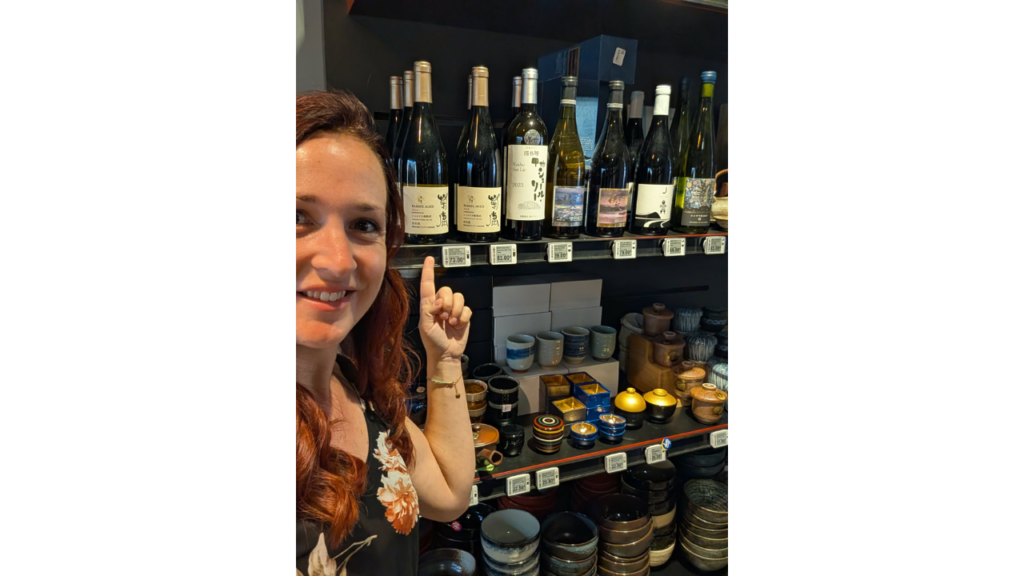
Of the 27 Japanese estates he currently works with, nearly all of them go exclusively to the restaurant trade. About twenty more estates are set to open up to the general public soon, though, a development worth keeping an eye on.
In the shop, the most striking find is available right now: a Chichibu Wine, white and red. It comes from the oldest wine estate in Saitama prefecture, founded in 1889.
Useful detail: 1889 is when founder Gensaku Asami planted his first vines at the foot of Mount Ryôkami — commercial bottling didn’t really start until the 1930s. There’s a nice story attached to the estate too: a passing French priest is said to have compared its wine to a Bordeaux.
Part of it ages in barrels that previously held one of Japan’s most celebrated whiskies, Ichiro’s Malt. There’s also a lees-aged Koshu from the same estate, and chardonnays from the Nagano region, in the Japanese Alps. Prices, across all estates, run from 20 to 150 euros.
A climate making things harder, a France that’s already watching
Climate change isn’t sparing Japan’s vineyards either.
Harvesting later, in October or November, lowers the grapes’ acidity and raises their sugar content. That’s a real challenge for a grape like chardonnay, which needs freshness to express itself properly. It’s a problem Burgundy winemakers know all too well too.
Why you should listen
On the European market, France is already the top importer of Japanese wine. Almost nobody knows that, including plenty of people in the wine trade itself.
Olivier likes to compare the current situation to Spain fifty or sixty years ago. Back then, it was a country making pretty niche, almost marginal wines. Today, it’s producing some of the most interesting cuvées in Europe.
You have to come at it, he told me, with fresh eyes. Japanese wine probably still has plenty of surprises left for anyone willing to look at it without preconceptions.
Nishikdôri is part of our selection of verified addresses in Where to Find Japanese Wine in France.

You May Also Like
Niigata Wine Region: Japan’s Best-Kept Secret on the Sea of Japan Coast
What is Koshu similar to?
