
Kamptal wine region : Kremstal’s Brilliant and Down-to-Earth Sister
7 minutes read
Kremstal and Kamptal — two neighboring regions of the famous Wachau — often live in its shadow.
Which is a bit unfair, honestly, because both regions are perfect examples of how impressive Austrian winemaking can be.
And the best part? They offer amazing quality for a fraction of the price of Wachau.
Their stories run in parallel. After World War II, vineyards were replanted across the country. Then came the infamous 1985 “antifreeze scandal,” when a few winemakers, overwhelmed by demand, adulterated their wines. It was a national shock — but it also changed everything. Austria completely reinvented its wine industry, creating strict quality controls and the DAC (Districtus Austriae Controllatus) appellations we know today.
Kremstal earned its DAC status in 2007, and Kamptal followed right after in 2008.
So, let’s meet the second sister — Kamptal, a region full of character, history, and quietly confident wines.
Kamptal, Austria’s DAC since 2008, is famous for its Grüner Veltliner on loess and clay, and Riesling on ancient Permian soils at Heiligenstein. Warm Pannonian days and cool Waldviertel nights shape its elegant, age-worthy wines — crafted by iconic estates like Bründlmayer, Schloss Gobelsburg, and Hirsch.
Terroir of Kamptal: soil and climate
Geologically speaking, Kamptal is characterized by loess, gravel, crystalline massifs, and red tuffeau and conglomerates rich in feldspar near the renowned Heiligenstein. The fractured sandstone here allows vine roots to dig deep, searching for nutrients and minerality.

Fun fact: the Heiligenstein’s name hints at the “hellish” sunlight that creates its dry, warm climate. The rock formations date back an incredible 320 to 250 million years, formed by desert floods that carried volcanic elements during the Permian period — hence the nickname “Perm” soils.
This south-facing winegrowing zone combines rocks from the ancient Hercynian massif and the molasse zone, which records the geological shift of the prehistoric sea “Paratethys” into the modern river systems of the Kamp, Traisen, and Danube.
In the northern part of Kamptal, hard, acidic crystalline rocks dominate — the same ones found in Wachau and Kremstal. A distinctive rock massif runs northeast from the Heiligenstein, making this one of the most geologically unique areas in Austria.
During colder eras, layers of loess spread widely across Kamptal’s vineyards — and today, they still define many of its best Grüner Veltliner sites.
Climatically, Kamptal enjoys the best of both worlds: warm, dry air from the Pannonian plains to the east meets the cool breezes from the Waldviertel to the northwest. Hot days, cool nights — a perfect recipe for grapes with fine aromas and crisp acidity.
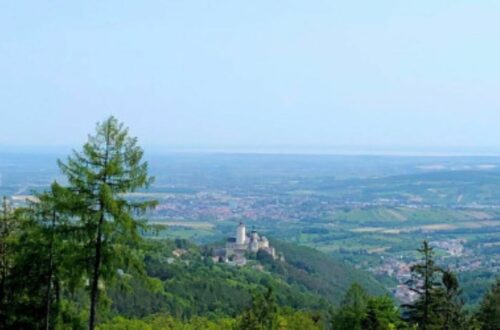
The region’s beating heart is the town of Langenlois, surrounded by well-known wine villages such as Schiltern, Gobelsburg, Haindorf, Zöbing, and Straß in the Straßertale valley. Smaller but equally charming wine villages like Etsdorf, Hadersdorf, Kammern, Lengenfeld, and Schönberg add even more local color to the landscape..
Grape varieties in Kamptal
On the steep southern slopes where loess can’t easily settle, Riesling reigns supreme. These vines produce full-bodied, age-worthy wines with striking precision.
The legendary Heiligenstein vineyard is especially famous — it’s the only place in Austria where Riesling grows on Permian soil. The microclimate here is warm, the grapes ripen beautifully, and the wines show an unmistakable stony minerality and incredible longevity.

Further down toward the Danube, the soils change to broad terraces of loess and clay, perfect for classic or richer styles of Grüner Veltliner.
In Gobelsburg, southeast of Langenlois, you’ll even find an unusually high proportion of red grape varieties — Saint Laurent, Pinot Noir, Merlot, and Zweigelt — which thrive beautifully here and are labeled under Lower Austria.
Kamptal DAC
Since the 2008 vintage, the Kamptal DAC has focused exclusively on two grape varieties: Grüner Veltliner and Riesling.
Kamptal DAC structure
Like Kremstal, Kamptal uses a clear DAC structure that you’ll see directly on the label, with several levels of origin and style.
Wines can simply be labelled Kamptal DAC, or Kamptal DAC with the indication of a specific commune. For even more precision, some bottles mention both the commune and a specific cru; in that case, a state control number is required from March 1st of the year following the harvest.
There is also Kamptal DAC Reserve, which is released later and requires a state control number from July 1st of the year following the harvest. On all bottles, the origin appellation — and, if applicable, the word “Reserve” — must appear on the front label (if there is no back label), and the harvest year must always be indicated.
Style of each Kamptal DAC
In terms of style, all hookup Kamptal DAC wines are dry, with no residual sugar, and alcohol levels help guide you.
Kamptal DAC wines must reach a minimum of 11.5% alcohol, while Kamptal DAC with a commune indication requires at least 12.0%. Wines that add both a commune and a specific cru must reach a minimum of 12.5% alcohol. These wines — often referred to as Klassik — should feel well-balanced, show no dominant botrytis influence, reflect the typical density of the vintage, and display no noticeable oak influence, with a style that’s fresh, pure, and fruit-driven.
Kamptal DAC Reserve, on the other hand, steps things up: a minimum of 13.0% alcohol, a fuller-bodied style, a dense and long-lasting palate, and room for a slight presence of botrytis and oak notes. The wines gain texture, warmth, and depth, but always stay firmly dry.
What makes Kamptal particularly interesting is that, while the structure is very similar to Kremstal DAC, the terroir gives the wines a distinct personality. Kamptal Grüner Veltliner, in particular, often shows a little more intensity and spice, adding an extra layer of energy to the region’s already precise, food-friendly style.
If you like crisp, expressive whites with a bit of bite, Kamptal is a great choice — Klassik for freshness and easy drinking, Reserve when you want more depth and texture, still dry and confidently balanced.
Wineries in Kamptal
If you find yourself wandering through Kamptal, here are a few wineries that are truly worth your time (and your taste buds):
Eichinger – Near Schönberg, this estate is a great example of how soil influences wine. Their Grüner Veltliners shine on both loess and primary rock soils — two expressions of the same grape, totally different personalities.
Kurt Angerer – Names his wines after the soils they come from: “Spies” for granite, “Kies” for gravel. He also grows a surprising number of red varieties — quite rare for Kamptal!
Martin Arndorfer – All about creativity and texture. His entry-level blends like Gemischter Satz and Strasser Weinberge are aged in large casks, while his top line Leidenschaft showcases bold, characterful wines. Try Anima — a Grüner Veltliner fermented on Riesling skins.
Brandl – Focuses on Riesling from the Heiligenstein and from the Kogelberge vineyards, where the soils are full of shale and primary rock. Expect structured, mineral wines.
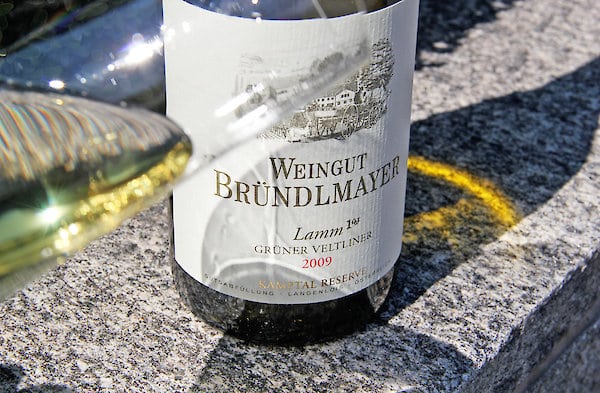
Bründlmayer – One of Kamptal’s true icons. Their Riesling and Chardonnay are trained using a “lyre” trellising system to maximize sunlight, and they use Austrian oak barrels — sometimes even acacia wood for Grüner Veltliner, which keeps flavors elegant and avoids vanilla tones.
Schloss Gobelsburg – A must-see. This beautiful baroque estate dates back to the 1740s and has been producing wine since forever. Under Michael Moosbruger and Willi Bründlmayer, the estate revived 19th-century winemaking techniques for their Tradition range. They even make Eiswein, Beerenauslese (BA), and Trockenbeerenauslese (TBA) from Grüner Veltliner and Riesling — a rarity in Austria.
Hiedler – Works only with indigenous yeasts. Their “Maximum” range (Grüner Veltliner, Pinot Blanc, Riesling) is aged in acacia barrels or stainless steel. Expect richness, ripeness, and tropical hints from their “Novemberlese.”
Hirsch – A biodynamic pioneer. Half the estate is planted with Grüner Veltliner. They ferment whole clusters with native yeasts, no temperature control, and avoid botrytis in their dry wines. The result? Vibrant, textural wines with purity and life.
A must-visit : Loisium wine museum

The wine museum “Loisium” is a great stop if you want to know more about wines and the region in a fun way. It even has a futuric visitor centre above ground with a wine library serving region wines so you’ll be able to taste some!
Underground, you’ll be immersed in a mystical wine experience as you explore centuries-old galleries with sound and light effects.
Totally worth it!
Conclusion : Kamptal wine
Kamptal is a region that perfectly balances geological diversity and climatic contrast.
From loess and gravel to crystalline rocks and red tuff, the soils are as complex as the wines they produce. Warm days and cool nights ensure grapes with aromatic depth and lively acidity.
Riesling thrives on the steep terraces of the south, especially in the Zöbinger Heiligenstein vineyard with its ancient Permian soil, giving wines with minerality and age-worthy power.
Grüner Veltliner loves the loess and clay terraces closer to the Danube, where it becomes rounder, richer, and full of charm.
Together, they define Kamptal’s identity: refined yet expressive, serious yet joyful.
And if you want to experience it all — from the elegant wines of Schloss Gobelsburg to the innovative energy of Hirsch — Kamptal is a place you’ll want to linger.
Where to next?
Kremstal — Kamptal’s Sister Region
If you liked Kamptal, wait until you meet Kremstal — for rounder, fruitier, and softer wines — Grüner Veltliners with a juicy charm and Rieslings that feel a touch more generous and ripe.
Exploring Austria’s Wine Regions
From Vienna’s urban vineyards to Burgenland’s bold reds — take a full tour of Austria’s wine country and find your favorite.
Learn to Taste Wine Like a Pro
Now that you know where great wine comes from, let’s talk about how to taste it. A fun, simple guide to help you appreciate wine like a sommelier.



One Comment
Franck
Very interesting!