
Wagram Wine Region: Austria’s Rich Terroir of Loess & Heritage
5 minutes read
You’ve probably heard of Wachau or even Kamptal — but what about Wagram?
It doesn’t get talked about as much, which is a shame. Because this region quietly makes some of Austria’s most delicious and distinctive wines.
Just north of Vienna, Wagram stretches along the Danube River, surrounded by soft hills and golden fields. It’s super easy to reach from the capital — perfect for a quick wine escape — and the wines are everything I love about Austria. They’re precise, full of personality, and beautifully drinkable.
Just north of Vienna, the Wagram wine region stretches along the Danube. It produces generous, spicy Grüner Veltliner, elegant Roter Veltliner, and refined Riesling on its famous loess soils. The area is split between the Wagram plateau to the north and Klosterneuburg to the south — home to Austria’s oldest wine school and the country’s largest private winery. With its new DAC status (since 2022), Wagram is finally getting the recognition it deserves for wines that are pure, expressive, and full of character.
A landscape in two parts
Wagram’s vineyards are split into two very different zones.
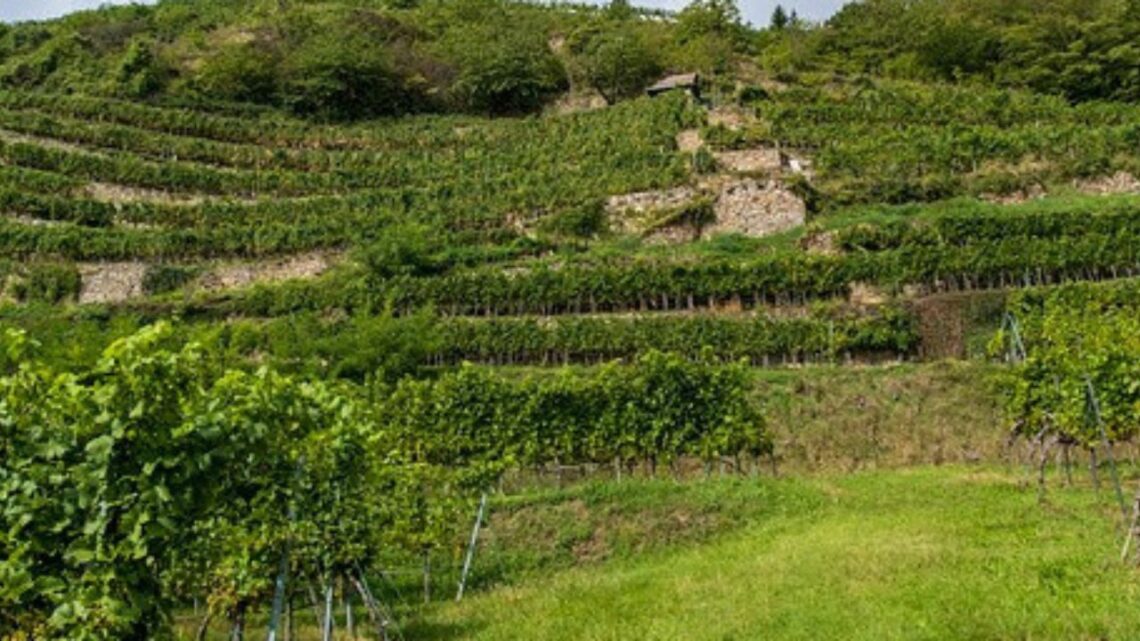
North of the Danube, next to Kamptal, lies the real heart of the region — the Wagram plateau. It’s a long, 30-kilometer stretch of wide terraces and gentle slopes covered in loess (a fine, powdery soil that’s basically magic for white wine).
South of the Danube, things look a little different. Here you’ll find the Tulln Basin and the historic town of Klosterneuburg, just a stone’s throw from Vienna. It’s full of small, charming wine villages and makes an ideal day trip. You know, the kind where you start with coffee in the city and end with Grüner Veltliner in the countryside.
Wagram and Klosterneuburg
And while the scenery is stunning, the region’s wine history is just as impressive.

Here you’ll find Stift Klosterneuburg, Austria’s largest private winery, which has shaped local winemaking for centuries. There’s also the Higher Federal Institute for Viticulture and Arboriculture, founded in 1860 — the world’s first wine school! Even today, it trains the next generation of Austrian and international winemakers.
What I love about Wagram is the mix of old and new. You’ll come across family wineries that have been around forever, right next to modern estates experimenting with biodynamics or amphorae. It’s that combination of tradition and curiosity that gives Wagram such a fresh, genuine energy.
Terroir of Wagram: soil and climate
If there’s one thing that defines Wagram, it’s loess.
Seriously — this fine, wind-blown dust is everywhere. It’s soft, pale, and light as flour, but it does wonders for the vines. Loess holds just the right amount of water, warms up quickly. It gives the wines that beautiful mix of richness and freshness that makes them so easy to love.
Fun fact : the name Wagram comes from Wogenrain, meaning “wave bank.” It’s a poetic nod to the area’s glacial loess — fine, wind-blown dust layered over ancient marine sediments and river gravels. This “wave-like” formation gives Wagram its soft slopes and silky-textured soils.

North of the Danube, loess covers almost everything. Underneath, you’ve got layers of crystalline rock, marine sediments, molasse clay, and old glacial gravels. These are all part of what geologists call the Hollabrunn-Mistelbach Formation. Sounds fancy, but what it really means is: this used to be the ancient bed of the Danube, about 10 million years ago. Pretty wild, right?.
South of the river, things change again. Here, the vineyards climb the molasse zone all the way to Großlage Klosterneuburg. The vines grow on flysch rocks — layers of marl and clayey limestone formed by underwater mudflows in an ancient sea. These soils tend to produce wines with a bit more structure and depth, which makes sense when you realize how much history is literally packed into the ground.
Some of the best vineyards are around Feuersbrunn, Fels, Kirchberg (where you’ll find the regional wine library, Weritas), and Großriedenthal. These spots combine ideal soils, exposure, and just the right amount of sun. Basically, this is where loess and winemaking talent come together to do magic.
Grape varieties in Wagram
Let’s talk grapes — because this is where Wagram really shows off.
The star here is definitely Grüner Veltliner, and on Wagram’s loess soils, it becomes something special. The wines are generous, spicy, and full of character, whether you go for the crisp, everyday Klassik style or the deeper, more powerful Reserve versions. They’ve got that beautiful balance of freshness and creaminess that makes Grüner so easy to drink (and dangerously easy to finish).
But Wagram has another gem up its sleeve — Roter Veltliner. Despite the name, it’s a white grape, and it’s actually one of Austria’s oldest indigenous varieties. When it’s done right, and it often is here, it makes elegant, complex wines with a slightly richer texture and the ability to age beautifully. It’s one of those “if you know, you know” wines that quietly impresses everyone at the table.
Red wine lovers, don’t worry — Wagram’s got something for you too. The region produces some lovely Blauer Zweigelt and Pinot Noir, especially from winemakers who like to experiment and push boundaries. These reds tend to be fruity, silky, and super food-friendly, perfect for cooler evenings.
And for those with a sweet tooth: keep an eye out for Eiswein, particularly from around Großriedenthal. It’s made when grapes naturally freeze on the vine. It’s actually super rare and incredibly delicious. The balance of sugar and acidity makes it just your perfect dessert.
Wagram DAC
Big news for Wagram — in February 2022, the region officially joined Austria’s family of DAC (Districtus Austriae Controllatus) appellations.
It was a huge step in recognizing Wagram’s own identity and style, and honestly, it was about time.

Like other Austrian DAC regions, Wagram has adopted a clear quality system built around three tiers, designed to make origin and style easier to understand rather than more complicated.
Gebietswein represents the region as a whole and can be made from 13 approved grape varieties.
Ortswein zooms in on a specific village and is more focused, limited to 7 approved grape varieties.
At the top sits Riedenwein, the most precise expression of Wagram, made exclusively from Grüner Veltliner, Roter Veltliner, and Riesling, sourced from officially recognised vineyards.
Across all three categories, there’s one non-negotiable rule: all Wagram DAC white wines must be dry and show no dominant oak influence. The idea is purity — wines that taste like where they come from, not like what they were aged in.
This approach is all about letting Wagram’s personality shine through: its loess soils, its bright, generous fruit, and its quietly confident, approachable style. While the DAC structure might sound technical on paper, in practice it’s there to reassure you — when you open a bottle of Wagram DAC, you know you’re getting a wine that’s faithful to the region.
So, if you like expressive, generous whites that feel polished but not overworked, Wagram is a lovely place to explore — clear, reassuring styles that let the vineyard do the talking.
Wineries in Wagram
What I love about Wagram is how down-to-earth the winemakers are. You can walk into a small family cellar or a modern, spotless tasting room, and you’ll always find people who genuinely love what they do — no big talk, just great wine and good stories.
Anton Bauer – Before running his own estate, Anton trained in Beaujolais with Georges Duboeuf. You can really feel that French influence in his wines. Half of his production is now red wine, not so common for this area, and they’re bold, structured, and full of charm.
Josef Fritz – Took over the family winery in 1999 and went fully biodynamic a few years later. He’s known for his Roter Veltliner and Roter Traminer. Both are incredibly precise, with just the right balance of fruit and spice.
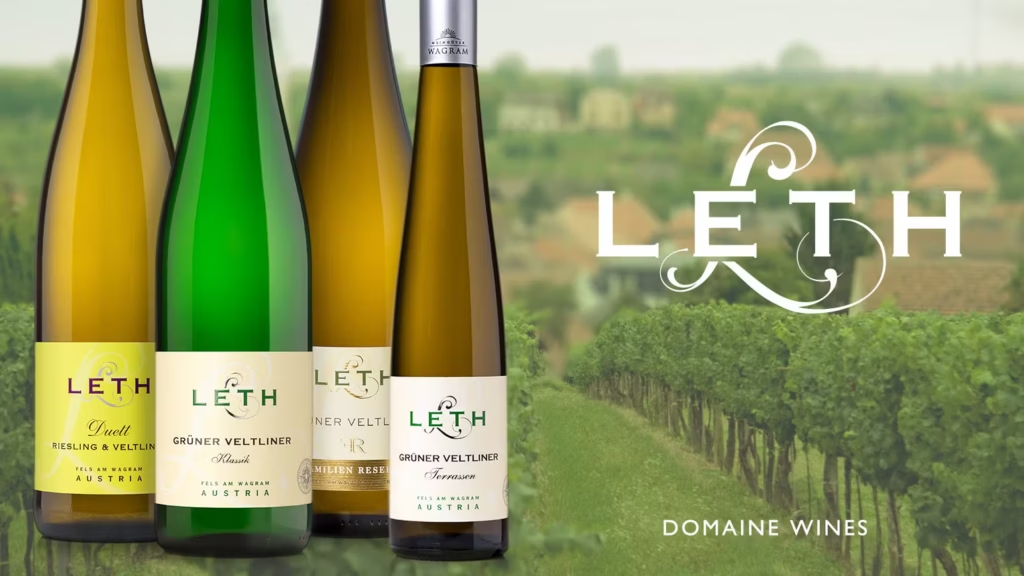
Franz Leth Jr. – Since 2006, he’s been running the estate with a focus on sustainability. There’s no herbicides, no anti-botrytis treatments, no unnecessary chemicals. His Grüner Veltliner is bright and expressive, and his Roter Veltliner might surprise you with its depth. He also grows a delicate Pinot Noir on limestone soils that’s really worth a try.
Bernhard Ott – Took over the family estate when he was just 21, back in 1995, and completely changed the game. He switched to biodynamics and even brought in soil expert Claude Bourguignon to study his vineyards. All his Grüner Veltliners are fermented and aged in stainless steel, spending extra time on the lees for that silky texture. And because he loves to experiment, he also makes one in amphorae, inspired by Georgian winemaking — and yes, it totally works.
These are the kinds of producers that make Wagram such a joy to explore — thoughtful, curious, and quietly confident. You don’t get the showmanship you sometimes find elsewhere; instead, it’s all about balance, place, and a lot of heart.
If you love rich, spicy whites with real character, Wagram wine region!
Wagram might not have the fame of Wachau or Kamptal, but it’s one of those regions that wins you over quietly. The landscape is soft and welcoming, the soils full of history, and the people just genuinely love what they do.
The region’s glacial loess sits over marine sediments and old river gravels. This gives the wines that mix of texture, spice, and freshness that’s so typical of Wagram. The climate is pretty consistent too, which helps create wines that are both expressive and reliable year after year.
Since 2022, Wagram has had its own DAC, with the same three-tier structure you find across Austria: Gebietswein, Ortswein, and Riedenwein. All the DAC whites, whether it’s Grüner Veltliner, Roter Veltliner, or Riesling, must be dry and free of strong oak influence, keeping the focus exactly where it should be: on the land and the fruit.
So what can you expect in your glass?
Think spicy Grüner Veltliner, distinctive Roter Veltliner, and elegant Riesling.
If you haven’t tried a wine from Wagram yet, do yourself a favor and change that. Wagram wines are all about warmth and spice, from juicy Grüner Veltliners, distinctive Roter Veltliners, and elegant Rieslings born from loess and sunlight.
Where to next?
A quick guide to Austria’s best wine regions
If Wagram got you curious about Austrian wine, wait until you see the rest.
Let’s zoom out and explore the country from north to south — Grüner Veltliner, Blaufränkisch, and everything in between.
Ready to taste what we’ve been talking about?
I’ve rounded up a few trusted websites where you can order Austrian wine — from great value bottles to organic gems.
If Wagram made you want to pour a glass right now — let’s make it happen.
I host relaxed, private tastings in France, where we explore wines from Austria (and a few surprises from beyond). No jargon, no pressure — just good wine, good stories, and good company.
Whether it’s with friends at home or your team at work, I’ll bring the bottles and the fun. You just show up curious.




One Comment
Franck MULARD
Very interesting!