Burgenland wine: Austria’s red + sweet wine powerhouse (Neusiedlersee, Blaufränkisch & DAC guide)
11 minutes read
Let me guess why you’re here.
You’ve heard Austria makes brilliant whites (Grüner, Riesling…) — but now you keep seeing one name pop up when people talk about serious reds and legendary sweet wines:
Burgenland.
So you’re wondering:
- What is Burgenland wine, really?
- What should I taste first?
- And why does everyone keep mentioning a lake?
Perfect — you’re exactly where you should be.
Because Burgenland is basically Austria’s wild card region: it can deliver deep, complex reds (Blaufränkisch and Zweigelt are the stars), but also some of the most fascinating botrytised dessert wines in Europe, made mainly from Welschriesling — thanks to the magical (and slightly mysterious) Neusiedlersee near the Hungarian border.
Ready? Let’s head east.
Burgenland has winemaking roots back to Roman times, keeping the folks in Carnuntum and Vienna happy by supplying wine. Post–World War I, the region adopted its current name after voting to remain in Austria (good call!). Initially known for Hungarian grape varieties, Burgenland gradually shifted to Austrian varieties like Welschriesling and Blauburger. Despite facing a few hiccups like Soviet occupation and a wine scandal in 1985, the region has bounced back like a champ. With diverse terroirs ranging from the hills of Leithaberg to the shores of Lake Neusiedl, Burgenland produces outstanding wines — especially in the worlds of dry reds and sweet whites.
History of Burgenland
Archaeological evidence shows that the Romans were already producing wine in Burgenland — mainly to supply their large settlements in Carnuntum and Vienna.
Over time, the area around the Neusiedlersee became particularly famous for sweet wines, especially the town of Rust and its legendary Ausbruch wines.
Until 1921, this region was part of Austria-Hungary. After World War I and the Treaty of Versailles, Hungary became independent. The residents of Burgenland voted to remain in Austria, and the region adopted the name Burgenland.
At the time, Burgenland wines didn’t enjoy much reputation. The principal grape varieties were Hungarian, and wines were mostly exported to Slovakia, Hungary, and Poland. (And by the way: many major Burgenland grapes are also found across the border in the Hungarian village of Sopron.)
Over time, Hungarian varieties declined, and more “Austrian” varieties such as Welschriesling and Blauburger became more prominent.
The region then stagnated, especially after 1945 when Burgenland was under Russian occupation. But once the Russians withdrew in 1956, interest returned. Burgenland built a growing reputation as a producer of inexpensive sweet wines — until the infamous 1985 wine scandal, which shook the entire Austrian wine industry.
So yes: Burgenland has seen the fall of the Austro-Hungarian Empire, contested borders, Soviet occupation, and a nationwide wine scandal. And yet…
Today Burgenland is a testament to resilience. Thanks to EU investments, its wineries are now among the most modern in the country. By embracing natural resources, rediscovering vineyards, and reviving older techniques, winemakers are making genuinely world-class wines.
Terroir : soil and climate
Burgenland is capable of producing a huge range of wine styles, but it shines particularly in two categories:
- outstanding sweet wines made around the lake (fog + noble rot)
- outstanding red wines (because the climate is warm enough to ripen red grapes properly)

Climate: why Burgenland can do reds (and the north can’t always)
One of the big differences between the Wachau (in the north) and its southern counterpart Burgenland is climate.
Wachau is shaped by the meeting of cold and hot weather systems, whereas Burgenland sits on the vast Pannonian plain, under warm westerly winds.
That warmth is the key reason red grapes can ripen at such a northern latitude. It basically transforms the landscape from “white wine territory” into “red wine haven.”
That said, Burgenland is not uniform:
- the northern tip bordering Slovakia receives cooling influence from Weinviertel
- the southern Eisenberg is also cooler, influenced by colder air from the eastern Alps
And while Wachau has the Danube as a temperature regulator, Burgenland has something else: forests.
These forests don’t just provide shade and cooling: they protect fragile botrytised grapes from wind and foster biodiversity (a role similar to Wachau terraces).
Rainfall + drought
Burgenland sees slightly more rainfall than Lower Austria, but higher temperatures and evaporation compensate for it. Drought can be a challenge, which is why irrigation is sometimes used.
The finest wines often come from water-retaining clay or loam sites, allowing dry farming: yields may be lower, but quality goes up.

Burgenland soils are extremely diverse.
- Red wines from Leithaberg, Eisenberg and Mittelburgenland benefit from limestone, clay, and schist soils (good retention + drainage).
- Coarse sandy gravels (ancient Danube beds) cover over 60% of the region — especially in Seewinkel, where around one-third of Austria’s vineyards are located.
- Older terraces have a clay layer, often low in limestone.
- About one-third of vineyards grow on Neogene basin sediments, ranging from:
- loamy clays (sometimes almost pure, limestone-free in Mittelburgenland)
- to hard limestones in Leitha
- Vineyards on hard rocks are rare but diverse: dolomite, limestone, limestone schist, clayey and mica schists, gneiss, amphibolites, serpentinites…
So… what’s the “so what” in the glass?
Okay — if your brain is starting to drift at “Neogene sediments”, I don’t blame you.
Here’s the real takeaway: Burgenland is warm enough to ripen reds beautifully but still has enough cooling influence (forests, altitude, winds) to keep freshness. That’s why Burgenland reds can be:
- dark-fruited and generous
- but still structured, balanced, and age-worthy
And around the lake, the terroir creates something even rarer: sweet wines that are intensely concentrated but still fresh — not heavy, not sticky, just pure golden magic.
If you want to geek out (in a fun way) about why soil matters so much, I wrote a full guide here: How does soil affect the taste of wine?
The famous lake of Burgenland : Neusiedlersee
In Lower Austria (especially in Wachau), the Danube River plays the starring role: a large body of water regulating temperatures, protecting vines in winter and cooling them in summer.
Burgenland didn’t benefit from that. Historically, it was less prosperous, with less investment, and the Danube wasn’t its trade route.
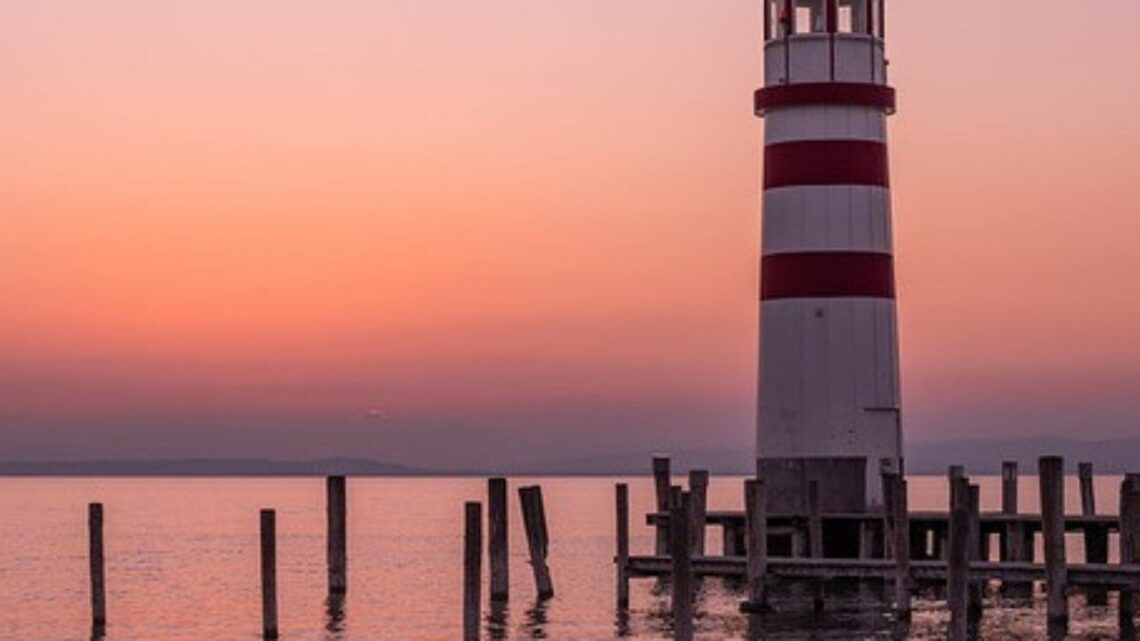
Instead, Burgenland’s defining feature is the Neusiedlersee, visible on the map below — and interestingly, parts of it are claimed by three different sub-regions.
Austria’s largest lake is extremely shallow: at most, it’s 11 inches deep. Yes — you can literally walk through it.
Anecdote: Lake Neusiedl isn’t fed by rivers or springs and has dried up over 100 times (notably in 1866). Five years later it refilled — and no one can fully explain why, even after farmers started cultivating crops in the silty bottom.
Why this lake is sweet wine gold
Its shallow depth is the key to Burgenland’s sweet wines.
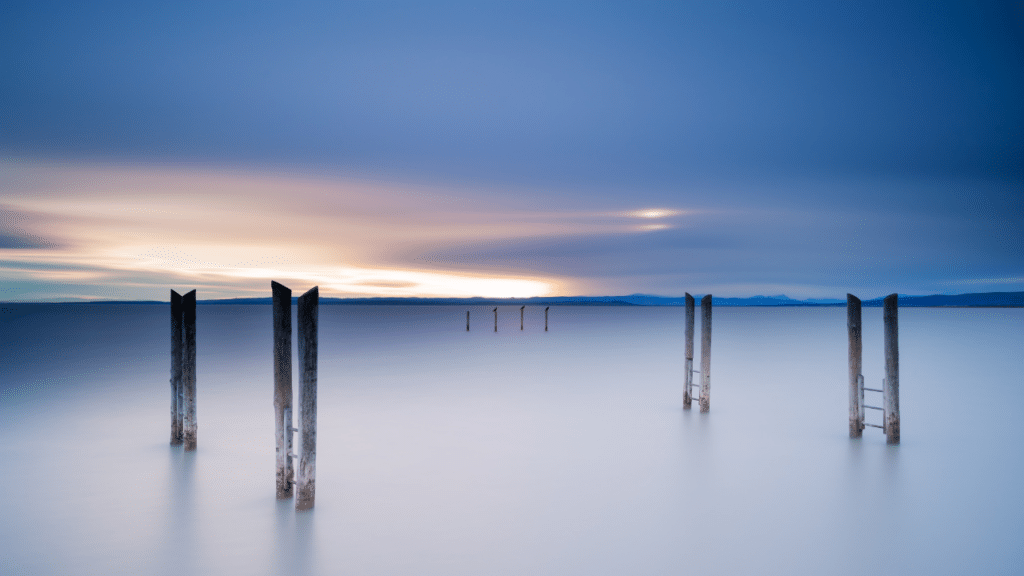
During the growing season, the lake heats up and creates humid conditions with morning fog — perfect for mildew spores. But because the region also gets 2,000 hours of annual sunshine and constant afternoon breezes, the fog disappears by mid-morning, drying the grapes.
This sets the stage for the development of botrytis (noble rot).
(In a nutshell: botrytis is a fungus that desiccates grapes, concentrating sugars. Fermented, these grapes give spicy saffron / orange notes and make intensely sweet wines.)
Anecdote: Unlike Sauternes, Tokaj, or the Mosel, Neusiedlersee gets noble rot reliably year after year. These wines may be less fashionable today, but they remain treasures for wine lovers.
Grape varieties in Burgenland
When it comes to reds, Burgenland still doesn’t have one single strategy:
- some producers love international varieties
- others focus on Austrian grapes
Anecdote: Alois Kracher (2003) said: “There are no Austrians reds that can compete with the best of Bordeaux or Napa at ten years old. Austria has its own grapes but not its own style, so there is a conflict between regionality and international acceptance. It will take us a while to be recognised internationally, as there is so much competition from other countries, which are also improving quality fast. We can also lack focus. Austrians are trying to make good Pinot Noir and good Cabernet Sauvignon, but it’s impossible to do both – it’s basically too warm for Pinot Noir and too cold for Cabernet.””
(And honestly… I see his point, but also: today Burgenland has absolutely proven itself.)
Most planted grape varieties
- Blaufränkisch (22%)
- Zweigelt (19%)
- Grüner Veltliner (10%)
- Welschriesling (10%)
- Chardonnay + Weissburgunder (about 5% each)
Other styles
- Schilfwein: made from healthy grapes dried on reeds (not straw). Very sweet, often lacking structure/acidity, best enjoyed young.
- Strohwein: similar style.
- Eiswein exists near the lake, but the best examples tend to come from Weinviertel (and Germany/Canada).
The DAC in Burgenland
The DAC system changed the map of Burgenland, which is now divided into five regions:
- Leithaberg (formerly Neusiedler-Hügelland, west side of the lake)
- Neusiedlersee (east side)
- Mittelburgenland
- Eisenberg (formerly Südburgenland)
- Rosalia (created in 2018, southwest extension of Leithaberg)
After the first typical wine of Burgenland (Mittelburgenland DAC, since 2005 vintage), Leithaberg DAC and Eisenberg DAC established themselves too. The Burgenland DAC family expanded in March 2012 with Neusiedlersee DAC, and in 2018 with Rosalia DAC..
The different parts and kind of wines in Burgenland
Now, here’s where Burgenland gets really fun — because yes, it’s one region… but it behaves like several regions in a trench coat.
Under the influence of the warm, continental Pannonian climate, Austria’s most complex red wines thrive here. But don’t assume Burgenland is one big uniform blob of “red wine country” — the natural differences between its areas are huge, and they show clearly in the glass.
Eisenberg: freshness + mineral elegance (Blaufränkisch heaven)
Further south, Mount Eisenberg stands out immediately thanks to its specific substrates and that little touch of Styrian-like freshness. This is prime territory for Blaufränkisch to produce exquisitely elegant red wines, often with a finely mineral character.
Mittelburgenland (and north Rosalia): depth, fruit, length
In the heavy clay soils of Mittelburgenland, and also in the north of the Rosalia range, the style becomes richer and more powerful. These conditions allow exceptional Blaufränkisch wines to flourish — wines with impressive fruit depth and serious length on the palate (the kind that stays with you long after you swallowed).
West of Lake Neusiedl: mineral edge + a touch of tannin
In the hills west of Lake Neusiedl, another expression appears: wines can show a pronounced mineral note, often with a touch of tannin — more structure, more “edge”, still very Burgenland.
Leithaberg: limestone + schist = Blaufränkisch AND serious whites
The eastern slopes of the Leitha mountain are made of limestone and schist subsoils — which creates an absolutely distinctive terroir.
Yes, it’s excellent for Blaufränkisch, but not only. This is also one of the places in Burgenland where you can find truly complex white wines, including:
- Pinot Blanc
- Chardonnay
- Grüner Veltliner
And again, Burgenland loves to surprise you: Ruster Ausbruch is one of the world’s most renowned sweet wines .
East of Lake Neusiedl: juicy Zweigelt (plus Sankt Laurent)
To the east of Lake Neusiedl, Blauer Zweigelt dominates, giving full-bodied, juicy, generous red wines. That said, Blaufränkisch and Sankt Laurent can also produce exceptional results here — definitely not a one-grape show.
Seewinkel: one of the world’s sweet-wine strongholds
And then… we arrive at Seewinkel, which is basically Burgenland’s superpower.
The Seewinkel area, in the southern part of the east, benefits from a special microclimate and is among the few great strongholds of sweet wines in the world.
Why? Because of the region’s temporary saline water bodies called “Zicklacke”. This naturally increases ambient humidity, which promotes the development of noble rot (botrytis cinerea) in autumn.
As a result, Seewinkel regularly produces outstanding wines in the styles of:
- Beerenauslese
- Trockenbeerenauslese
And among the grape varieties involved (including Chardonnay, Scheurebe or Traminer), it’s Welschriesling that reaches its highest level of quality here — in its most glorious, botrytised form.
Conclusion : Burgenland wines
Burgenland’s terroir delivers remarkable diversity: exceptional sweet wines around the lake thanks to fog and noble rot, plus outstanding reds from slopes like Leithaberg, Eisenberg and Mittelburgenland.
There is no single red-wine philosophy in the region, with producers split between international and Austrian grape varieties. Most planted grapes include Blaufränkisch, Zweigelt, Grüner Veltliner, Welschriesling, Chardonnay and Weissburgunder.
DAC changes have reshaped the map into five regions: Leithaberg, Neusiedlersee, Mittelburgenland, Eisenberg and Rosalia.
And the personality of each sub-region matters: Eisenberg’s elegance and minerality, Mittelburgenland’s depth, Leithaberg’s structure and complex whites, and Seewinkel’s extraordinary botrytised sweet wines
Where to next?
Austria is a small country… with huge wine diversity. From peppery Grüner to bold Blaufränkisch and Vienna’s urban vineyards, here’s your guided tour of Austria’s must-know wine regions
Austrian wines are having a moment — and if you’re wondering where to buy Austrian wine online, I’ve got you. Here are my trusted retailers for great bottles, good value, and ethical sourcing
Want a private wine tasting at home, at the office, or even in an Airbnb in Provence? I’ll bring rare wines from Austria, Japan, and England — and make it fun, easy, and unforgettable


You May Also Like
Tasting Notes Checklist For Austrian Wines
Grüner Veltliner from Wachau