
Traisental wine region : Fresh, Spicy, and Full of Austrian Character
4 minutes read
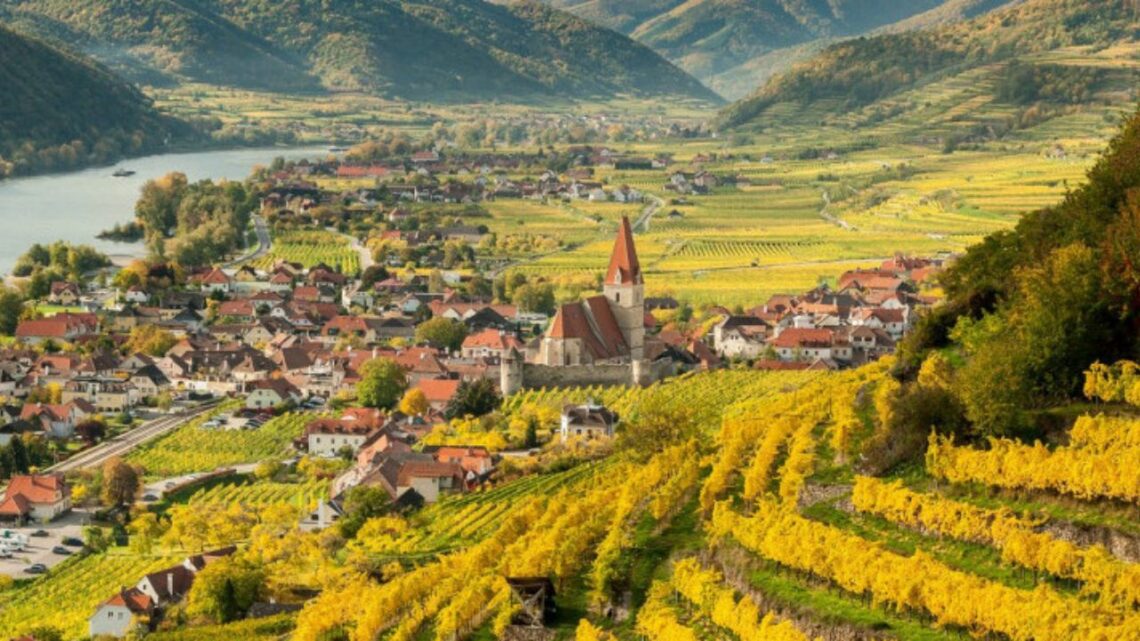
If you’ve already explored Wachau or Kamptal, let me take you somewhere a little quieter — the Traisental wine region. Just west of Vienna, this pocket-sized valley doesn’t make headlines, but it delivers big on character. Think crisp, peppery Grüner Veltliner, elegant Riesling, and that unmistakable Austrian balance between freshness and spice.
Traisental’s winemaking roots run deep — over 500 years of history, with grape seeds from the Bronze Age discovered in the area. Today, its 1,500 acres of vineyards and 50+ producers craft around 10 million bottles each year. It’s a region that proves small can be mighty.
Visitors can wander through the charming towns of the valley, like Traismauer, where narrow streets and centuries-old cellars tell stories of Austria’s oldest winemaking traditions. Whether you come for the wine, the scenery, or both, Traisental has that easygoing mix of authenticity and discovery that makes you want to linger — preferably with a glass in hand.
Tucked between Kamptal and Kremstal, Traisental might be small, but it packs a serious punch. With over 500 years of winemaking and about 1,500 acres of vines, this region is all about character. The soils here — a mix of limestone, gravel, and ancient river deposits — give the wines that bright, mineral edge I absolutely love. Grüner Veltliner is the star (no surprise there), while Riesling shines on the calcareous slopes, full of energy and aging potential. Since 2006, the Traisental DAC has guaranteed wines that taste like the place they come from — clean, fresh, and expressive, with no heavy oak to hide behind. Winemakers like Markus Huber, Leopold Figl, and Ludwig Neumayer are leading the way, making whites that are vibrant, spicy, and just ridiculously drinkable.
The Traisen Valley
The Traisen Valley is one of those rare places where wine, nature, and culture come together so effortlessly you wonder why it isn’t more famous. Nestled between gentle hills and winding rivers, it’s a dream for hikers, cyclists, and anyone who likes to explore with a glass of something good waiting at the end of the trail.
And wine has been part of life here for a very long time — archaeologists found grape seeds dating back to the early Bronze Age, long before the Romans ever set foot in the area. That’s how deep the roots go.
The valley’s main hub, St. Pölten, is the regional capital of Lower Austria and a lively base for exploring. From there, small roads lead you to postcard-perfect wine villages like Statzendorf, Unterwölbling, Oberwölbling, Nußdorf, Reichersdorf, Getzersdorf, Inzersdorf, Stollhofen, Frauendorf, and Gemeinlebarn — each one with its own charm and cozy farm inns serving local food and wine.
Whether you’re chasing panoramic vineyard views, cycling through quiet country lanes, or just sipping Grüner Veltliner in a shady courtyard, Traisental feels like the kind of place that still moves at wine pace — slow, deliberate, and full of heart.
Terroir in the Traisen valley: soil and climate
If you love wines that balance freshness with structure, Traisental might just become your new favorite region. Its secret lies beneath your feet — in the ancient soils shaped by time, rivers, and mountains.

The most distinctive feature here is the coarse limestone and dolomitic gravel carried down from the Alps some 16 million years ago by the prehistoric Traisen River. Over time, these materials hardened into conglomerates, forming the backbone of the vineyards on the western slopes.
The result? Wines with bright acidity, minerality, and an underlying sense of precision — like a crisp Grüner Veltliner that knows exactly what it’s doing.
On the right side of the valley, things get even more interesting. Here, you’ll find the Traisental Formation — a mix of limestone sands and loams, sometimes slightly compacted, and sprinkled with the marine shell Oncophora. It’s a reminder that this land once sat under a warm, shallow sea.
The climate is a careful balancing act. Compared to nearby Kamptal and Kremstal, Traisental sees a bit more rainfall, but the winds that sweep up from the Alps keep the grapes dry and healthy. To avoid frost and unwanted botrytis, many vineyards are planted higher on the slopes — where breezes are stronger and the air cooler.
Like its two “sister regions,” Traisental benefits from both the warm Pannonian influence from the east and the cool Alpine air from the west. That daily dance between hot days and cool nights is what gives the wines their signature style — aromatic finesse, lively freshness, and a touch of spice.
Grape varieties in Traisental
If you only remember one thing about Traisental wine, let it be this: it’s Grüner Veltliner country.
This grape completely rules the valley — it covers almost 60% of the vineyards — and it really shows its best side here. The soils are mostly chalky and gravelly, giving the wines that perfect mix of freshness and body.
You get this lovely peppery spice, bright citrus, and a smooth texture that makes Grüner Veltliner from Traisental both easy to drink and seriously elegant.
Riesling also plays a big role here, though it’s a little pickier about where it grows. You’ll find it on small, stony terraces with dry, calcareous, gravel-rich soils, which help the grapes keep their structure and minerality.
The result? Lively, zesty wines with great depth and the kind of acidity that makes you want another sip. They also age beautifully if you’re the patient type.
So yeah, between the Grüner and the Riesling, Traisental wine is all about clean, expressive flavors with a touch of mountain freshness. It’s one of those regions that quietly delivers wines with real character.
Traisental DAC
Traisental might be one of Austria’s smaller wine regions, but it takes quality very seriously.
It officially became a DAC (Districtus Austriae Controllatus) in 2006, joining the ranks of Austria’s top appellations, and it follows the same clear structure as Kremstal and Kamptal.
The different levels of Traisental DAC
Within the Traisental DAC, several levels exist, which you’ll see directly on the label. Wines can simply be labelled Traisental DAC, or Traisental DAC with the indication of a specific commune. For even more precision, some bottles mention both the commune and a specific cru; in that case, a state control number is required from January 1st of the year following the harvest.
There is also Traisental DAC Reserve, which is released later and requires a state control number from July 1st of the year following the harvest. On all bottles, the origin appellation — and, if applicable, the word “Reserve” — must appear on the front label (if there is no back label), and the harvest year must always be indicated.
Each level has its own style
In terms of style, every wine labelled Traisental DAC must be made from Grüner Veltliner or Riesling, and all are dry, with no residual sugar. Alcohol levels give you another clue to what’s in the glass: Traisental DAC wines must reach a minimum of 11.5% alcohol, Traisental DAC with a commune indication requires at least 12.0%, and wines that include both a commune and a specific cru must reach 12.5% alcohol.
These wines should feel well-balanced, show no dominant botrytis influence, and reflect the typical density of the vintage, with a style that’s often described as crisp, aromatic, and full of finesse — very much shaped by the valley’s limestone and gravel soils, which give Traisental its mineral-driven edge.
Traisental DAC Reserve takes things a step further. With a minimum of 13.0% alcohol, these wines have a fuller-bodied style, a dense and long-lasting palate, and are allowed a slight presence of botrytis and oak notes, adding texture and depth while staying true to the region’s character.
If you love precise, mineral whites, Traisental is a great choice — Klassik for crisp freshness, Reserve when you want a bit more weight and complexity.
Wineries in Traisental
One of my favorite things about Traisental wine is how personal it feels — this isn’t a region of big, flashy estates. It’s full of winemakers who pour their hearts into their vineyards, crafting bottles that tell real stories. Here are a few names you should definitely know:
Leopold Figl took over winemaking in 2012, after honing his skills at Stadt Krems in neighboring Kremstal. His vineyards are planted on sandy loess soils, which give his Grüner Veltliners a fuller body and a touch more alcohol. And if you’re into sparkling wines, don’t skip his — they’re such a treat!

Markus Huber, on the other hand, is the region’s superstar. When he took over the family estate in 1999, it was just 5 hectares — now it’s grown to 55 hectares spread over more than 100 tiny plots. His top wines get minimal skin contact, ferment in neutral Austrian acacia casks, and age 9 months on the lees. The result? Elegant, structured wines that capture Traisental’s precision beautifully.
Then there’s Ludwig Neumayer, who’s all about expressing the character of his stony soils. His winery may be small, but the quality is anything but. Two wines you’ll want to remember: “Wein vom Stein,” a blend from different rocky parcels, and “IKON,” his top selection from the estate’s best plots — both known for their aging potential and that signature mineral edge Traisental is famous for.
These producers perfectly capture what makes Traisental wine special — clean, honest, and quietly confident. No hype, no frills — just great wines made by people who care deeply about their craft.
Why You’ll Fall for Traisental Wine
Traisental might not make as much noise as its neighbors Kamptal or Kremstal, but once you taste a Traisental wine, you’ll wonder why it’s still under the radar.
This valley produces Grüner Veltliner that’s bright, spicy, and full of energy — plus Rieslings with that signature mineral kick and a backbone built to age. The secret lies in the region’s limestone-rich soils, constant Alpine breeze, and hot-day, cool-night rhythm that gives every bottle its elegance and lift.
Since 2006, Traisental has proudly carried its DAC classification, following the same standards as its two northern sisters — Kremstal and Kamptal. That means when you open a bottle labeled Traisental DAC, you’re guaranteed quality and authenticity: wines that reflect the valley’s pure, stony terroir and no unnecessary oak getting in the way.
Add to that a community of dedicated winemakers like Leopold Figl, Markus Huber, and Ludwig Neumayer, and you’ve got a region that quietly crafts some of Austria’s most precise and characterful wines.
If you love wines that balance freshness, spice, and real personality — Traisental wine is your next discovery waiting to happen.
Where to next?
A quick guide to Austria’s best wine regions
If Traisental got you curious about Austrian wine, wait until you see the rest.
Let’s zoom out and explore the country from north to south — Grüner Veltliner, Blaufränkisch, and everything in between.
Ready to taste what we’ve been talking about?
I’ve rounded up a few trusted websites where you can order Austrian wine — from great value bottles to organic gems.
If Traisental made you want to pour a glass right now — let’s make it happen.
I host relaxed, private tastings in France, where we explore wines from Austria (and a few surprises from beyond). No jargon, no pressure — just good wine, good stories, and good company.
Whether it’s with friends at home or your team at work, I’ll bring the bottles and the fun. You just show up curious.


One Comment
Franck MULARD
Very interesting!