
Best wines for cozy dinners
or wines that’ll impress your guests (without being obvious)
Home » Austria »22 minutes read
Throughout the year, you’ll drink, host, share, celebrate — and occasionally try to impress at least one person around the table.
Maybe it’s your in-laws. Maybe it’s the friend who thinks they know everything about wine. Maybe it’s yourself (yes, you deserve that).
You know the moment — the raised eyebrow, the pause, the: “Wait… this is actually really good. What is it?”
Here are 9 wines from Austria and Japan that make any meal feel special — without needing a PhD in wine to understand them.
Why choose foreign wines when you want to impress?
Because most dinners are predictable. The wine doesn’t have to be.
Austrian and Japanese wines bring:
- freshness (essential when food gets heavy)
- elegance (always welcome)
- stories (because yes, wine is a conversation starter)
- originality (your bottle becomes the moment)
And most importantly:
They pair brilliantly with festive food.
So let’s explore.
Austria: six bottles that make you look like you know what you’re doing
Grüner Veltliner
The “everyone loves it” white wine.
Why it works
- fresh, zesty, peppery
- clean and elegant
- a perfect crowd-pleaser
Serve it with:
- oysters
- smoked salmon
- scallop carpaccio
Fun fact to drop at the table:
“It’s like Muscadet married a pinch of white pepper—Austrian style.”
My recommandation : FJ Gritsch Gruner Veltliner Ried Steinporz 2023
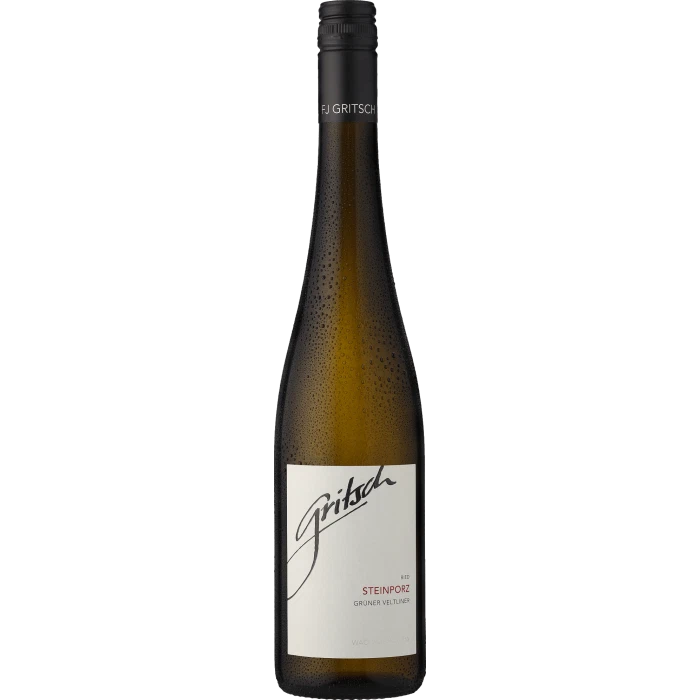
(Wachau, Austria – Smaragd – 13.5% – Sustainable Austria – Vegan)
If there were a textbook definition of “Austrian white wine with personality,” this bottle would be it.
The Steinporz vineyard sits on steep terraces just above the Danube — the kind of place where vines grow in thin soil over solid stone, and where you immediately think: ah, yes… this is going to be a mineral-driven wine.
And it is.
First impressions (the nose)
Before you even swirl the glass, it hits you with that generous, mouthwatering aroma Grüner can have when it comes from a great site:
- a little butter, a little brioche (your Christmas kitchen at 9 a.m.)
- lively citrus zest
- yellow orchard fruit
- meadow herbs
- and that beautiful “crushed stone” signature of the Wachau
It’s expressive. It’s confident. It’s a wine that knows exactly who it is.
On the palate
The first sip is almost surprising — there’s a silky, slightly glycerol texture, but then the acidity comes in like a clean winter breeze. Everything snaps into balance.
You’ll find:
- lime zest
- sweet/bitter interplay (in the best possible way)
- a creamy touch
- honeysuckle
- hints of hazelnut
- a fine line of white pepper
- and a long, cool, mineral finish
It’s one of those wines you can follow for an entire evening and never get bored.
There’s always something happening.
What to pair it with (especially for the holidays)
This Grüner loves:
- scallops
- elegant fish dishes
- roast chicken
- pork (yes, sausages included)
- creamy pastas
- festive seafood
Basically: anything where freshness + depth makes the dish shine.
Ageing
Happily stays in your cellar for 10 to 15 years, gaining layers while keeping its precision.
The sentence to drop at the table
“Steinporz is all stone and sunlight — it gives you texture, depth, and that beautiful mineral grip the Wachau is famous for.”
Looking for a premium recommendation? Knoll Grüner Veltliner Ried Loibenberg Smaragd 2023
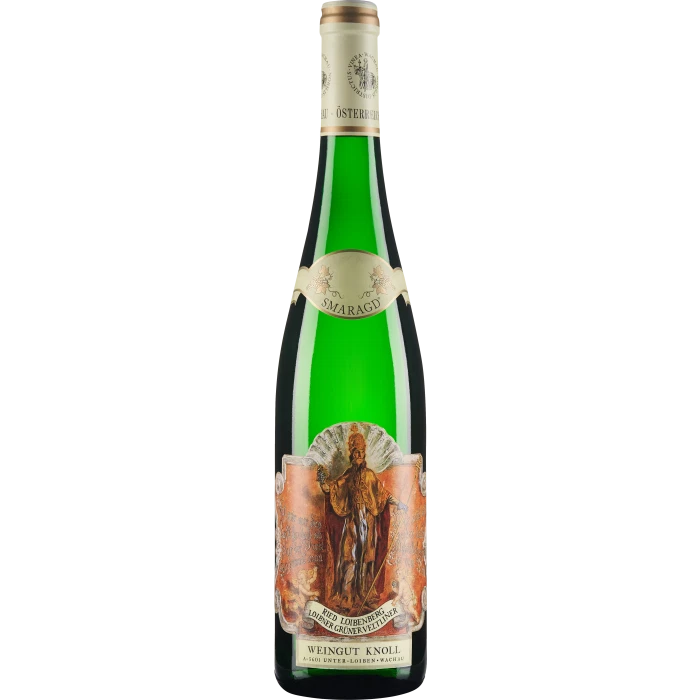
(Wachau, Austria – Smaragd – 13.5% – one of the region’s reference estates)
If you want to bring a seriously impressive bottle to a Christmas dinner — the kind of wine that gets quiet nods and slow, thoughtful sips — this is the one.
Knoll is one of those names in the Wachau: iconic, meticulous, deeply rooted in its terroir. Their vineyards sit between 260 and 350 meters above the Danube, facing south, on a mosaic of calcareous loess and quartz-rich gneiss.
And Loibenberg? It’s one of the most revered sites of the region — a place that naturally produces deep, elegant, age-worthy Gruner Veltliner.
Aromas: deep, layered, confident
This wine doesn’t rush. It opens slowly, with:
- fresh herbs
- white fruits
- refined mineral notes
Not flashy — classy. Quietly complex. The kind of nose that invites you back again and again.
On the palate: richness + precision
This is what Smaragd is all about: full-bodied, structured, generous, but never heavy.
Expect:
- intensity
- roundness
- depth
- silky texture
- and a fresh, saline, mouthwatering finish
There’s a real sense of place here — the kind of mineral clarity you only get from steep terraces and thirty-year-old vines.
Food pairings (festive & elegant)
This is the bottle you serve when the menu is refined:
- creamy freshwater fish
- seafood risotto
- porcini risotto
- terrines
- veal
- or anything where richness meets elegance
It’s also the bottle you open when you want your guests to think:
“Ah… so this is what great Grüner tastes like.”
Drink now, or keep it up to 15 years
No decanting needed — it’s already poised, polished, and expressive.
The sentence to drop at the table
“This is Loibenberg — one of the Wachau’s great terroirs. Grüner doesn’t get much more refined than this.”
Austrian Riesling
The Christmas white that glows from within
Why it’s perfect
- dry, juicy, aromatic
- peach, citrus, and that beautiful mineral tension
- feels like a breath of fresh air between bites
Serve it with:
- foie gras (yes, absolutely)
- rich fish dishes
- lightly spicy plates
Pro tip
If someone says “I only drink Alsace,” pour them this.
My recommendation : FJ Gritsch Riesling Ried Setzberg 2024
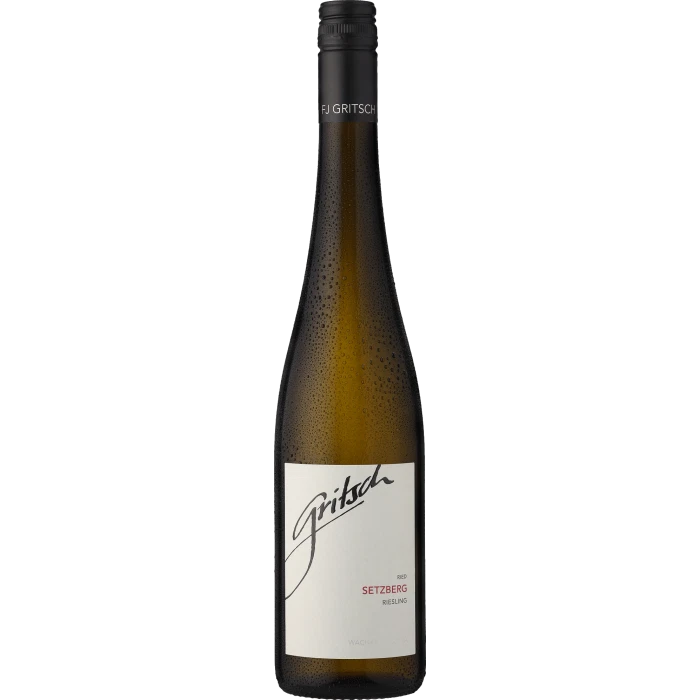
(Wachau, Austria — Smaragd — 13.5% — cellar up to 20 years)
If the Steinporz Grüner is the “quiet confidence” of the Wachau, the Setzberg Riesling is its bright, sculpted, majestic voice — the kind of wine that stands tall and doesn’t need to raise it to be heard.
Perched high above Spitz, the Setzberg vineyard rises to almost 400 meters, its terraces carved into ancient metamorphic rock and poor sandy soils. Riesling adores this kind of stress — it digs deep, concentrates, and gives you fruit that feels like it has been distilled by altitude and stone.
And with Franz-Josef Gritsch at the helm — seventh generation, hand-harvesting with the precision of a jeweler, vinifying in his modern “Kalmuck” cellar — the result is a wine with both tradition and ambition stitched into every drop.
On the nose
This Riesling doesn’t tiptoe in. It opens with a crisp, mouthwatering bouquet:
- pink grapefruit
- ripe peach
- plum
- a steely, almost chiselled minerality
It’s delicate but expressive — a nose that feels like sunlight reflecting on cold river stone.
On the palate
Here’s where the Smaragd signature comes in: power, structure, and clarity.
Expect:
- peach and plum
- citrus brightness
- a linear, driving acidity
- a full, generous texture
- the tiniest hint of effervescence that lifts the fruit
- and a long finish dusted with spice
It’s a Riesling that manages to be both mouth-filling and sharply defined — finesse meeting energy.
The fermentation in stainless steel preserves the purity of fruit; the ageing on lees + brief time in large oak foudres adds creaminess and shape. It’s the best of both worlds.
Pairing ideas (for Christmas or anytime you want to impress)
This wine loves dishes that highlight its tension and fruit:
- Mediterranean cuisine
- white fish (especially with herbs or citrus)
- poultry
- pork
- anything with a touch of cream + acidity
A classic Christmas pairing?
Roast poultry with citrus or herbs.
Ageing potential
You can keep it for up to 20 years — but it’s already glorious now.
Decanting optional (up to one hour).
Sentence to drop at the table
“Setzberg is all about altitude and stone — this Riesling is powerful, pure, and sculpted by its hillside.”
Zweigelt
The red that keeps the peace during family dinners
Why it shines
- juicy
- soft tannins
- fruity and playful
- extremely food-friendly
Serve it with:
- turkey
- roast chicken
- glazed ham
Bonus
Even your uncle who “doesn’t drink light reds” will love it.
My recommendation : Weingut Philipp Grassl Ried Schuttenberg 1OTW Erste Lage 2022
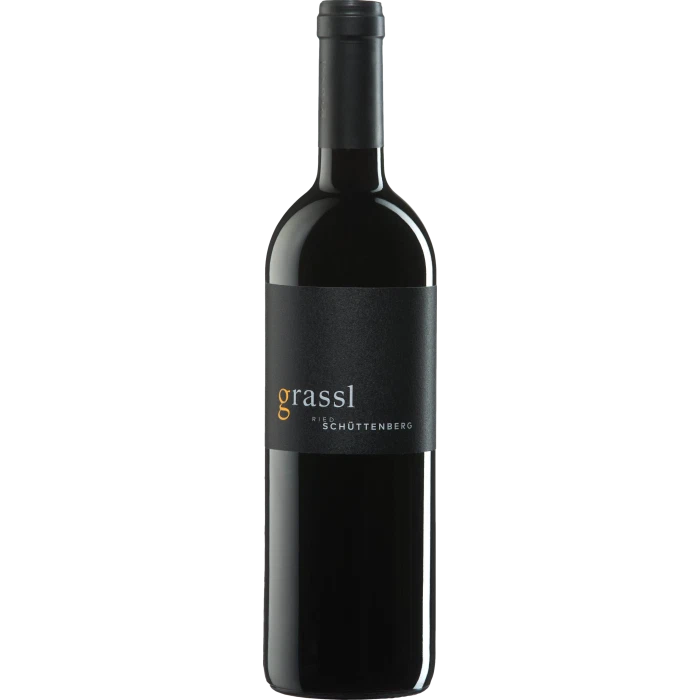
If you think you already know Zweigelt, this wine will gently — but firmly — prove you wrong.
Schüttenberg is one of those sites that completely rewrites the script: altitude, cool breezes, gravel-and-clay soils, and 45-year-old vines that have dug so deep into the ancient terraces of the Urdonau that the wine feels almost carved from the hillside itself.
Philipp Grassl has been running his family estate since 2006, farming organically and working in the cellar with a philosophy of minimal intervention, maximum precision.
And it shows here: this is Zweigelt with tension, definition, and the kind of depth people don’t usually associate with the grape — but absolutely should.
In the glass
A deep garnet red with violet reflections — the kind of color that already tells you you’re heading into something structured and serious.
On the nose
A broad, intense aromatic profile:
- blackberry
- cherry
- plum
- tobacco
- aromatic herbs
- subtle spice
- and that earthy, cool, slightly graphite-like complexity that comes from gravelly, calcareous soils
If you like wines with a “cool climate” signature — freshness, lift, definition — this nose is going to make you very, very happy.
On the palate
This is where Schüttenberg really stands out.
It’s juicy, structured, and full of character, but with a surprising freshness for a wine of this concentration.
Expect:
- black fruits
- firm, beautifully integrated tannins
- a long, lingering finish with a touch of bittersweet chocolate
- complexity and depth without heaviness
There’s a real sense of layer upon layer — the kind of wine you taste once, then again, then again, because something new keeps showing up.
Why it tastes like this
Honestly, this vineyard is anything but ordinary.
You’ve got the southwest exposure giving the grapes all the sunlight and ripeness they need, while the cool breeze from the nearby forest keeps everything fresh and lifted.
Then there’s the soil — gravel and clay sitting on ancient freshwater deposits — which gives the wine its structure and that lovely, grounded feel.
Add to that the old vines (45 years… they’ve seen things), so you get real concentration. In the cellar it’s all native yeasts in wooden vats, which gives the wine that natural texture and authenticity.
And after that? Sixteen slow months in both large and small oak, just enough to smooth everything out without covering anything up.
Basically, once you know all this, the wine suddenly makes perfect sense. It tastes exactly like where it comes from.
It’s the kind of detail-oriented winemaking usually reserved for high-level Burgundy — but applied here to Austria’s native red grape.
Food pairings (Christmas table included)
This is a food wine, full stop. It shines with:
- game
- roasted mushrooms
- smoked meats
- lamb
- steaks
- aged cheeses
If your Christmas menu leans toward darker, earthy flavors — this will be a star.
Ageing potential
Drink now or cellar up to 20 years.
Decant 30 minutes if drinking young.
Sentence to drop at the table
“Schüttenberg shows what Zweigelt can really do — structure, depth, and a cool-climate elegance most people never expect.”
Blaufränkisch
The elegant, slightly mysterious red
Why it’s magical
- dark berries
- spice
- a touch of smoke
- structure without heaviness
Serve it with:
- beef roast
- mushroom dishes
- truffle mashed potatoes
Nice phrase to say before pouring:
“It’s a bit like Cabernet Franc… but from a colder, more poetic place.”
I know, I know — Blaufränkisch is supposed to shine brightest in Burgenland.
And yet… sometimes you meet a winemaker you admire so deeply that you happily follow her across regions.
For me, that’s Dorli Muhr.
Her story begins in 1912, when her grandmother Katharina received a tiny 0.17-hectare vineyard as a gift — a humble beginning that quietly planted the seed for something bigger. The vines eventually died, life moved on… until Dorli rediscovered the family’s patch of land, fell in love with winemaking, and brought the story back to life — this time together with her daughter Anna.
So here goes : Dorli Muhr Samt & Seide Blaufrankisch 2022

Where the wine comes from
Samt & Seide (“Velvet & Silk”) is made from 20 separate parcels on the southern slope of the Spitzerberg, a limestone-rich hill that gives Blaufränkisch a very different profile from the Burgenland versions.
- 15–35-year-old vines
- younger vines = samt (velvet)
- older vines = seide (silk)
- all growing on dry, poor, limestone soils that force the vines to dig deep
- resulting in purity, finesse, and tension
This wine is the definition of “don’t underestimate the underdog.”
How it’s made
Dorli’s winemaking is all about restraint and clarity:
- hand-harvested grapes
- meticulous selection (every overripe berry removed)
- spontaneous fermentation with wild yeasts
- partial whole-cluster
- some grapes trod by foot — yes, really
- slow, natural fermentation in open vats
- no pumping, no temperature manipulation
- 20 months in large 1000–3000L neutral casks
- no filtration
Everything is designed to let the fruit and the limestone speak — not the cellar.
On the nose
A beautifully fresh, detailed, red-fruit profile:
- red berries
- refined, precise fruit
- herbal nuances
- refreshing acidity already hinted at in the aromatics
It smells like purity — like fruit picked at the perfect second.
On the palate
The name says it all: velvet and silk.
Expect:
- precise red fruit
- a bright, refreshing acidity
- velvety tannins (truly velvety, not marketing-velvety)
- a long, silky finish
- balance at 13% alcohol — impressive given the hot, dry 2022 vintage
It’s elegant, fine-boned, and quietly powerful — not a blockbuster.
It’s a wine with confidence, not volume.
Food pairings
This style of Blaufränkisch is incredibly flexible:
- roast poultry
- charcuterie
- mushroom dishes
- pasta with herbs
- soft cheeses
- grilled vegetables
- anything that benefits from freshness + elegance rather than weight
For Christmas?
Roast turkey with herbs or wild mushroom dishes will make it shine.
Cellaring
Up to 7 years, but already charming and expressive today.
No need to decant.
Sentence to drop at the table
“This is Blaufränkisch reimagined — pure, silky, and shaped by limestone.”
A premium recommendation : Dorli Muhr Ried Spitzerberg Kobeln 1OTW Erste Lage 2021
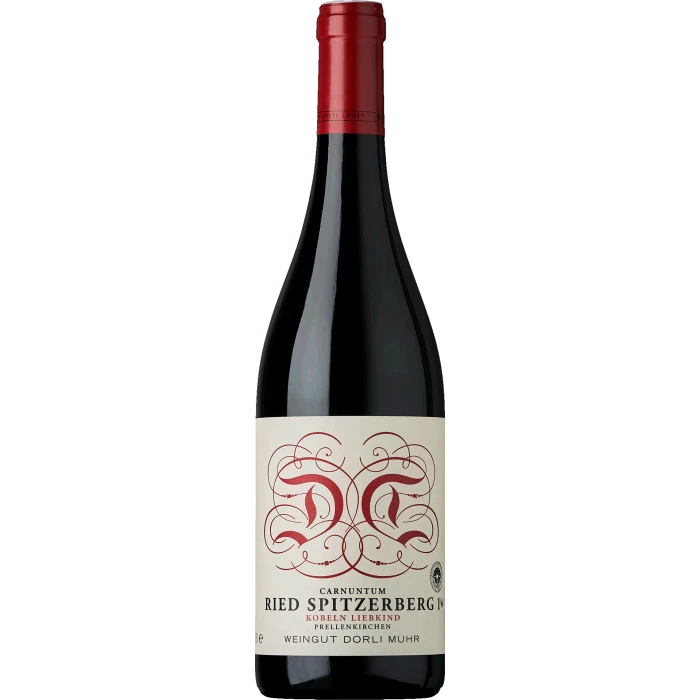
If Samt & Seide is the graceful, charming introduction to Dorli Muhr’s world, Köbeln is the masterpiece — the bottle that shows just how far precision, patience, and sheer stubborn dedication can take Blaufränkisch.
And stubborn she was.
Before becoming one of Austria’s most respected red-wine voices, Dorli Muhr had a groundbreaking career in wine PR. Then, in 2002, she did something beautifully unreasonable: she returned to the tiny 0.17-hectare vineyard gifted to her grandmother in 1918 and decided to make wine — barefoot grape-treading included.
Her neighbors called her “die verrückte Frau” — the crazy woman.
Today, she’s the woman who helped secure Erste Lage (Premier Cru) status for Spitzerberg in 2019.
The place: Kobeln
Kobeln is the highest vineyard on the Spitzerberg (210–270 m), perched on a brutally stony, dry, wind-swept slope.
This is not gentle winemaking terrain.
It’s a place where vines must fight for every drop of water, where yields are laughably tiny (6000 vines → barely 1500 kg of grapes), and where fruit naturally concentrates into something profound.
Dorli farms just 1.1 hectares here — organically, meticulously, and with a kind of devotion that feels almost ancestral.
The vineyard is so dear to her that the wine carries the name “Liebkind” — “beloved child.”
How it’s made
As always with Dorli, everything is done slowly, gently, and without shortcuts:
- hand-harvested
- spontaneous fermentation in open vats
- no pumping, no temperature control
- 1/3 of the grapes gently trodden by foot
- very slow, delicate extraction
- 22 months in large neutral oak
- bottled unfiltered
- released after another year of bottle ageing
This is winemaking that respects fruit, respects place, and refuses to rush anything.
On the nose
James Suckling called it “dark and mysterious,” which is actually a perfect starting point.
Expect:
- deep, ripe black fruit
- spice
- a touch of tobacco
- herbal notes carried by the wind
- that cool, stony intensity that only dry, exposed limestone slopes can give
It’s aromatic without excess — concentrated, but not heavy.
On the palate
This is power with finesse.
Elegant structure.
Firm, beautifully shaped tannins.
A sense of purity and gravity at the same time.
Flavours move from:
- ripe black cherry and dark berries
- to spice and earth
- to a long, smooth, surprisingly silky finish
It’s opulent, yes — but never overwhelming.
The 2021 vintage, considered an exceptional year on the Spitzerberg, brings both richness and clarity.
Everything feels in balance.
Food pairings (for the premium moments)
This is your bottle for:
- venison
- lamb
- beef
- roast mushrooms
- truffle dishes
- mature cheeses
- any dark, festive, savoury dish
If Samt & Seide is for a dinner with friends, Kobeln is for the dinner you remember.
Cellaring
Already beautiful, but will develop gracefully over 10 years or more.
Decant 1 hour or more.
Sentence to drop at the table
“Kobeln is the highest, harshest part of Spitzerberg — and that’s exactly why the wine is so extraordinary.”
Japan: three bottles for delicate, quietly impressive moments
Japanese wines bring softness and light.
A calm presence.
Works incredibly well with delicate, seafood-forward meals and anything with umami
And if you love natural wines, you’re in luck—I work with one of the only Japanese natural wine distributors.
Koshu
The purest, cleanest white for hosting
Why it’s perfect
- delicate
- floral
- crystalline
- refreshing without being sharp
Serve it with:
- salmon gravlax
- sushi (a brilliant Christmas twist)
- oysters
A line to share:
“It’s Japan’s signature grape—light as snow, bright as winter sun.”
Complicated to find Japanese wines in Europe..but on the lookout! However I did find one importer with a small recommendation.
And my recommendation to you today is : COCO FARM & WINERY – Koshu F.O.S. 2021
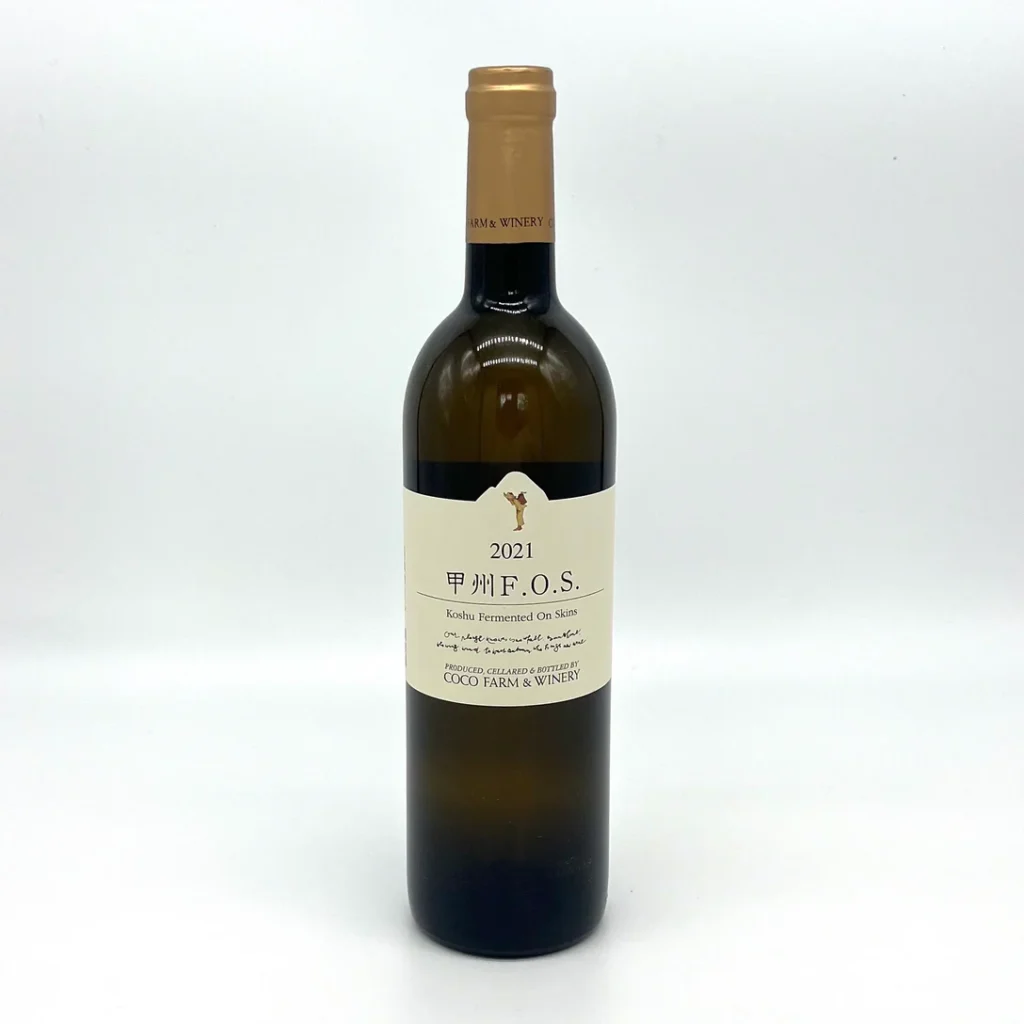
(Tochigi / Yamanashi – Orange wine – Koshu 92%, Petit Manseng 8% – 11% vol – Wild yeast)
If you only try one Japanese orange wine this winter, let it be this one.
Koshu F.O.S. isn’t just a bottle — it’s the story of a grape, a place, and a philosophy that refuses to compromise on authenticity.
COCO FARM & WINERY began in 1958, when a group of junior-high students with intellectual disabilities and their teacher carved a vineyard into a steep hillside with their own hands. That founding spirit — resilience, dignity, and joy in the work — still shapes everything the winery does today.
This wine is the perfect expression of that: meticulous, heartfelt, and absolutely Japanese in its clarity and restraint.
On the nose
It’s wonderfully complex — not “funky orange” but deep, aromatic, and nuanced:
- apricot
- yellow peach
- mandarin
- black tea
- cinnamon
- toast
- a hint of tobacco
It smells like winter sunlight through paper screens — warm, bright, and subtle all at once.
On the palate
This is where Koshu’s true character comes through.
Expect:
- ripe fruit wrapped in gentle acidity
- a supple, tightening tension across the palate
- phenolic roundness and astringency
- an almost savory umami length
It’s light-bodied but three-dimensional, textured without weight, expressive without shouting.
A wine you sip… then think about… then sip again.
Food pairings
This wine is incredibly versatile — and very Japanese in its balance, so it works beautifully with delicate, aromatic, or slow-cooked dishes:
- Caprese with prosciutto & peaches
- cold tomato capellini
- Iburi-gakko (smoked radish pickles)
- Kobako crab
- grilled conger eel
- simmered chicken wings & daikon
- charcoal-grilled chicken
- oden
- smoked tofu
Perfect for a Christmas table with seafood, vegetables, or lighter appetizers — or for a January evening when you want something thoughtful and soothing.
How it’s made (and why it matters)
“F.O.S.” stands for Fermented On Skins, and COCO FARM & WINERY has been making it since 2004 — long before orange wine was fashionable.
Koshu is often treated like a delicate grape. But here, they recognized its hidden power: astringency, structure, and inner strength.
To express that, the team uses four different skin-contact fermentations (stainless steel, clay jars, long macerations, short macerations), then ages the wine 7-9 months in:
- 65% wooden barrels
- 35% stainless steel tanks
All wild yeast.
No shortcuts.
Just the natural voice of the grape.
It’s a wine that grows more complex between 2023–2028, becoming deeper, firmer, more expressive.
After 2029, it shifts toward dried fruit and savory notes.
Sentence to drop at the table
“Koshu F.O.S. shows what happens when tradition, patience and wild ferments meet Japan’s native grape — it’s umami, texture, and elegance in one.”
A small note, from me to you
If you end up ordering it, whisper that Diane Wine Voyage pointed you in this direction — they’ll smile, I promise.
Thinking about trying a red wine from Japan?
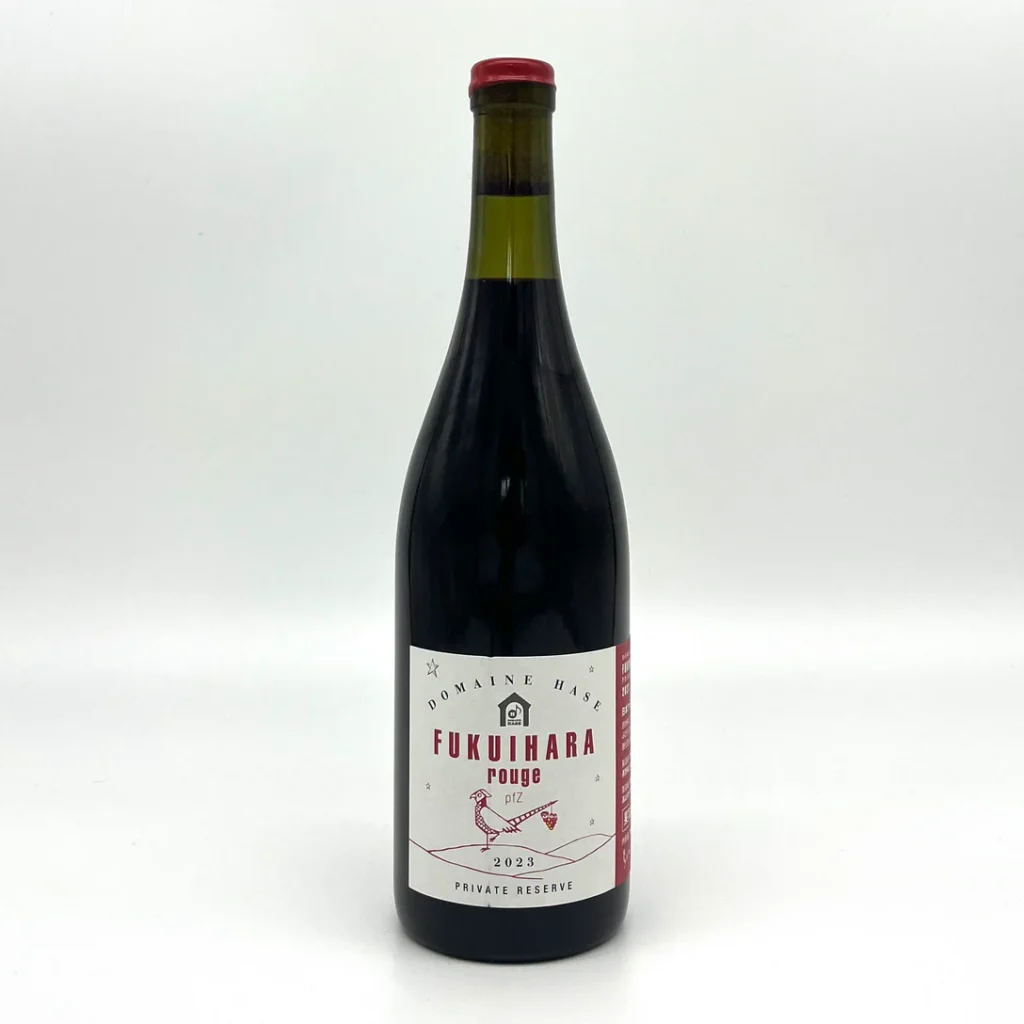
They actually make really great red wines in Japan. Unfortunately importing them is always the issue, so I’ll recommend the best one I found that you can actually buy in Europe : Domaine Hase – FUKUIHARA rouge pfZ PRIVATE RESERVE 2023
Add to cart
(Takayama Village, Nagano – Muscat Bailey A, Pinot Noir, Gamay, Zweigelt – 12% – Wild yeast – 1,480 bottles)
If Koshu F.O.S. is the contemplative, quietly luminous side of Japan, then pfZ PRIVATE RESERVE is the emotional one — the bottle that tells a story of passion, grit, and a bit of beautiful obsession.
Domaine Hase is one of those tiny Japanese wineries where everything feels deeply personal. It was founded in 2017 by Mitsuhiro Hase, who spent two decades in the music industry before one life-changing sip of Pinot Noir in Nagano convinced him to leave everything behind and start from zero.
What followed is the kind of story you only hear in Japanese wine:
training on weekends, studying on evenings, moving to a mountain village, learning viticulture by hand from mentors in the region, and absorbing the spirit of natural winemaking from some of Japan’s most respected growers.
Today, Domaine Hase farms its vines organically at 800 metres altitude, in volcanic ash soils layered with tens of thousands of years of humus — a deep, dark, living soil that gives their wines an unmistakeable softness and nuance.
And in 2023, something extraordinary happened.
The vintage that changed everything
Muscat Bailey A — usually delicate, soft, charming — reached a level of ripeness and concentration the winery had never seen before.
So instead of releasing two cuvées (one Muscat Bailey A–led, one Pinot Noir–led), Hase did something rare for Japan: he combined them, and created a special cuvée called PRIVATE RESERVE.
The name pfZ itself tells a story:
- pf for Pinot fin — and for the winemaker’s deep love of Pinot
- Z for Zenbei Kawakami, the creator of Muscat Bailey A
It’s a tribute, a thank-you, and a quiet declaration of intent: Japan can make world-class red wine.
On the nose
This wine has an aromatic complexity you don’t often find in Japan:
- framboise
- cassis
- violet
- strawberry jam
- cherry
- dried fruits
- clove
- nutmeg
- warm spice
It’s a nose that pulls you in — bright, generous, and subtly exotic.
On the palate
Many Japanese reds are light and airy.
This one has more power, more depth, more structure.
Expect:
- juicy red fruits
- spice
- fine, polished tannins
- balanced alcohol (12%, remarkably restrained)
- a long, gently warming finish
It’s medium-bodied, elegant, and surprisingly age-worthy — the sort of wine that unfolds slowly over three days, gaining detail and dimension.
Food pairings
This wine thrives with dishes full of umami, depth, or sweetness–saltiness:
- beef fillet with red wine sauce
- beef cheek braised in wine
- beef Wellington
- sukiyaki
- miso-grilled pork
- unagi kabayaki
- Peking duck
- Moroccan lamb tagine
- grilled Mont d’Or cheese
For Christmas or New Year’s, it’s a dream pairing for richer, wintery dishes — especially anything slow-cooked.
How it’s made
Everything at Domaine Hase is done with reverence:
- organic viticulture, no chemicals
- cold maceration
- 30% whole-bunch fermentation
- a month-long wild-yeast fermentation
- ageing in François Frères + Kádár Hungarian oak
- natural malolactic
- minimal sulphites (15 ppm at bottling)
- unfiltered
It’s natural winemaking expressed with precision — not funk.
Why it tastes the way it does
Because everything at Domaine Hase happens on a spectacular, high-altitude volcanic plateau tucked inside the Shiga-highland Biosphere Reserve.
Because the soils are ancient, black, humus-rich, and alive.
Because the night/day temperature shift is huge.
Because rain is low.
Because everything is farmed and made with both humility and ambition.
This is Japanese red wine with both heart and backbone.
Sentence to drop at the table
“This wine is Muscat Bailey A like you’ve never seen it — concentrated, aromatic, and shaped by mountain soils and wild ferments.”
A small note
There’s no affiliate link for this bottle — but if you do order it, feel free to mention you discovered it through Diane Wine Voyage.
They’ll know exactly why it caught your eye.
Quick pairing cheat-sheet (seafood / poultry / rich dishes)
For seafood:
✔ Grüner Veltliner
✔ Koshu
For poultry:
✔ Zweigelt
✔ Red Japanese Wine
✔ Blaufränkisch
For rich dishes:
✔ Austrian Riesling
✔ Blaufränkisch
Want to look like you know what you’re doing?
Try this sentence:
“I wanted us to travel a little tonight… so I brought wines from places we don’t often see in France.”
(It works every time.)
Bonus: the easiest way to turn a dinner into an experience
Want to taste wines like these in real life — without overthinking it?
I host private tastings in Toulon/Var (and beyond), and I can also organise group tastings wherever your group is.
💌 A Discovery Tasting Gift Card
- 45€ for one person
- 240€ for a private group of six
- at home in the Var if you wish (I can come to you)
- 1.5 hours
- 3 rare wines
- a warm, social, zero-pressure experience
Available on my website.
Instant. Printable. Chic.
Perfect for
- birthday
- housewarming
- team event
- “just because”
Final note
Whether you choose Austrian precision or Japanese elegance, your dinner table will suddenly feel… different.
More curious.
More open.
More you.
Because wine isn’t just something you drink—it’s a way to travel, discover, and create memories.


You May Also Like
Eisenberg Wine: Austria’s Spicy Blaufränkisch Secret (Terroir, DAC & Top Wineries)
Top Grüner Veltliner Producers in Wachau