Austria
- A Quick Guide to Austria’s Best Wine Regions
- The famous Wachau wine
- The less famous but equally delicious red wines of Burgenland
- Your Beginner's Guide to Grüner Veltliner from Wachau
- Your Beginner's Guide to Blaufränkisch from Burgenland
- Where to buy Austrian wine online
-
What grape is Sekt made from?
Austrian Sekt is a sparkling wine made from several grape varieties, not just one. The most common grapes used are Grüner Veltliner, Riesling, Pinot Noir, Pinot Blanc, and Chardonnay. The grape variety plays a key role in the style of Sekt: Grüner Veltliner and Riesling produce fresh, crisp, and lively sparkling wines, while Pinot Noir, Pinot Blanc, and Chardonnay create…
-
What does DAC stand for in wine?
20 minutes read Let’s take a deep breath and step into the world of Austrian DACs — because once you understand the logic, it’s actually much simpler (and more useful) than it looks. In Austria, wines labelled Qualitätswein can be made from 40 authorised grape varieties and come from nine generic wine regions. These regions — sometimes called areas —…
-
What are the major quality levels of Austrian wine?
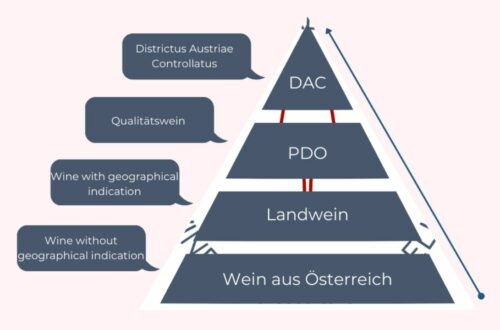
What are the major quality levels of Austrian wine? The major quality levels of Austrian wine are based on grape ripeness (must density) and origin. Austria officially distinguishes three wine categories: wine without geographical indication, Landwein, and Qualitätswein (PDO wine). Within Qualitätswein, the main quality levels are Kabinett, DAC, and Prädikatswein. Prädikatswein wines are further classified by natural sugar levels,…
-
What is Bergland in Austria?
What is Bergland in Austria? Bergland is Austria’s mountain wine zone, covering small, high-altitude vineyards scattered across Carinthia, Upper Austria, Salzburg, Tyrol, and Vorarlberg. Shaped by Alpine geology, cooler climates, and stony, well-drained soils, Bergland produces fresh, precise, low-alcohol wines rather than powerful styles. Viticulture here is limited and often experimental, but it offers distinctive expressions of grapes like Chardonnay,…
-
What wine region is Vienna in?
What wine region is Vienna in? Vienna is its own wine region. With 637 hectares of vineyards inside the city limits, Vienna produces high-quality wines shaped by limestone-rich soils, Danube terraces, and centuries of history. Best known for Wiener Gemischter Satz DAC, Vienna also excels with Grüner Veltliner, Riesling, Chardonnay, and Zweigelt. This post explains how Vienna’s vineyards work, why…
-
What kind of wine is Südsteiermark famous for?
Südsteiermark, in southern Austria, is best known for world-class Sauvignon Blanc. Shaped by steep vineyards, diverse soils (limestone, volcanic, gravel, schist), and a climate with hot days and cool nights, the wines combine aromatic intensity with freshness and precision. Alongside Sauvignon Blanc, Südsteiermark also excels with Pinot Blanc, Chardonnay (Morillon), Welschriesling, and Muscat. The Südsteiermark DAC, introduced in 2018, classifies…
-
Weststeiermark wines
Weststeiermark DAC is the most distinctive wine appellation in Styria, Austria, and the only region allowed to grant protected designation of origin to Schilcher. Located on the foothills of the Koralpe and Reinischkogel mountains, Weststeiermark is shaped by crystalline gneiss and schist soils, high altitude, and a wet Illyrian climate with Mediterranean influences. These conditions produce wines with high acidity,…
-
What does Vulkanland Steiermark wine taste like?
Vulkanland wines from southeastern Styria tend to taste richer, rounder, and more textured than other Styrian wines. Shaped by volcanic and sedimentary soils and a slightly warmer climate, they often show subtle spice, softer aromatics, and generous mouthfeel while keeping freshness. Key grapes include Weissburgunder (Pinot Blanc), Welschriesling, Sauvignon Blanc, Grauburgunder (Pinot Gris), and Zweigelt. Klöch, with its heat-retaining basalt…
-
Steiermark wine: Austria’s freshest region (and my personal favourite)
Steiermark wine (Styria) comes from southern Austria and is one of the country’s four main wine regions. Unlike Austria’s best-known styles (Grüner Veltliner and Riesling), Steiermark focuses on fresh, lively wines from international varieties such as Sauvignon Blanc and Chardonnay (Morillon), alongside Weissburgunder, Grauburgunder, Gelber Muskateller and Traminer. The region spans 4,630 hectares across three wine zones—Südsteiermark, Vulkanland and Weststeiermark—known…
-
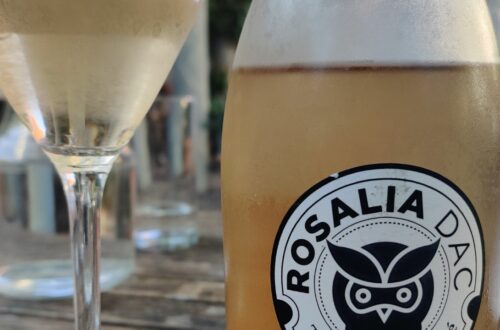
Rosalia Wines in Austria: Blaufränkisch, Rosé & DAC Explained (Terroir + Best Producers)
Rosalia wines in Austria come from Burgenland and officially became a wine-growing area in 2018, but the region’s winemaking history dates back over 2,500 years. Rosalia is known for full-bodied red wines and fruity, refined rosés, shaped by a warm Pannonian climate and young mineral-rich sediments from a prehistoric sea. Soil types range from gravelly to highly calcareous, creating distinct…