
Thermenregion wine
9 minutes read
Let me guess why you’re here.
You love Austrian wine (or you’re curious), but you don’t want to read another article that says:
“Go to Wachau. Drink Grüner. The end.” 😅
You want something a bit more secret. A bit more local.
Something you can actually experience, not just drink.
Maybe you’ve even googled “best Austrian wines”… and surprise: the same names keep popping up.
But what if I told you there’s a wine region just south of Vienna where you can combine:
- seriously good wines
- hot springs and spa towns
- sunshine for days
- and two uniquely Austrian grapes you’ll struggle to find anywhere else
Welcome to Thermenregion — one of the most underrated (and honestly most enjoyable) wine areas in Austria.
If you clicked on this article, I’m guessing you’re looking for one of these things:
- Which wines should I taste / buy?
- What makes Thermenregion special?
- Where do I go, and which wineries are worth it?
Perfect. That’s exactly what we’ll do together.
I’ll walk you through Thermenregion’s history and terroir, introduce its signature grapes (Rotgipfler and Zierfandler — remember those names, they’re gems), and then I’ll share my favourite wineries like Karl Alphart and Johanneshof Reinisch.
Ready? Glass in hand. Let’s go. 🍷✨
Want Austrian wine beyond the classic “Wachau + Grüner and done”? Thermenregion, just south of Vienna, is an underrated gem with 2,181 hectares of vineyards, spa towns and hot springs, and two rare local grapes you need to know: Rotgipfler and Zierfandler. In this guide, I break down the region’s history, terroir, key grape varieties (including Saint-Laurent), the Thermenregion DAC (since June 1st, 2023), and the wineries worth your time — like Karl Alphart, Biegler, Gebeshuber, Heinrich Hartl III, Johanneshof Reinisch and Stadlmann.
History of Thermenregion
For over 2,000 years, vines have been cultivated in the gentle, favourable climate south of Vienna. The story begins with the Romans: legionnaires stationed in Carnuntum and Vindobona introduced vines from their home regions — along with their viticultural expertise — into Pannonia.
Then came the Middle Ages, and wine really took off under the careful guidance of Cistercian monks. In fact, the vineyard landscape and village structure still clearly show the influence of the original Cîteaux monastery in Burgundy.
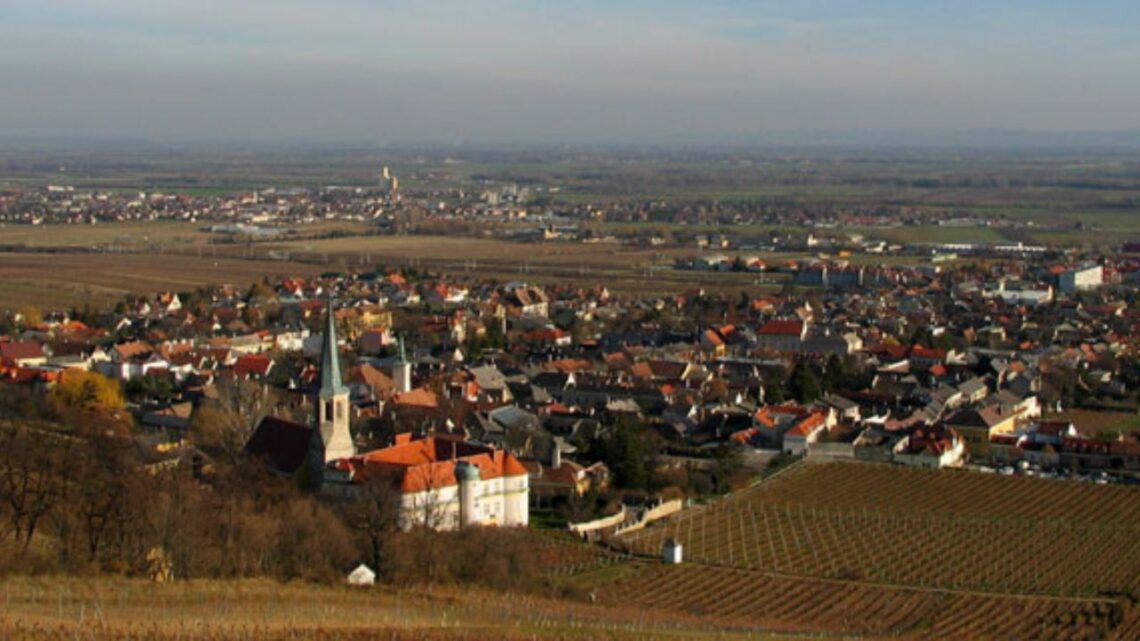
The Thermenregion wine-growing area covers 2,181 hectares. In the northern part, it has long been considered one of Austria’s most renowned regions, taking its name from the village of Gumpoldskirchen, which once enjoyed a reputation comparable to Rust or Tokaj.

And why “Thermenregion”? Because the region is famous for the hot sulphurous springs of Aquae (Baden). Just south of Gumpoldskirchen, you’ll find the spa towns of Baden and Bad Vöslau.

Quick note (because it matters): the Thermenregion wines’ history goes back to the Middle Ages, and notable designations of origin such as Gumpoldskirchen for white wines and Vöslau for red wines rhyme with exceptional quality.
A major turning point occurred in 1985 with the introduction of the new Austrian wine law, ushering in a new era for the region. Gumpoldskirchen and Bad Vöslau merged together to form Thermenregion, uniting their viticultural traditions and expertise.
And yes — Thermenregion also happens to be the birthplace of two distinctive Austrian grape varieties: Rotgipfler and Zierfandler. We’ll get to them very soon.
And honestly: this is not just a wine region — it’s a full experience. Nature and culture offer a very tempting menu of leisure activities, such as:
- visiting Freigut Thallern (owned by the Cistercian collegiate church Stift Heiligenkreuz), one of Austria’s oldest vineyards
- enjoying the spa and cultural town of Baden (theatre, operetta, wellness… even grape cure!)
- wine route excursions to authentic farm inns
- hiking through vineyards along the mountain spring water pipeline from Vienna
Yes. This region knows how to live.
Terroir : soil and climate
Let’s talk terroir — because Thermenregion is a terroir playground.
Soils
Limestone and fossil limestone dominate the region, with bands of sandy loam or brown loam.
Vineyards aren’t terraced here, but planted on slopes — which makes them harder to work (poor winemakers), but it gives grape clusters sun exposure both in the morning and in the afternoon.
Even better: deposits on the lower slopes contain gravel, helping with drainage and warming.

Around Tattendorf, the soils are alluvial and gravelly, with little topsoil but excellent drainage. They heat up quickly in hot weather… then cool down at night thanks to the chilly winds flowing down from the Anninger hills. (Yes, drama.) Frost can be an issue.
ANECDOTE: Hannes Reinisch has a… creative solution. Maybe not the greenest though. He tackles frost by flying a helicopter over the vineyard every fifteen minutes, which raises the temperature by 2°C. Efficient? Yes. Environmentally friendly? Let’s not think about it too much.
Also worth noting: Klosterneuberg owns the largest Saint-Laurent vineyard in Austria. One of the most celebrated sites is Frauenfeld, with alluvial stony soils rich in limestone and a topsoil of black earth — perfect for Saint-Laurent.
Climate
The hills protect vineyards from cold wet weather and hail, while the nearby Pannonian plain (stretching into Hungary) has a strong warming influence. The result?
1,800 to 2,000 hours of sunshine
And because Thermenregion likes balance, the cool air coming down from the hills helps preserve acidity in the wines.
Where the best reds and whites come from
- Major centres for red wine: Bad Vöslau, Sooß, Tattendorf, Teesdorf
- Classic white wines: Perchtoldsdorf, Gumpoldskirchen, Pfaffstätten, Baden, Guntramsdorf, Traiskirchen
Grape varieties in Thermenregion
In the area between Wiener Neustadt and Tattendorf, Saint-Laurent is widely grown. And yes, the region has contrast: the gravelly plains around Tattendorf and the slopes around Gumpoldskirchen don’t give the same results — which is exactly why tasting through Thermenregion is so interesting.
But the region’s truly distinctive identity comes from its star duo:
Rotgipfler & Zierfandler: the local treasures
- Rotgipfler is known for tropical fruit characters
- Zierfandler shows tension, and can even develop noble rot potential
The BA (Beerenauslese) and TBA (Trockenbeerenauslese) wines from Gumpoldskirchen typically have more acidity than those near Lake Neusiedl.
Now… we need a quick moment of honesty.
Grüner Veltliner is taking over (again)
Grüner Veltliner has largely taken over Thermenregion — which is, in my opinion, a little unfortunate (I mean… don’t we already have enough with the Wachau, Kamptal, Kremstal, Weinviertel?).
The good news: top producers are holding the line. Rotgipfler and Zierfandler still exist, with:
- 128 hectares of Rotgipfler
- 82 hectares of Zierfandler
They’re planted along the slopes of the Anninger hills, between 200 and 300 meters in altitude.
Steinfeld and the legendary blend
In Steinfeld, poor gravel soils offer excellent conditions for red wines. The typical local whites — Zierfandler (Spätrot) and Rotgipfler — thrive here and are blended after harvest into the famous: Spätrot-Rotgipfler blend
Other varieties you’ll encounter
Traditional diversity includes:
- Blauer Portugiese (formerly called “Vöslauer”)
- Neuburger
And more modern plantings:
- Pinot family (St. Laurent, Pinot Noir)
- Zweigelt
- Merlot
- Cabernet Sauvignon
Thermenregion DAC
Thermenregion had been waiting patiently, and in the end, it finally happened: on June 1st, 2023, the region officially earned its DAC status, becoming the 18th and final member of Austria’s DAC family.
The 2023 harvest marks the very first vintage to carry the Thermenregion DAC name.
Like other Austrian DACs, Thermenregion is organised around an origin pyramid with three quality tiers.
At the top sits Riedenwein, the single-vineyard level, representing the most precise expressions of place. These wines are made from a very specific and prestigious set of grape varieties: Zierfandler, Rotgipfler, St. Laurent, Pinot Noir, Pinot Blanc, and Chardonnay.
Just below, Ortswein (village wines) form the middle tier. They include all the same grape varieties as Riedenwein, with the addition of Pinot Gris and Zweigelt (also known as Rotburger). Ortswein wines come from clearly defined DAC villages: Perchtoldsdorf, Gumpoldskirchen, Tattendorf, Wiener Neustadt, and Bad Vöslau, each contributing its own nuance to the region’s style.
At the broader regional level, Gebietswein Thermenregion DAC completes the picture. These wines include all the grape varieties already mentioned, plus Neuburger, Gemischter Satz (a traditional field blend), and Blauer Portugieser.
Wineries in Thermenregion
Now to the wineries! (My favourite part, obviously.)
Karl Alphart
With history dating back to 1796, Karl Alphart offers an impressive range of Rotgipfler wines.
Their range includes:
- cuvées from Rodauner, like “Vom Berg” (their most basic offering)
- “Top Selektion” from old vines, partially fermented and aged in 30% new oak
- “Pur”, aged 11 months in barriques, with a minimum of 18 g residual sugar (not produced every year)
And their sparkling wine is great too.
Biegler
Specialists in Rotgipfler and Zierfandler, usually around 6 g residual sugar, with acidity kept high enough to avoid the “too sweet” impression.
Notably, their 2015 Zierfandler Badener Weg shows exceptional aging potential according to Stephen Brook.
Gebeshuber
Known for their organic practices, with:
- “Modler” as a top site for Zierfandler
- “Laim” as a standout site for Rotgipfler
Rich, full-bodied wines with real depth.
Heinrich Hartl III
A broad range of wines, with a special passion for Rotgipfler and Pinot Noir.
Their Classic and Reserve Saint Laurent wines are also highly regarded.
Johanneshof Reinisch
Founded in 1923, the estate went through tragedy when the father was killed in a vineyard accident in 2009.
Today, it’s run as an organic estate, with Hannes Reinisch leading production.
Their 13 hectares in Gumpoldskirchen include:
- Satzing, planted with Rotgipfler
- Spiegel, with sandy rock soils suitable for Zierfandler
Both wines undergo skin contact and fermentation in old barrels.
Their Saint-Laurent vines in Frauenfeld average 35 years old, and the wines age for 16 months in small barrels.
Their top Pinot Noir comes from Holzspur, with vines planted in 1975.
They also use a machine that blows away excess flowers after Saint-Laurent and top white varieties flower — reducing bunch number and size, and decreasing the need for green harvesting.
Stadlmann
Founded in 1778, now run by Johann Stadlmann and his son Bernhard, who previously worked at Domaine Jacques Prieur in Meursault.
Only 18% of their wines are red, but they shine for whites, especially Zierfandler.
Their pride: the south-east facing Mandel-Höh vineyard in Gumpoldskirchen, with 50-year-old Zierfandler vines planted on a hillock of fossil limestone topped with shallow brown earth.
Great quality, and I loved their Zierfandler TBA from Mandel-Höh.
Conclusion: Thermenregion wine
The Thermenregion, south of Vienna, has a rich winemaking history dating back over 2,000 years.
Named after the hot sulphurous springs of Aquae (Baden), it covers 2,181 hectares of vineyards.
It is particularly known for:
- Saint-Laurent (especially around Tattendorf and Gumpoldskirchen)
- the local gems Rotgipfler and Zierfandler
- Grüner Veltliner
- the Pinot family (St. Laurent, Pinot Noir)
Several wineries truly stand out, including Karl Alphart, Biegler, Gebeshuber, Johanneshof Reinisch and Stadlmann.
So… go discover this underrated region and book your wine tour!


Where to next?
Exclusive wine experience in Vienna
In Vienna and wondering how to taste the best Austrian wines without spending days planning? I’ve got you — here’s my honest review of the Exclusive Wine Experience, the cozy cellar tasting I book every time I’m in town
Austria is a small country… with huge wine diversity. From peppery Grüner to bold Blaufränkisch and Vienna’s urban vineyards, here’s your guided tour of Austria’s must-know wine regions
Austrian wines are having a moment — and if you’re wondering where to buy Austrian wine online, I’ve got you. Here are my trusted retailers for great bottles, good value, and ethical sourcing
Want a private wine tasting at home, at the office, or even in an Airbnb in Provence? I’ll bring rare wines from Austria, Japan, and England — and make it fun, easy, and unforgettable


You May Also Like
The Impact of Terroir on Blaufränkisch Production
What are Carnuntum wines? Vienna’s nearby red-wine secret (Rubin Carnuntum, DAC & top wineries)